Test Mold at Home: A Practical DIY Guide
Learn practical, safe methods to test mold at home, identify moisture-driven growth, and decide when to test and remediate. Includes DIY sampling basics and guidance on professional testing.


You can start testing mold at home with a basic kit or by careful visual inspection, focusing on moisture sources and problem areas. This DIY approach helps you decide if professional remediation is needed and guides early steps to improve air quality, while recognizing that lab-confirmed identification may require a specialist. Follow safety rules and document findings to plan next steps.
What testing mold at home means
Testing mold at home means performing safe, basic sampling and visual inspection to determine whether mold growth exists in your living spaces and to identify moisture issues that could support future growth. According to Mold Removal Lab, home testing can help you decide if you need professional remediation and guide initial mitigation steps, but it is not a substitute for formal lab analysis when precise identification or insurance coverage is involved. This distinction matters because many common indoor molds look similar, and some may require specialized laboratory methods to confirm species or quantify spore loads. By starting with a clear plan, homeowners can prioritize moisture control, airflow improvements, and safer temporary remedies while avoiding panic or misinterpretation. The goal is to reduce exposure, protect vulnerable household members, and set a course for a healthier home environment.
Understanding the limits and benefits of DIY testing
DIY mold testing is a useful first step for many households, especially after water intrusion or in damp climates. It can reveal visible colonies, confirm suspected problem areas, and help you map moisture sources. However, DIY tests have limits: they may not detect hidden growth behind drywall, may fail to distinguish harmless from hazardous species, and can yield inconclusive results if sampling is not done correctly. Mold Removal Lab's analysis emphasizes that proper sampling technique and consistent labeling are essential to avoid cross-contamination. For best results, combine a moisture assessment with your sampling plan and maintain good documentation so a professional remediation contractor can review your data. Always treat DIY results as directional rather than definitive.
Sampling methods: surface tests, tape, swabs, and air samples
Surface sampling using swabs or tape can identify contaminants on visible surfaces like baseboards, window frames, and bathroom tiles. Swabs collect cells from a defined area; tape lifts material from the surface for lab analysis. Air sampling measures spores in the breathing zone and can indicate ongoing airborne exposure, especially in high-moisture rooms. Each method has pros and cons: surface tests are quick and inexpensive but may miss hidden growth; air tests can detect airborne spores but require careful timing and may be influenced by ventilation. If you choose DIY testing, read the kit instructions carefully and follow a standardized area size to improve comparability with other samples. Plan to re-test after improving moisture control to verify progress.
Preparing the space and collecting samples safely
Before collecting any sample, turn off fans and reduce air movement in the room to avoid drawing more spores into your sampling device. Put on PPE: gloves, a disposable gown or shirt, a dust mask or respirator rated for particulates, and eye protection. If you are sampling in a damp or moldy area, set up a temporary barrier to contain dust. Label each sample with location, date, and method; keep a simple log so you can track changes across rooms and times. Use clean tools for each sample and avoid touching visible mold with bare hands. Document the surroundings with photos, noting moisture sources such as leaks or condensation patterns. If sampling behind walls, consider consulting a professional about safe access.
Interpreting results and next steps
DIY test results can indicate whether mold was detected, and where it is most concentrated. They seldom provide definitive species identification or exposure-risk levels, so treat results as a guide for moisture control and remediation planning. If tests show mold in multiple rooms, or if you have lingering odors, headaches, or allergic responses, it's wise to seek a professional assessment. The Mold Removal Lab team recommends pairing test data with a formal building moisture survey and a licensed remediation contractor for substantial mold issues. In mild cases, improving ventilation, reducing humidity, cleaning with appropriate products, and addressing leaks may suffice.
When to test: timing and triggers
Test after water events (flooding, broken pipes, or roof leaks), after remediation to confirm cleanup, and in consistently damp rooms (basements, bathrooms with poor ventilation). Re-check annually as part of home maintenance in humid climates. Consider testing if residents notice persistent allergy symptoms, musty odors, or visible staining that suggests ongoing moisture problems. Remember that test results are a snapshot and can be influenced by weather and occupancy patterns, so use them as part of a broader mold-management plan.
DIY testing versus professional testing: cost, accuracy, and decision points
DIY testing is typically faster and cheaper upfront, but may require follow-up testing and professional interpretation, especially for complex cases. Professional mold testing involves certified samplers, accredited labs, and standardized protocols to improve accuracy and defensibility for insurance or remediation contractors. In deciding between DIY and pro testing, weigh the home's moisture history, occupant health concerns, the likelihood of hidden growth, and the potential cost of undetected problems. If a major water event occurred or if anyone in the home experiences persistent symptoms, professional testing is usually the safer choice.
Prevention and long-term mold control after testing
Even after testing, ongoing moisture control is the key to preventing mold recurrence. Maintain indoor humidity below 50 percent, fix leaks promptly, use exhaust fans in bathrooms and kitchens, ensure proper air sealing, and consider a dehumidifier in damp spaces. Regular cleaning with appropriate, non-abrasive products and addressing visible mold spots early can prevent larger problems. If you plan renovations or have ongoing moisture issues, consult a mold remediation professional to design a long-term prevention strategy. Keeping a dry, well-ventilated house reduces mold-friendly conditions and protects health.
Additional resources and authoritative guidance
Public health agencies and research institutions offer authoritative guidance on mold. The Centers for Disease Control and Prevention (CDC) provides an overview of mold health risks and safe removal practices. The Environmental Protection Agency (EPA) offers a guide to moisture control and remediation. The National Institute of Environmental Health Sciences (NIEHS) discusses health effects and exposure considerations. For homeowners seeking more depth, refer to university extension programs and accredited labs to understand sampling methods and interpretation.
Tools & Materials
- Mold testing kit (surface swab or air sampling)(Choose kit type based on your goal (surface vs air) and follow instructions exactly)
- Nitrile gloves(Disposable, size medium)
- N95 respirator or equivalent(Protects against inhalation of spores)
- Goggles or eye protection(Prevents splashes or dust in eyes)
- Sealable sample bags or containers(Label per sample; avoid cross-contamination)
- Masking tape and permanent marker(Labeling samples and locations clearly)
- Notebook and pen(Record locations, conditions, and observations)
- Small flashlight(Help inspect dark corners or behind furniture)
- Camera or smartphone(Document moisture sources and mold growth)
Steps
Estimated time: 60-90 minutes
- 1
Prepare the Space and PPE
Put on all PPE before touching any surfaces. Close doors to limit cross-contamination and create a controlled testing zone. Gather labeling materials and ensure you have a clean workspace.
Tip: Wear a disposable gown or old clothing you can safely remove after testing. - 2
Choose the Sampling Method
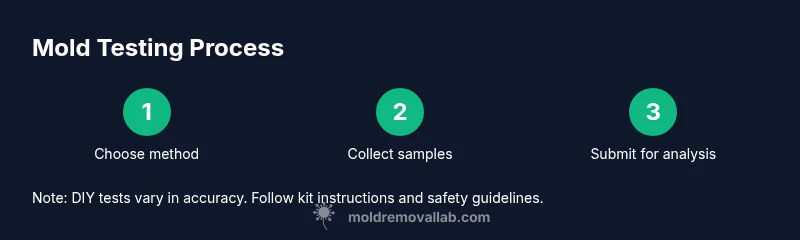
Decide whether you will perform surface sampling, air sampling, or both based on the suspected problem. Surface methods are usually easier for beginners; air sampling can reveal hidden airborne spores.
Tip: Start with a single method per room to avoid confusion, then expand if needed. - 3
Collect Surface Samples
Use a clean swab or sticky tape to collect from the defined area. Label each sample with the location and date. Use separate tools for each sample to minimize cross-contamination.
Tip: Avoid touching visible mold with bare hands; use tools and PPE. - 4
Collect Air Samples (Optional)
If your kit includes an air sampling component, follow the timing and placement guidelines. Position the sampler away from immediate moisture sources and doors or vents that skew results.
Tip: Run the sampling device for the recommended duration and place near the breathing zone. - 5
Seal, Label, and Document
Seal samples in their containers, label with room, date, and method, and photograph the area to document moisture sources. Maintain a simple log of observations.
Tip: Keep samples upright and protected from heat or direct sunlight during transport. - 6
Submit for Analysis or Self-Review
If using a lab-based kit, follow shipping and submission instructions. If using a consumer kit, review the results per the manufacturer’s guidance and compare with your moisture plan.
Tip: Record the results in your testing log and plan the next steps based on moisture improvements.
FAQ
Do I need to rely on DIY testing, or should I hire a professional for mold testing?
DIY testing is a good starting point for awareness and planning, but professional testing provides standardized methods and lab confirmation that may be needed for remediation decisions and insurance reasons.
DIY testing helps you start, but for definitive results and insurance coverage, consider professional testing.
What is the difference between surface testing and air testing?
Surface testing checks mold on visible surfaces, while air testing measures mold spores in the breathing zone. Each method informs different aspects of mold exposure and should be chosen based on your concerns and space.
Surface tests show what's on surfaces; air tests tell you about airborne spores. Both have roles.
How long do DIY test results take?
Most at-home test kits provide results within hours to a few days, depending on the kit and whether you mail samples to a lab. Always follow the manufacturer’s timeline for accuracy.
Results usually come within hours to a few days, depending on the kit.
If I find mold after testing, what should I do next?
If mold is detected, address moisture sources immediately and plan remediation. For extensive growth or any health concerns, consult a licensed remediation professional.
Tackle moisture first and consider a professional if growth is large or health is affected.
Can DIY tests identify specific mold species?
Most DIY tests do not reliably identify exact mold species. Lab analysis or professional testing is typically required for precise species identification.
DIY tests rarely identify exact species; lab tests are more reliable.
Are DIY mold tests reliable for insurance or health concerns?
DIY tests can inform you about conditions, but official remediation decisions for insurance or health risks usually require professional evaluations.
DIY tests alone aren’t usually sufficient for insurance or regulated health decisions.
Watch Video
The Essentials
- Test mold at home to gauge moisture issues and guide next steps
- Select sampling methods suited to your goals and space
- Interpret results as guidance, not definitive proof of species
- Prioritize moisture control and professional remediation when needed
- Document conditions and maintain a prevention plan