What Kills Mold Spores: A Practical Guide to Safe Remediation
Learn practical, evidence-based methods to kill mold spores safely. This Mold Removal Lab guide covers moisture control, cleaning strategies, disinfection, and prevention.


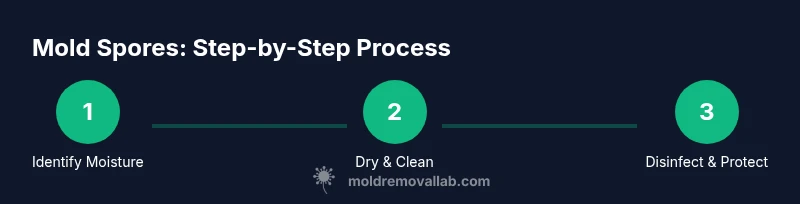
To kill mold spores effectively, you’ll tackle moisture control, surface cleaning, and proper disinfection. Start by drying the area, removing moldy materials if needed, and ventilating while you work. Then clean with a suitable cleaner and apply an approved sporicidal or sanitizer following label directions.
Understanding Mold Spores and How They Survive
According to Mold Removal Lab, mold spores are tiny, highly resilient particles that travel through the air and settle wherever moisture is present. They can lie dormant for long periods and become active when humidity rises. The bottom line for killing mold spores is not just about one treatment; it’s about stopping moisture, cleaning thoroughly, and applying appropriate disinfectants. Mold Removal Lab's analysis in 2026 emphasizes that spores die only when exposed to proper conditions and handling; the real win is preventing regrowth by removing the source of moisture and maintaining a dry environment.
Recognize that killing spores on a surface is different from removing visible mold. Spores can remain viable even after visible growth is gone, so a two-pronged approach—moisture management and surface disinfection—is essential. This section lays the groundwork for practical steps you can take in your home, with safety and efficacy in mind.
Why Moisture Management Is The Key
Moisture control is the cornerstone of any mold remediation plan. If you eliminate the water source and reduce humidity, spores lose the conditions they need to germinate and proliferate. In most homes, leaks, condensation, and high indoor humidity are the primary drivers of mold activity. By addressing these factors first, you dramatically reduce the likelihood of regrowth. The Mold Removal Lab team notes that consistent humidity below typical indoor comfort levels makes it far harder for spores to become established, even if some spores remain.
Practical moisture management steps include fixing leaks promptly, drying wet areas within 24–48 hours, and using dehumidifiers or ventilation to maintain stable humidity levels. Small, persistent moisture problems can lead to large mold issues over time, so early intervention is crucial. This section provides actionable checks you can perform today, such as inspecting bathroom seals, roof lines, and crawlspaces for dampness.
Cleaning and Disinfection: What Works On Surfaces
Surface cleaning removes mold and its growth products, creating a cleaner base for disinfection. For hard, nonporous surfaces (like tiles and sealed countertops), scrubbing with soap and water followed by a disinfectant is often sufficient. On porous materials (like drywall or fabric), cleaning may remove surface mold but spores can remain embedded; in many cases, replacement is necessary to fully eliminate the problem.
When choosing cleaners, prioritize products labeled as effective against mold and following the label’s instructions for contact time. Bleach can be effective on nonporous surfaces but is not ideal for porous materials and can damage finishes or release fumes in poorly ventilated areas. Hydrogen peroxide is a less corrosive alternative for some surfaces. Always use personal protective equipment and ensure adequate ventilation during cleaning. This section also explains how to choose between a sanitizer and a sporicidal product depending on the surface and level of contamination, a distinction Mold Removal Lab emphasizes in 2026 findings.
Choosing Effective Products: What the Label Actually Says
Labels tell you what a product can and cannot do, and they specify contact time, dilution, and safety precautions. A sporicidal product is designed to kill spores under certain conditions, while sanitizers reduce the number of microorganisms but may not completely neutralize spores. When treating mold, you want products with explicit mold or mildew claims and proven efficacy against spores on the intended surface. Always perform a spot test on a small, inconspicuous area to check for discoloration or damage.
Follow the label exactly: wear PPE, ventilate the space, and adhere to contact times. Do not mix cleaners or use more than the recommended strength. If the surface is porous or water-damaged beyond repair, consider replacement rather than attempting a risky remediation. This section consolidates guidance from Mold Removal Lab’s 2026 analysis on effective product use and safety practices.
When to Consider Professional Help
For extensive water intrusion, large areas of mold growth, or contamination of HVAC systems, professional remediation is advisable. Professionals have specialized equipment, training, and containment methods to prevent cross-contamination. If you observe mold growth spanning more than a few square feet, or if it returns after cleaning, it’s a strong signal to bring in experts. The Mold Removal Lab team cautions that DIY remediation may be insufficient for hidden mold behind walls or in ventilation ducts, where spores can be dispersed during cleanup.
Before calling a pro, document moisture sources and the affected areas, and ensure the contractor follows established guidelines for containment and disposal. This section explains how to evaluate a remediation contractor, what questions to ask, and what to expect in the scope of work.
Preventive Practices To Stop Reinfestation
After you’ve treated mold, prevention is essential. Maintain indoor humidity at reasonable levels, fix leaks promptly, and ensure good ventilation in bathrooms, kitchens, and laundry areas. Regularly inspect problem zones and use moisture meters or humidity gauges to monitor conditions. Clean and dry any damp surfaces quickly, especially after showers or floods. The Mold Removal Lab analysis highlights the role of ongoing maintenance in keeping spores from reappearing.
Practical prevention tips include installing bathroom exhaust fans that vent outdoors, using dehumidifiers in damp basements, and prioritizing airflow in attics and crawlspaces. Keeping your home dry is the most reliable defense against mold spores, and consistent, proactive checks reduce the chance of recurrence. The end of this section connects prevention outcomes with real-world home maintenance plans that homeowners can implement today.
The Mold Removal Lab team recommends ongoing moisture control and routine inspections to prevent mold recurrence.
Tools & Materials
- Personal protective equipment (PPE)(N95 respirator or higher, gloves, eye protection, and long sleeves)
- Nonporous scrub brushes(For cleaning hard surfaces without scratching)
- Mop and bucket(For larger spill cleanups and rinsing)
- Buckets of clean water(For dilution and rinse steps)
- Appropriate cleaners(Soap and water; approved mold cleaners; sporicidal products as labeled)
- Disinfectants labeled for mold(Follow label instructions including contact time)
- Disposable trash bags(Seal and dispose of contaminated materials carefully)
- Moisture meter or hygrometer(Helps monitor humidity but not strictly required)
Steps
Estimated time: 2-6 hours
- 1
Identify moisture source
Locate the water intrusion or high humidity area responsible for mold growth. Document visible leaks, condensation points, and any previous repairs. Stopping the moisture source is essential to prevent spores from returning after cleaning.
Tip: Fix leaks and vent damp areas before cleaning to reduce airborne spore spread. - 2
Contain the workspace
Close off the affected area to limit airflow to other parts of the home. Use plastic sheeting and tape to create a containment zone, and run an exhaust fan to direct air out of the room.
Tip: Keep doors closed and avoid cross-ventilation that could spread spores. - 3
Dry surfaces and materials
Thoroughly dry all surfaces and remove any moldy porous materials if they cannot be cleaned. Use towels, fans, or dehumidifiers to achieve a stable dry state before cleaning.
Tip: Drying reduces spore transfer and improves cleaning effectiveness. - 4
Clean hard surfaces
Scrub nonporous surfaces with soap and water or a mold-safe cleaner. Rinse and allow to dry fully before applying disinfectant. Do not use abrasive cleaning methods that could damage surfaces.
Tip: Rinse thoroughly to remove residues that can reduce disinfectant efficacy. - 5
Disinfect the area
Apply a mold-approved disinfectant or sporicidal product to cleaned surfaces, following the label for contact time and ventilation. Avoid mixing cleaners and never apply to porous materials that weren’t cleaned or dried first.
Tip: Respect contact times to ensure spores are neutralized. - 6
Inspect and fix any remaining issues
Recheck the area for hidden moisture or residual mold growth. If any is found, repeat cleaning and disinfection steps or escalate to professional remediation if necessary.
Tip: Address hidden moisture sources, like wall cavities or HVAC ducts, to prevent recurrence. - 7
Plan ongoing prevention
Implement humidity control, regular inspections, and prompt repairs to prevent mold from returning. Keep an eye on bathrooms, kitchens, and basements, where moisture commonly accumulates.
Tip: Seasonal checks help catch issues before they become problems.
FAQ
Does killing mold spores really work or is removing mold enough?
Killing spores is part of a comprehensive approach, but removing mold growth and eliminating moisture sources are equally important. Treat both aspects to minimize recurrence.
Killing spores helps reduce exposure, but you also need to remove the visible mold and fix moisture to prevent return.
Is bleach effective for mold spores on porous surfaces?
Bleach is often not effective on porous materials because spores can be embedded deep in the material. It’s best for nonporous surfaces and in combination with proper cleaning and moisture control.
Bleach works on hard, nonporous surfaces but not on porous materials like drywall.
What’s the difference between a sporicidal and a sanitizer?
A sporicidal product is designed to kill spores, while a sanitizer reduces the number of microorganisms but may not eradicate spores completely. Choose based on surface and contamination level.
Sporicidal products target spores; sanitizers reduce microbes but may not fully neutralize spores.
How long does it take for mold to reappear after cleaning?
Reappearance depends on moisture control. If humidity and leaks are not addressed, spores can regrow within days to weeks. Continuous monitoring helps prevent this.
If you keep moisture out and the area stays dry, mold is less likely to come back quickly.
When should I call a professional?
Call a professional for extensive or recurring mold, hidden growth, or if you are unsure about safety or containment. Professionals have equipment to prevent cross-contamination.
If the area is large or you suspect HVAC contamination, it’s wise to get a pro involved.
Watch Video
The Essentials
- Control moisture to stop mold growth
- Use proper cleaners and follow label times
- Ventilate and protect yourself during cleanup
- Inspect for hidden moisture sources to prevent recurrence
- Plan ongoing prevention to keep spores from returning