What is Black Mold vs Regular Mold? A Practical Comparison
A clear, evidence-based comparison of black mold vs regular mold, explaining identification, health risks, testing options, and safe remediation strategies for homeowners and renters.


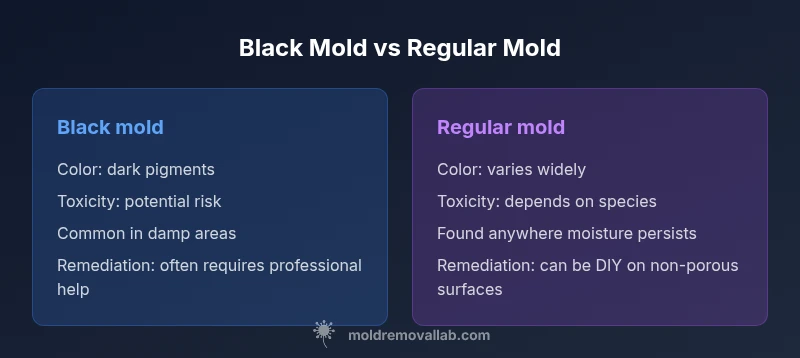
Black mold generally refers to a subset of molds that often appears dark due to pigment and can produce potent toxins under certain conditions. Regular mold covers a broader spectrum of species and colors. When mold is detected, treat it as a health risk and act quickly with moisture control, containment, and professional testing as needed. This is a practical distinction, not a legal label.
What is black mold vs regular mold: definitions and context
In many households, mold is a familiar nuisance that triggers concern about health and home safety. A common question is what is black mold vs regular mold, a distinction that often guides how people respond. According to Mold Removal Lab, mold is a broad category of fungi that thrive in moist environments and can appear in many colors and textures. The phrase black mold typically refers to a subset of molds that often appears dark due to pigment and can produce toxins under favorable conditions. However, color alone is not a reliable indicator of hazard. For homeowners, the key takeaway is practical rather than punitive: treat any visible mold as a potential health risk, focus on stopping moisture sources, isolate the area, and seek testing or professional remediation as needed. Framing the issue this way helps you prioritize steps that reduce exposure and prevent recurrence while avoiding alarmism.
The biology behind the distinction
Mold is not a single organism but a large group of fungi with many species that can colonize indoor spaces. Black mold is a colloquial label most often associated with molds that produce dark pigments and, in some cases, mycotoxins. It is important to recognize that many other molds—Aspergillus, Penicillium, and Cladosporium among them—can look different colors but still pose health concerns under damp conditions. The color of a mold colony is influenced by pigments, spores, and growth stage, not a definitive measure of toxicity. In practice, the best approach is to identify moisture sources, confirm contamination, and verify with appropriate tests rather than relying on appearance alone. Mold Removal Lab analysis shows that relying on color as a proxy for danger can lead to under– or over‑estimated risk, which is why testing and containment are emphasized in remediation planning.
Common species and signatures to watch for
Black mold is commonly linked to certain species that favor wet interiors, particularly when water intrusion persists. Stachybotrys chartarum is the best-known example in popular discourse, but several other species may appear black or dark under certain lighting. Regular mold, by contrast, can be green, gray, white, brown, or even black, depending on the species and the substrate. The appearance alone is not enough to determine risk. Look for signs such as persistent dampness, a musty odor, and visible growth on organic materials like drywall, wood, or fabrics. When uncertain, collect samples for laboratory analysis and document the growth pattern to help determine containment needs and remediation scope.
Health implications and safety considerations
Exposure to mold can trigger allergic reactions, respiratory irritation, and asthma symptoms, especially in children, the elderly, and individuals with compromised immune systems. While not all black molds produce toxins, some can. The health risk hinges on the mold species, the level of exposure, and the duration of contact. Protective measures are essential during any investigation or cleanup: wear gloves, a properly fitted respirator (not just a cloth mask), and ensure proper ventilation. If you have ongoing dampness, seek professional guidance to assess whether air quality testing or surface sampling is warranted. Mold remediation is safer when moisture control is prioritized and work is conducted with established containment practices.
How to verify mold type: testing, kits, and professional inspection
Color alone cannot reliably identify a mold’s species or toxigenic potential. There are several testing approaches: surface swabs and tape lifts sent to a lab, air sampling to quantify spore counts, and DNA-based methods for precise identification. Home test kits exist but can produce false positives or inconclusive results if not interpreted correctly. For many homeowners, a professional mold inspection offers a comprehensive assessment, including moisture mapping, humidity monitoring, and targeted sampling plans. When results are available, a remediation plan can be tailored to the identified species and site conditions, reducing unnecessary work and protecting occupants.
Differences in remediation: DIY vs professional remediation
DIY approaches can address small, non-porous surface mold with appropriate safety precautions, but porous materials such as drywall, insulation, or ceiling tiles often require professional removal and disposal. Black mold—when associated with moisture intrusion and porous substrates—generally benefits from professional remediation to ensure containment, air filtration, and proper cleaning and disposal. A licensed remediator will implement containment barriers, negative air pressure, HEPA filtration, and follow up moisture-control strategies to prevent re-growth. The decision to hire a pro should consider the mold size, location, substrate, and the health risk profile of occupants.
Practical steps to reduce mold growth in homes
Prevention is the most effective strategy for both black mold and regular mold. Start by eliminating moisture sources: fix roof leaks, repair plumbing, improve ventilation in bathrooms and kitchens, and run dehumidifiers to maintain indoor humidity below 50%. Regularly inspect areas prone to dampness, such as basements, crawl spaces, and window sills. Clean surfaces using approved products on non-porous materials, and consider applying mold-resistant paints or sealants to susceptible substrates. Implement a moisture-detection plan and record humidity readings to identify trends over time. These practical steps reduce the likelihood of mold growth and simplify any remediation that becomes necessary.
Myths vs reality: common misconceptions about black mold
A persistent myth is that only the color black indicates danger. In reality, any mold growth in a living space should be treated seriously, especially when moisture is involved. Another misconception is that bleach alone can fully remediate mold on porous materials; in many cases, porous substrates require professional removal to prevent regrowth beneath the surface. A third misconception is that all black molds are toxic; toxicity depends on the specific species and exposure level. By separating myths from evidence and focusing on moisture control, testing, and appropriate remediation, homeowners can manage mold risks more effectively.
Exposure routes and risk assessment for homeowners
Mold exposure can occur via inhalation of spores, skin contact, or incidental ingestion, depending on the environment and individual behaviors. Occupants with preexisting allergies or compromised immune systems may experience more pronounced symptoms. Risk assessment should consider the extent of growth, the duration of exposure, and the presence of water-damaged materials. In many cases, early action reduces sustained exposure and lowers the chance of chronic respiratory issues. Always err on the side of caution, particularly in high-risk groups, and seek professional guidance for long-term risk management.
Costs, time, and effort: evaluating remediation options
Remediation costs vary widely based on the extent of growth, location, and materials involved. Small, non-porous surface mold may cost hundreds of dollars for removal, while larger or porous-substrate contamination can reach into the thousands. DIY efforts may save money upfront but risk incomplete removal or rebound if moisture is not controlled. Professional remediation typically includes containment, air filtration, disposal of contaminated materials, and a post-remediation moisture plan to prevent recurrence. Weigh the costs against the health benefits and the potential for future moisture problems when deciding on the right course of action.
Documentation and communication: tenants, landlords, and safety practices
Keep detailed records of mold discoveries, moisture readings, remediation steps, and any health symptoms observed by occupants. Documenting dates, locations, and actions helps with communication between tenants and landlords and provides a basis for compliance with health and housing regulations. If you rent, report mold findings promptly and request a formal remediation plan with timelines. At all times, prioritize occupant safety by restricting access to affected areas during cleanup and ensuring proper ventilation and containment. Documentation supports accountability and ongoing prevention.
Quick-start checklist for homeowners and renters
- Inspect for moisture sources and fix leaks promptly.
- Confirm humidity levels stay below 50% in living spaces.
- Use PPE during any inspection or cleanup and ventilate the area.
- Consider professional testing if growth is extensive or numerous spaces are affected.
- Develop a moisture-control plan to prevent future growth and re‑growth.
Final practical note from Mold Removal Lab
In any mold scenario, rapid assessment and moisture control are your first tools. The Mold Removal Lab team emphasizes that even if black mold is suspected or confirmed, remediation strategy should be guided by the site conditions, exposure risk, and test results. This approach helps minimize health risks while protecting property values and indoor air quality over the long term.
Comparison
| Feature | Black mold | Regular mold |
|---|---|---|
| Color range | Often dark green to black | Wide range: green, gray, white, brown, or black |
| Toxicity potential | Often associated with higher concern, but not guaranteed | Toxicity depends on species; not all are hazardous |
| Common locations | Moist, organic-rich substrates like wet drywall, ceilings, basements | Any damp interior where moisture persists |
| Identification | Color alone is unreliable; requires testing | Color and texture are insufficient for definitive ID |
| Remediation approach | Containment and specialized cleaning; often requires professional removal on porous materials | DIY cleaning possible on non-porous surfaces with precautions; porous materials may need pro remediation |
Upsides
- Highlights safety-first approach to any mold growth
- Encourages moisture control to prevent recurrence
- Promotes testing to tailor remediation
- Supports informed decisions about professional help
The Bad
- Can cause anxiety when health risks are implied
- Testing costs can add up
- DIY remediation on porous substrates can fail if not done correctly
Professional assessment is recommended for suspected black mold or any indoor mold growth.
Color alone cannot determine danger. Testing and expert remediation minimize exposure and prevent recurrence while ensuring safety.
FAQ
Is black mold always toxic?
Not all black molds produce toxins, but many can pose health risks. The risk depends on the species and duration of exposure. Treat any suspected mold growth as potentially hazardous and pursue testing or professional assessment as appropriate.
Not all black mold is toxic, but some can be hazardous. Treat mold growth seriously and consider testing or a professional assessment to confirm risk.
Can I identify black mold by color alone?
Color is an unreliable indicator of hazard. Mold colors vary by species, substrate, and lighting. Always use testing or professional inspection to confirm identity and risk before remediation.
Color alone won't tell you the danger level. Get testing or a pro to confirm what kind of mold it is.
Should I use bleach to clean black mold?
Bleach can be ineffective on porous materials and may not reach mold growth inside walls. For porous substrates or extensive growth, professional remediation is often required. For small, non-porous areas, follow product directions and safety guidelines.
Bleach isn't a universal fix, especially on porous surfaces. For larger or porous growth, call a pro.
What steps should I take immediately after discovering mold?
Contain the area to prevent spread, stop moisture sources, and avoid disturbing the growth if you’re unsure about safety. Document locations and symptoms. Schedule testing or a professional inspection to identify the mold type and remediation plan.
Contain the area, stop moisture, and get a professional assessment to plan remediation.
When should you call a professional?
Call a professional for large or widespread growth, porous substrates, water-damaged areas, or if occupants have respiratory issues. A pro can assess safety, containment, and provide a proven remediation plan.
Call a pro for large or hidden growth or if anyone is ill; they ensure safe, complete remediation.
Are there health symptoms associated with mold exposure?
Mold exposure can cause nasal congestion, throat irritation, coughing, and wheezing, especially in sensitive individuals. Long-term exposure may aggravate asthma or trigger allergic reactions. If symptoms persist after cleaning, seek medical advice and assess indoor air quality.
Mold exposure can irritate airways and worsen allergies; medical guidance may be needed if symptoms persist.
The Essentials
- Test to identify species and risk before remediation
- Control moisture to stop mold growth at the source
- Don’t rely on color to judge hazard; use professional guidance
- Choose remediation based on substrate type and contamination extent