Black Mold vs Mildew: A Practical Comparison for Homeowners
Distinguish black mold from mildew, understand health risks, and learn practical remediation steps. This analysis covers visuals, moisture control, testing options, and professional help when needed.


Black mold vs mildew: the two are often mistaken, but they imply different risks and remediation needs. Black mold is generally more concerning due to moisture-driven growth and potential health impacts, while mildew is usually a surface-level growth that’s easier to clean. Accurate identification, moisture control, and proper protective measures are essential before treatment. This comparison explains appearances, growth conditions, health considerations, and practical remediation steps.
Defining the Difference: Black Mold vs Mildew
Understanding the difference between black mold and mildew is essential for homeowners and renters. While both are mold-related growths that appear in damp spaces, they differ in appearance, growth behavior, and the level of concern they warrant. The phrase black mold vs mildew is familiar to many, yet misidentification can lead to inappropriate cleaning or delayed remediation. According to Mold Removal Lab, recognizing these traits early helps you decide whether moisture control alone will suffice or if you need professional help. Broadly, black mold involves darker, often greenish-black patches that may feel fuzzy or slimy as it grows on porous or semi-porous surfaces. Mildew, by contrast, presents as lighter-colored, white to gray or yellowish coatings that sit on the surface and are generally easier to remove. Both thrive in moisture-rich environments, but the implications for health and property damage differ. In practical terms, treat mildew as a surface blemish tied to humidity, and treat black mold as a potential sign of a larger moisture problem that can affect indoor air quality and building materials over time. The next sections will translate these differences into what you should look for, how to test, and what steps to take to reduce risk.
Visual Clues: How to Tell Them Apart at a Glance
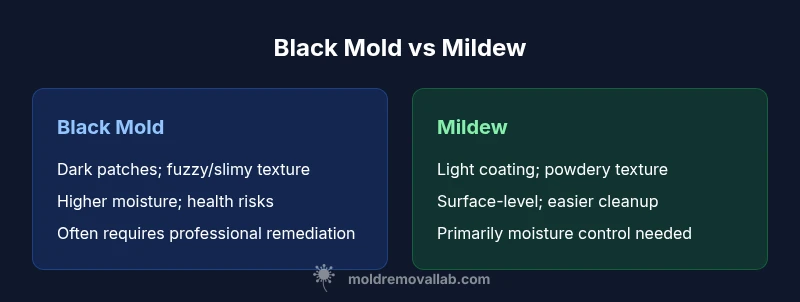
Visual cues are the first line of defense when identifying mold growth. Black mold typically appears as dark, patchy areas with a fuzzy or slimy texture, often spreading along walls, ceilings, or within damp building materials where moisture persists. Mildew tends to present as a lighter coating—white, gray, or yellowish—often seen on bathroom grout, window sills, or the surface of plants. Texture matters: mildew is usually powdery to the touch, while black mold can feel slimy or damp. Context is critical: dark patches with a musty odor and ongoing moisture problems raise the likelihood of black mold rather than mildew. Lighting can help reveal spread patterns—mildew tends to stay near joints and surfaces in a thin film, whereas black mold can cover more substantial areas if moisture remains unresolved. Always avoid aggressive scrubbing to test color; spores can disperse and worsen exposure. In later sections, we’ll cover typical locations, simple verification methods, and when to pursue testing.
Growth Conditions and Common Locations
Mold needs moisture to thrive, but black mold and mildew have different moisture tolerances and environmental niches. Black mold is commonly found where there is chronic moisture from leaks, roof repairs, plumbing failures, or high humidity in poorly ventilated spaces. You’ll often see it behind drywall, around sinks, in basements, or inside HVAC ducts where damp air circulates. Mildew prefers damp but not necessarily deeply saturated conditions and is frequent in bathrooms, on shower curtains, grout, and near sinks where condensation is common. Understanding these growth conditions helps homeowners target moisture sources: fix leaks, improve ventilation, and dry wet materials promptly to halt further growth. Each space—kitchen, bathroom, basement, attic—has unique moisture dynamics, so tailor remediation strategies to the specific environment and material involved.
Health Implications and Research Findings
Exposure to mold growth can affect indoor air quality and health. While many people experience no noticeable symptoms, sensitive individuals—such as those with asthma, allergies, or compromised immune systems—may suffer coughing, wheezing, eye irritation, or headaches when exposed to damp mold. The Mold Removal Lab analysis indicates that persistent moisture coupled with visible mold growth increases the risk of respiratory symptoms in susceptible individuals. It’s important to separate general moisture management from remediation: addressing moisture at its source reduces exposure, while removing the growth protects indoor air quality. Remember, even mildew can trigger allergies in sensitive people, though its health impact is typically milder than that of prolonged black mold exposure.
Moisture Control: The Root Cause and Prevention
Moisture control sits at the heart of any mold management plan. Begin with a moisture audit: inspect for leaks in roofs, plumbing, and windows; check for condensation on walls and pipes; and quantify humidity levels (ideally below 60% in most homes, lower in humid climates). Implement practical steps: repair leaks promptly, install or upgrade ventilation in kitchens and bathrooms, use dehumidifiers in damp spaces, and dry affected areas within 24–48 hours after water intrusion. Regular maintenance—clearing condensate from window frames, cleaning dryer vents, and sealing gaps around pipes—reduces new mold growth. Remember to monitor hidden sources: behind appliances, in crawl spaces, and inside cabinets where dampness can accumulate unnoticed. Document moisture sources and remediation steps to ensure lasting prevention.
Testing and Confirmation: Do You Need a Lab Test?
Visual inspection can often identify mildew, while black mold may require laboratory confirmation, especially in cases of large growth, porous materials, or persistent moisture. If you observe extensive growth (>10 square feet), recurring dampness, or persistent health symptoms, consider professional testing to confirm species and guide remediation. Surface and air tests can help determine the extent of contamination and whether hidden growth exists behind walls or within ducts. It’s important to work with accredited laboratories and trained professionals who follow standardized sampling and reporting methods. Testing informs the remediation plan and helps verify that moisture issues have been resolved before closing the project.
Cleaning, Remediation, and Safe Practices
Cleaning approaches differ for mildew and black mold. Mildew on non-porous surfaces can often be cleaned with household cleaners such as vinegar or baking soda, followed by thorough drying. For mildew on porous materials, or when growth is more extensive, professional remediation is recommended to ensure complete removal and to address underlying moisture. Black mold on porous materials often warrants more intensive remediation because spores can penetrate materials and return after cleaning if moisture remains. Personal protective equipment is essential when cleaning mold, including gloves, eye protection, and an N95 or higher respirator. Containment barriers, proper cleaning solutions, and disposal of contaminated materials help minimize exposure and cross-contamination. After cleaning, address moisture sources and monitor for signs of re-growth.
When to Call Professionals: Red Flags and Thresholds
You should consider professional help when mold covers a large area, involves porous building materials, or when occupants report persistent health symptoms after cleaning. Visible growth in hard-to-clean areas like HVAC ducts or behind walls, ongoing leaks, or repeated moisture issues are strong indicators that a professional remediation team is needed. Professionals can perform advanced testing, contain the affected area to prevent cross-contamination, and remove or repair damaged materials using industry-standard practices. Early professional intervention can prevent escalation and reduce long-term costs.
Long-Term Prevention: Keeping Mold at Bay
Prevention is more effective than repeated remediation. Maintain indoor humidity at moderate levels, address leaks promptly, improve ventilation in moisture-prone rooms, and use mold-resistant materials in high-humidity zones. Regularly inspect areas around baths, kitchens, basements, and laundry rooms for signs of moisture and condensation. Clean and dry damp surfaces routinely, especially after water events. Consider air purifiers with HEPA filters in spaces with ongoing moisture issues or mold concerns. By combining moisture control with proactive cleaning and timely testing, you reduce the likelihood of future outbreaks and keep indoor air safer for everyone.
Comparison
| Feature | Black mold | Mildew |
|---|---|---|
| Appearance | Dark patches (often greenish-black), fuzzy or slimy texture | White, gray, or yellowish powdery coating on surfaces |
| Moisture association | Indicates persistent, higher moisture and potential moisture problems | Tied to moisture but generally milder conditions |
| Health implications | Potential health risks; can affect air quality; more concerning for sensitive individuals | Typically milder; may trigger allergies or irritation in some people |
| Remediation difficulty | More challenging; thorough moisture control and possibly professional remediation | Easier surface cleaning; often manageable with common cleaners |
| Cleaning approach | Specialized cleaners; containment; consider professional removal for porous materials | Household cleaners (vinegar, baking soda); thorough scrubbing and drying |
| Common locations | Walls, drywall, ceilings, HVAC ducts in damp areas | Bathrooms (tiles, grout), windows, and damp corners |
| Time to visible growth | Can spread rapidly in humid spaces; may be present unseen for some time | Develops relatively quickly in moist bathrooms and showers |
| Best for remediation path | Hire professional remediation when growth is extensive or materials are porous | DIY cleaning is often sufficient for mild, surface-level mildew with moisture control |
Upsides
- Clarifies which mold issue you’re dealing with for effective action
- Guides appropriate remediation paths and safety precautions
- Encourages moisture control to prevent recurrence
- Supports informed decisions about professional help
The Bad
- Requires careful observation to avoid misidentification
- Can cause anxiety about indoor air quality before testing
- DIY remedies may not fully resolve mold in porous materials
Black mold typically demands more urgent attention and professional remediation than mildew
If you see dark patches with ongoing moisture, treat as a higher-risk situation. Mildew is usually manageable with simple cleaning and moisture control.
FAQ
What is the key difference between black mold and mildew?
Black mold and mildew differ in appearance, moisture needs, and risk level. Black mold tends to be dark and more concerning for health, while mildew is lighter and often easier to clean. Correct identification guides remediation strategy and safety measures.
The main difference is that black mold looks dark and is usually more risky, while mildew is lighter and typically easier to remove. Correct identification helps you take the right steps.
Is black mold dangerous to healthy people?
Exposure can irritate airways, especially in sensitive individuals. In some cases, prolonged exposure in damp environments may worsen respiratory symptoms. Always minimize exposure and address moisture promptly.
Black mold can irritate airways, particularly for those with allergies or asthma. Reduce exposure and fix moisture quickly.
Can mildew become black mold over time?
Yes, if moisture remains unresolved, mildew can progress into more aggressive mold growth. Controlling humidity and repairing leaks are essential to prevent this progression.
Mildew can turn into darker mold if moisture stays high, so fix leaks and dry areas promptly.
Do I need a lab test to identify the mold?
For small, clearly mildewed areas, visual identification may suffice. Large or persistent growth, or health concerns, often requires accredited lab testing to confirm species and guide remediation.
For big or stubborn growth, consider lab testing to confirm the mold type and guide treatment.
What are safe DIY cleaning methods for mildew?
Non-porous surfaces can often be cleaned with vinegar or baking soda and then dried thoroughly. Avoid mixing cleaners and always ventilate the area.
Mildew on non-porous surfaces can usually be cleaned with vinegar and a good dry, but ventilate and don't mix cleaners.
When should I hire a professional?
Consult a professional when growth is extensive, involves porous materials, or health symptoms persist after cleaning. Professionals can safely contain, test, and remediate the affected area.
Call a professional if the mold covers a large area or if health symptoms persist after cleaning.
The Essentials
- Identify growth type early to choose the right action
- Prioritize moisture control to prevent recurrence
- Use appropriate PPE and follow safety guidelines
- Test or consult a pro for large or porous-growth scenarios
- Document moisture sources and remediation steps for long-term prevention