Mold vs Black Mold vs Mildew: A Practical Guide for Homeowners
A practical, evidence-based comparison of mold, black mold, and mildew for homeowners. Learn definitions, growth cues, health risks, testing guidance, and remediation strategies to keep homes safe and healthy.


Mold, black mold, and mildew are related indoor fungi, but they differ in risk and remediation. The mold vs black mold vs mildew comparison shows that mold is a broad term for indoor fungi, black mold is a potentially hazardous subset, and mildew is usually milder and easier to remove with moisture control. For homeowners, start with containment, moisture reduction, and verified testing if you suspect black mold.
Understanding the Terms: mold, black mold, mildew
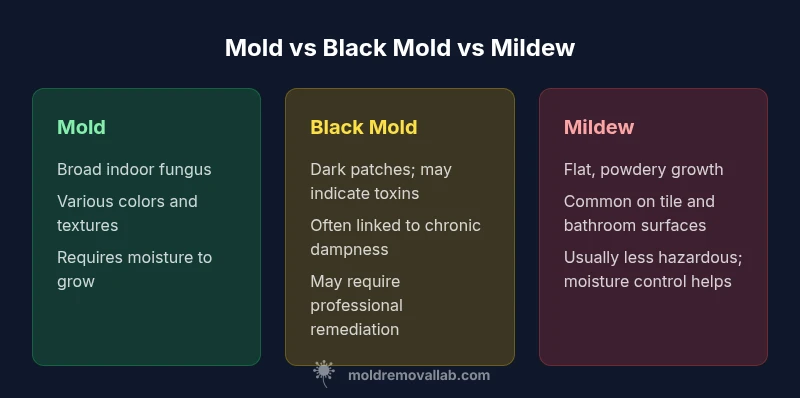
The phrase mold vs black mold vs mildew is widely used in homeowner conversations, but precise definitions matter for effective action. Mold is a broad umbrella term for a wide variety of fungi that colonize damp indoor surfaces. Black mold is not a distinct species; it is a descriptive label for a subset of mold that appears dark greenish-black and may have higher toxin-related concerns in some environments. Mildew, by contrast, tends to be flat, powdery, and lighter in color, often appearing on bathroom walls and other moisture-prone surfaces. The Mold Removal Lab team emphasizes that misidentification can lead to inappropriate cleaning methods or missed risks. In this guide, we examine the differences among mold, black mold, and mildew, and translate those differences into practical steps homeowners can take to protect health and property.
Growth Conditions: Why they appear and where to look
All three forms require moisture to grow, but the specific conditions—humidity levels, surface materials, and airflow—shape their development. Mold thrives in areas with sustained moisture on organic substrates like wood, drywall, fabric, and wallpaper. Mildew prefers flat surfaces with ample ventilation but insufficient drying after moisture events. Black mold commonly appears in areas with chronic dampness, such as leaky roofs, basements, or porous materials that have absorbed water for weeks or months. Understanding mold vs black mold vs mildew helps you target moisture sources first, then address surface contamination with appropriate methods. Mold Removal Lab analyses consistently show that stopping the moisture source yields the biggest returns in reducing indoor fungal growth, regardless of the exact mold type present.
Health Impacts and Risk Perceptions
Exposure to indoor fungi can trigger a range of health effects, from minor irritations to respiratory symptoms. In the mold vs black mold vs mildew discussion, the color or label alone does not determine risk; the level of exposure, the occupants' health status, and the extent of contamination matter. Mildew is often less hazardous than mold growth that penetrates porous materials; however, any visible growth in living spaces warrants careful attention. The Mold Removal Lab Team notes that people with allergies, asthma, or compromised immune systems may experience symptoms even from milder growth. Proper containment, ventilation, and remediation reduce risks for all three forms.
Visual Cues and Sampling: Can you tell them apart by sight and smell?
Color and texture offer clues but are not definitive. Mildew typically presents as white to gray on smooth surfaces and has a powdery or fluffy appearance. Mold can appear in a spectrum of colors, including green, black, or bluish hues, and often shows a fuzzy or slimy texture depending on moisture. Black mold may resemble dark greenish-black patches and can have a musty odor, but appearance alone cannot confirm toxicity. For mold vs black mold vs mildew, use odor, growth pattern, and surface material as a guide, then rely on testing to verify species and extent when needed. Always wear PPE during inspection and avoid disturbing growth that could release spores into indoor air.
Detection and Testing: When and how to test for mold safely
Testing is a nuanced topic in the mold vs black mold vs mildew landscape. DIY air or surface tests can indicate the presence of mold, but they do not reliably identify species or quantify risk. If you suspect black mold, testing should be coupled with a professional assessment to determine hidden growth behind walls or under insulation. For general mildew and non-porous surface growth, validated cleaning and moisture control may suffice. In all cases, address the moisture source first, then consider testing to confirm toxigenic species or to guide remediation strategy.
Remediation: Quick fixes vs professional help
Remediation approaches differ based on the category of growth. Mildew on non-porous surfaces often responds to scrubbing with detergent and a moisture-control plan. Mold inside porous materials, especially in large areas or behind walls, typically requires containment, removal of affected material, and professional remediation for safe and thorough cleanup. Black mold raises additional concern due to potential toxin exposure; if suspected, treat as a high-risk situation and consult a licensed remediator. The key is to combine physical removal with moisture restoration to prevent recurrence.
Prevention Strategies: Keeping moisture in check over time
Preventing mold vs black mold vs mildew requires ongoing moisture management. Use dehumidifiers in damp spaces, improve bathroom and kitchen ventilation, fix leaks promptly, and ensure good drainage away from the foundation. Regularly inspect areas prone to dampness—basements, crawl spaces, attics, and near HVAC ducts—for signs of moisture intrusion. Clean hard, non-porous surfaces promptly after water exposure and dry them completely within 24 to 48 hours. By prioritizing moisture control, you reduce the likelihood of all three forms returning, while minimizing health risks and property damage.
Common Myths and Misconceptions: Separating fact from fiction
One common misconception in the mold vs black mold vs mildew conversation is that color alone determines danger. False positives or underestimations can occur if people rely solely on appearance. Another myth is that bleach kills all fungi; while bleach can be effective on non-porous surfaces, it may damage porous materials and does not prevent regrowth unless moisture is controlled. A third misconception is that all mold is equally dangerous; toxicity varies by species and concentration, and context matters for health risks and remediation needs.
Quick Guidance for Homeowners: A practical checklist
- Confirm persistent moisture issues and address them before cleaning. - Clean non-porous surfaces with appropriate detergents; dry thoroughly. - For suspected black mold or extensive growth, contact a licensed professional for testing and remediation planning. - Keep indoor humidity below 60% (ideally 30–50%) and ensure adequate ventilation. - Document moisture sources and remediation steps for future maintenance. - When in doubt, prioritize safety and professional guidance over DIY methods.
Final Thoughts: Making informed decisions about mold vs black mold vs mildew
Understanding the differences among mold, black mold, and mildew enables smarter decisions about safety, cleanup, and prevention. While mildew is typically less hazardous, all visible growth signals moisture problems that deserve prompt attention. The Mold Removal Lab Team recommends a cautious, moisture-focused approach, with professional testing and remediation when needed to safeguard health and home value.
Feature Comparison
| Feature | Mold | Black Mold | Mildew |
|---|---|---|---|
| Definition | Broad term for indoor fungi that grow on damp surfaces | Descriptive label for a mold subset that appears dark and may produce toxins | Flat, powdery growth on surfaces like tile or walls |
| Color/Texture | Varies (green, gray, black, white, etc.), often fuzzy or slimy | Dark green to black patches, can be slimy if wet | White to gray, powdery, on smooth surfaces |
| Growth Conditions | Moisture on organic substrates (drywall, wood, fabric) | Chronic dampness in enclosed spaces with porous materials | Moisture on flat, non-porous surfaces or surfaces that dry quickly |
| Common Locations | Basements, bathrooms, kitchens, anywhere moisture persists | Bathrooms, basements, laundry rooms with leaks or high humidity | Showers, sinks, windowsills, tiles |
| Health Effects | Allergic reactions, asthma triggers, irritation varies by exposure | Potential toxins in some environments; higher risk for sensitive individuals | Typically milder symptoms but still a concern for moisture-related exposure |
| Remediation Approach | Containment, cleaning, and moisture control; evaluate porous material replacement as needed | Often requires professional testing and remediation for concealed growth | Non-porous surface cleaning; ensure drying and ventilation to prevent regrowth |
| Test Availability | DIY tests can indicate presence but not species or risk | Professional testing recommended for suspected toxigenic mold | Simple surface tests or visual checks; higher reliability with moisture data |
Upsides
- Clarifies differences to guide cleaning and prevention
- Improves targeting of remediation efforts
- Supports safer, moisture-focused home maintenance
- Helps avoid unnecessary chemical treatments or over-cleaning
The Bad
- Testing can be costly and time-consuming
- DIY tests may be unreliable without expert interpretation
- Misidentification remains possible without professional assessment
- Overemphasis on color can mislead homeowners
Prioritize moisture control and accurate identification; treat mildew, mold, and black mold with appropriate cleanup or professional help as needed.
Mold is a broad term; black mold represents a higher-risk subset that often requires testing and professional remediation. Mildew is generally less hazardous but signals moisture problems that should be addressed. A moisture-first approach yields the best long-term results for all forms.
FAQ
What is the difference between mold, black mold, and mildew?
Mold is a broad term for indoor fungi that grow in damp conditions. Black mold refers to a dark, potentially toxigenic subset that can indicate higher risk. Mildew is a milder, powdery growth on flat surfaces. Identifying the right category informs remediation and moisture-control strategies.
Mold is a broad term, black mold is the risky-looking subset, and mildew is usually milder. Use moisture control and testing to decide on remediation.
Is black mold always dangerous?
Black mold can pose higher health risks in some environments, especially for sensitive individuals. However, danger depends on exposure, concentration, and the presence of other toxins. Treat suspected black mold seriously and seek professional assessment when in doubt.
Black mold can be more hazardous, but risk depends on exposure and context. When in doubt, get a professional assessment.
Can mildew become mold?
Mildew can precede mold growth if moisture remains, but the two are distinct in growth and management. Address moisture to prevent both, and remove mildew promptly to reduce spread to mold.
Yes, mildew can signal conditions that may later support mold growth. Fix moisture and clean promptly.
How reliable are DIY mold tests?
DIY tests can indicate that mold is present but often cannot identify the species or toxins. For risks like black mold, professional testing and site assessment are recommended for accurate results and guidance.
DIY tests can show presence, but professional testing is better for identifying the type and risk.
Should I bleach mold on wood or drywall?
Bleach is often not recommended for porous materials like plywood or drywall because it doesn't prevent regrowth and can damage the surface. Clean with appropriate cleaners and ensure complete drying, or consult a pro for larger infestations.
Bleach isn't always best on porous materials. Use appropriate cleaners and dry thoroughly, or get a pro for bigger jobs.
When should I hire a professional remediator?
Hire a professional if you suspect black mold, if contamination is extensive, or if growth is behind walls or under insulation. A licensed remediator can assess, contain, and remove safely while addressing moisture sources.
If you suspect black mold or have growth behind walls, call a licensed remediator.
The Essentials
- Identify moisture sources and fix leaks promptly
- Differentiate by appearance, location, and moisture context
- Call a professional for suspected black mold or concealed growth
- Ventilation and humidity control prevent recurrence
- Use testing to guide remediation when risk is unclear