Moisture Mold vs Black Mold: Practical Comparison
Explore the difference between moisture mold and black mold, health implications, remediation strategies, and practical prevention tips to keep homes safe. Learn when DIY is appropriate and when to seek professional help.


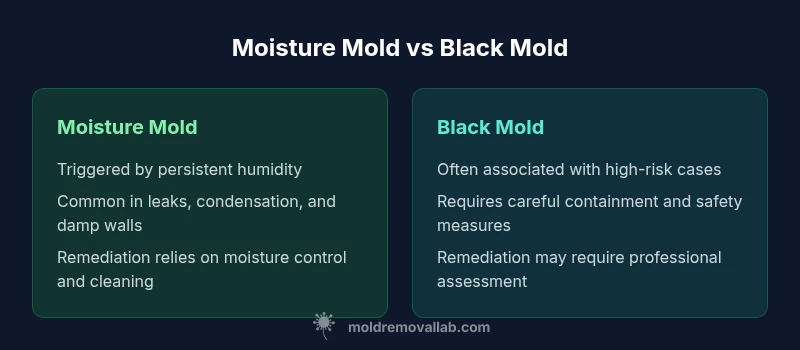
Moisture mold grows where humidity and moisture persist, often on walls, ceilings, or insulation. Black mold is a common label for Stachybotrys chartarum, which can produce mycotoxins and pose health risks. Both require moisture control and safe cleaning, but remediation differs in urgency and approach. This guide helps homeowners distinguish and respond effectively.
Moisture Mold vs Black Mold: Definitions and Differences
According to Mold Removal Lab, moisture mold is not a species but a category of mold growth driven by ongoing moisture. It can appear on drywall, wood, or fabric after a leak, high humidity, or condensation. The term 'black mold' is commonly used in consumer media to describe mold growth that looks black and is sometimes associated with Stachybotrys chartarum, although the color alone is not a reliable indicator of danger. The critical distinction for homeowners is not the color but the moisture source and the potential for toxin production. In most homes, any mold that results from moisture accumulation should be treated with the same seriousness as other mold problems: identify the source, contain the area, clean if safe, and restore dryness. The Mold Removal Lab team emphasizes that the first step is to fix the moisture problem, because without moisture control, remediation efforts often fail or recur. This section will unpack the practical differences between how moisture mold forms and how black mold is perceived in everyday home remediation.
How Moisture Fuels Mold Growth
Mold requires three things to thrive: a food source, suitable temperatures, and, most importantly, moisture. When a home experiences leaks, roof damage, plumbing failures, or chronic humidity, porous materials like drywall and cellulose-based insulation can become a food source for fungal growth. Moisture creates micro-environments where spores settle, germinate, and spread. Unlike a quick surface cleaning, addressing moisture requires a systematic approach: locate the leak, dry out the space, ventilate to restore air exchange, and monitor humidity levels. Mold growth can occur within 24-48 hours of moisture exposure, but the timeline varies with material type and humidity control. The Mold Removal Lab team notes that persistent moisture is the primary driver of regrowth, so remediation must target the moisture source as a prerequisite to cleaning. If you see new damp patches after cleaning, re-evaluate the moisture source and follow up with drying strategies and, if needed, professional assessment.
Health Implications and Safety Considerations
Exposure to mold can trigger allergic reactions, respiratory symptoms, and, in some cases, exacerbation of asthma. While most molds are not immediately dangerous, certain species can release irritants and, in high concentrations, create health concerns for children, elderly individuals, and those with compromised immune systems. Black mold, commonly linked to Stachybotrys chartarum, has been associated with more significant health warnings when present in large areas or persistent moisture environments. The key safety takeaway is to minimize disturbance of mold growth during cleaning unless you are equipped with appropriate PPE (gloves, respirator, eye protection) and you follow containment procedures to avoid spreading spores. The Mold Removal Lab team emphasizes personal safety and suggests wearing NIOSH-approved respirators for any significant mold tasks and to avoid dry brushing that can aerosolize spores. If you experience persistent symptoms or suspect extensive contamination, seek professional evaluation.
Seeing and Testing: Is It Moisture Mold or Black Mold?
Visible signs of moisture mold include fuzzy or slimy patches, often appearing on water-damaged surfaces after a leak or condensation. Black mold typically presents as dark, powdery, or soot-like growth, though color alone isn’t a definitive indicator of danger. Testing is not always required for small, contained areas if you can safely access and remediate the moisture source and clean the surface using approved methods. For larger areas or uncertain cases, professional mold testing and air sampling can help determine species and containment needs. Remember, even when tests indicate a common mold, the remediation approach should still focus on moisture control and thorough cleaning. The Mold Removal Lab team recommends erring on the side of caution when mold is suspected near drinking water, food prep areas, or ventilation intakes.
Quick Fixes vs. When to Call a Pro
For minor, well-contained mold growth caused by isolated moisture events, a well-planned DIY cleanup with proper PPE and containment can be effective. Use soap and water or a mild detergent on non-porous surfaces, followed by thorough drying. For porous materials like drywall, insulation, or wood that has sustained moisture, DIY cleaning is often insufficient, and professional remediation is advisable. When mold covers more than a few square feet, or if you notice recurring growth after remediation, a professional inspection is warranted. The Mold Removal Lab team stresses that safety and moisture control are non-negotiables; professionals can assess indoor air quality, identify hidden moisture sources, and implement containment and remediation protocols that minimize cross-contamination. In high-risk settings—homes with children, elderly residents, or compromised health—consider professional assessment from the outset.
Case Scenarios: Common Home Moisture Molds
Consider a scenario where a upstairs bathroom experiences repeated fogging and dampness after showers; the mold growth is visible on the ceiling and tile grout. The moisture source is a ventilation issue and small roof leak that drips onto the bathroom ceiling. In another case, a basement wall shows dark patches after a flood. Here the moisture source is structural and ongoing. In both cases, moisture control is the first step, followed by cleaning and material replacement as needed. The key distinction is whether the observed mold is driven by a single event or ongoing moisture, which influences remediation length and whether professionals should be involved. The Mold Removal Lab team notes that early detection and moisture-focused interventions reduce long-term costs and health risks.
Prevention: Stopping the Moisture Cycle
Prevention is the most effective strategy against both moisture mold and black mold growth. Maintain indoor humidity below 50% with dehumidifiers in damp spaces, ensure adequate ventilation in bathrooms and kitchens, and repair leaks promptly. Use exhaust fans during moisture-heavy activities like showering and cooking, insulate cold surfaces to prevent condensation, and regularly inspect roofs, windows, and plumbing for signs of water intrusion. Quick interventions after leaks dramatically reduce mold risk. The Mold Removal Lab team highlights that consistent moisture management—paired with routine inspections—forces mold back into a rare event rather than a recurring problem. Small investments in moisture control equipment and a simple maintenance schedule pay off by preserving indoor air quality and structural integrity.
Documentation, Testing, and Record-Keeping
Keeping a remediation diary helps homeowners track moisture events, cleaning steps, and follow-up results. Document leaks with photos and dates, record humidity readings, and note areas that required replacement or repair. If you choose to pursue testing, keep copies of lab reports and moisture readings, and verify that remediation steps align with local building codes and health guidelines. The Mold Removal Lab team recommends documenting moisture sources and remediation outcomes to inform any future maintenance and to facilitate insurance or remediation contractor interactions. For ongoing concerns, consider a professional moisture assessment to identify hidden sources, such as vapor barriers or crawl-space humidity, that are not obvious during routine home inspection.
Authority Sources and Reading List
- Authoritative sources for mold prevention and health guidance:
- https://www.epa.gov/molds
- https://www.cdc.gov/mold/default.htm
- https://www.niehs.nih.gov/health/materials/mold_health_risks/index.cfm
Comparison
| Feature | Moisture Mold | Black Mold |
|---|---|---|
| Definition/Trigger | Growth driven by persistent moisture and humidity in building materials | Label often tied to Stachybotrys chartarum or visible dark growth |
| Health Considerations | General mold exposure risks; symptoms vary by individual | Potential for more serious health concerns with certain high-growth scenarios |
| Remediation Approach | Moisture source control, containment, and cleaning; may be DIY for small areas | Often requires professional assessment and remediation; stringent safety protocols |
| Detection/Appearance | Fuzzy or slimy patches on damp surfaces; color varies | Often appears black or dark green; sampling may be recommended |
| Prevalence & Context | Common in damp basements, bathrooms, roofs, and around leaks | Seen in similar damp environments; color not a definitive indicator |
| Remediation Time | Depends on moisture control success; can be days to weeks | Depends on extent; may require multiple cleanup cycles and containment |
| Cost Context | Variable; DIY cleaning possible for minor cases | Professional remediation costs vary; higher if extensive containment is needed |
Upsides
- Emphasizes moisture control as the foundation of mold remediation
- Encourages proactive home maintenance and early detection
- Clarifies that many cases can be managed safely with proper precautions
- Promotes safer cleaning practices and proper PPE usage
The Bad
- Labeling can obscure risk if not paired with moisture assessment
- Black mold concerns can trigger precautionary but costly remediation
- DIY remediation risks health hazards without proper PPE and containment
- Misidentification can delay appropriate treatment and containment
Moisture control is the primary driver of successful mold remediation; treat suspected black mold with heightened caution.
If you detect mold, begin by eliminating moisture sources. For suspected black mold or large affected areas, prioritize professional assessment and safe remediation. Our guidance centers on moisture-first strategies to minimize health risks and prevent recurrence.
FAQ
What is the difference between moisture mold and black mold?
Moisture mold refers to mold growth driven by ongoing humidity and leaks, regardless of color. Black mold commonly refers to Stachybotrys chartarum but is often used as a general label for dark-growth mold; color is not a reliable indicator of danger. Focus on moisture control and safe remediation strategies.
Moisture mold is mold caused by moisture, while black mold is a color-based label often linked to a specific species. The key is moisture control and safe cleanup.
Is moisture mold dangerous to health?
Any mold can affect health, especially for sensitive individuals. Prolonged exposure may worsen allergies or asthma. Address moisture issues and clean following safety guidelines; seek professional help for extensive growth or persistent symptoms.
mold exposure can affect health, especially for sensitive people. Manage moisture and clean safely; contact a pro if it’s extensive.
Should I test my home for mold?
Testing can help determine the extent and type of mold, but it is not always necessary for small, contained growths. If growth recurs after cleaning or you have health concerns, professional testing can guide the remediation plan.
Testing isn’t always required, but it helps confirm the type and scope when growth persists or health risk is a concern.
Can I clean mold myself?
Small, non-porous areas can often be cleaned safely with soap and water and proper PPE. Porous materials, large areas, or contaminated HVAC systems usually require professional remediation to prevent spread and ensure safety.
You can clean small, non-porous mold yourself, but large or porous areas should be handled by a pro.
When should I call a professional remediator?
Call a professional if the mold covers more than a few square feet, recurs after cleaning, or if it involves HVAC systems, insulation, or signs of extensive moisture intrusion. A pro can assess, contain, and remediate safely.
If it’s widespread, recurs, or involves the HVAC, get a professional to assess and remediate.
How can I prevent mold growth in my home?
Maintain humidity below 50%, fix leaks promptly, improve ventilation in bathrooms and kitchens, and regularly inspect for damp spots. Routine maintenance and moisture monitoring are the best defenses against mold.
Keep humidity low, fix leaks, ventilate, and inspect regularly to prevent mold.
The Essentials
- Control moisture sources before cleaning to prevent regrowth
- Differentiate moisture-driven mold from black mold by focusing on moisture and not color alone
- Seek professional help for large areas or persistent growth
- Document moisture events and remediation steps for future maintenance