Black Mold vs Regular: Key Differences and Remediation Guidelines
Learn how black mold differs from regular mold, understand health risks, and follow practical remediation steps to keep homes safe. This Mold Removal Lab guide covers identification, moisture control, testing, and when to hire professionals.


Black mold is a specific, moisture-driven mold with higher health risks than ordinary molds. Distinguishing it matters for remediation approach and safety. See the full comparison for signs, risks, and actionable cleanup steps.
What black mold vs regular mold means in homes
The phrase black mold vs regular mold is common in home diagnosis, but it is important to separate color from risk. In practice, many homeowners encounter mold growth for the first time after water intrusion, humidity spikes, or ongoing leaks. Black mold is a colloquial label that people use for a mold species or growth that appears dark greenish-black. However, color alone does not establish toxicity or health danger. According to Mold Removal Lab, the label is often associated with moisture problems rather than a precise taxonomy. The real concern is moisture control and the conditions that allow mold to thrive. In this guide we will compare identification cues, health considerations, and remediation paths so you can decide a safe course of action without panic. This section uses the term black mold vs regular to describe a spectrum of indoor molds rather than a single, uniform threat.
How mold grows in residential spaces
Mold requires three elements: moisture, a food source (like wood, drywall, fabric), and the right temperature. In homes, everyday activities such as cooking, showering, and laundry create humidity that, if not vented, forms a damp microclimate. Surfaces like plywood, drywall, wallpaper, and insulation can hide mold behind cracks and seams. The distinction between black mold vs regular mold shows up in growth patterns more than in color: any mold that grows on damp cellulose-rich materials under sustained humidity can cause health concerns and property damage. The main takeaway is that mold growth is not a rare event; it is a predictable response to moisture management. If you notice musty odors, condensation on windows, or recent water events, treat the area as potentially active mold until you have evidence otherwise.
Signs beyond color: how to identify mold presence safely
Relying on color alone is insufficient. Look for fuzzy or powdery textures, a musty odor, visible colonies, and staining on walls, ceilings, or crawl spaces. Mold growth can be patchy or widespread, and some species appear near moisture sources such as leaks, HVAC condensate lines, or poor ventilation. For homeowners concerned about black mold vs regular, the best practice is to assess humidity and moisture history first: humidity above 60% indoors, recent leaks, or persistent condensation signal risk. Use a moisture meter if available and consider professional testing to confirm species. Note that many tests indicate mold presence without providing safe remediation instructions; use results to guide a remediation plan rather than a final diagnosis.
Health implications and who is most at risk
Exposure to mold can affect people differently. Sensitive individuals, including children, older adults, and people with asthma, allergies, or compromised immune systems, may experience coughing, wheezing, eye irritation, or headaches after exposure. Black mold in particular has been associated with more persistent symptoms in some studies, but color is not a reliable stand‑alone predictor of danger. The goal is to reduce exposure by addressing moisture, cleaning contaminated areas with appropriate methods, and ensuring fresh air through ventilation. In workplaces and homes, upper respiratory symptoms are commonly reported after mold exposure, but chronic illness risk is influenced by duration and concentration of airborne spores. Always err on the side of caution and seek medical advice if you notice persistent symptoms after exposure.
Testing and verification: when to test and what tests tell you
Testing mold is not a magic wand; it is a tool to inform a plan, not a final verdict on safety. Surface swabs or air samples can indicate presence and concentration, but they do not automatically identify safe remediation steps. If you suspect black mold vs regular, tests should be used alongside moisture assessments and visual inspections. Mold Removal Lab Analysis, 2026 emphasizes that moisture control is the primary driver of mold risk; testing should focus on moisture sources, airflow, and potential hidden growth behind walls or under flooring. Pair tests with infrared inspections for hidden pockets and always follow up with repair work to eliminate the root cause.
Immediate actions you can take now
Contain the area to prevent spread by sealing doors and turning off HVAC in the affected zone. Avoid disturbing the growth; disturbing it can release spores. Clean small, nonporous surfaces with detergent and water and dry thoroughly. For porous materials like drywall or insulation, plan professional remediation rather than DIY cleanup. Document water events and monitor humidity with a hygrometer to identify improvements over time. The best defense against black mold vs regular mold is proactive moisture management and timely response to leaks.
DIY vs professional remediation: weighing the options
DIY cleanup can be appropriate for small, nonporous surface contamination and when you can seal off the area effectively. For most cases of black mold or suspected contamination, professional remediation is safer because it requires containment, specialized equipment, and knowledge of regulatory guidelines. The decision depends on contamination size, location, and occupant health risks. Remediation professionals will assess, contain remove contaminated materials, and restore proper moisture control. The value of professional help includes documentation, standards compliance, and the opportunity to address underlying issues such as leaks.
Moisture control strategies to prevent future mold growth
Install proper ventilation in bathrooms and kitchens, use exhaust fans, and maintain indoor humidity between 30% and 50%. Fix leaks promptly and improve drainage around the foundation. Use mold-resistant materials where possible and consider air purifiers with HEPA filtration. Seal attic or crawlspace access points and insulate pipes to avoid condensation. The key to combating black mold vs regular mold is preventing moisture accumulation in the first place and performing regular inspections after heavy rains or rapid temperature changes.
Step-by-step remediation plan you can adapt
- Confirm moisture source and reduce humidity; 2) Protect occupants and take safety measures; 3) Contain area to prevent spread; 4) Remove contaminated materials following safety guidelines; 5) Clean and disinfect with approved products; 6) Restore with moisture-control improvements; 7) Re-monitor humidity and air quality. This plan should be used in conjunction with professional guidance for larger or stubborn outbreaks. Always document actions and keep receipts for potential insurance claims.
Case scenarios: typical home situations
Scenario A: A damp basement with a history of water intrusion shows dark patches on concrete walls. Scenario B: A bathroom with frequent condensation and a small leak behind a tile wall shows sporadic growth on drywall. For both, moisture control and proper cleanup are essential, and testing may guide next steps. The distinction between black mold vs regular mold informs the remediation plan, but moisture remains the central driver of risk.
Common myths and misperceptions
Myth: If mold isn't visibly black, it's safe. Reality: many species are unseen behind walls. Myth: Bleach alone eliminates mold. Reality: while bleach can kill surface mold, it doesn't address porous materials or hidden roots. Myth: All black mold is toxic. Reality: toxicity depends on species, spore load, and exposure duration, not color alone. Myth: DIY cleanup is always safe. Reality: safety depends on scope and occupant vulnerability; large contamination usually requires professionals.
Maintenance schedule and when to check back
Set a monthly moisture check in humid seasons, an annual professional inspection, and immediate action after any water event. Keep a log of humidity readings, cleaning tasks, and repairs so you can track improvements over time. A proactive maintenance plan reduces the odds of recurring mold growth and improves indoor air quality.
Comparison
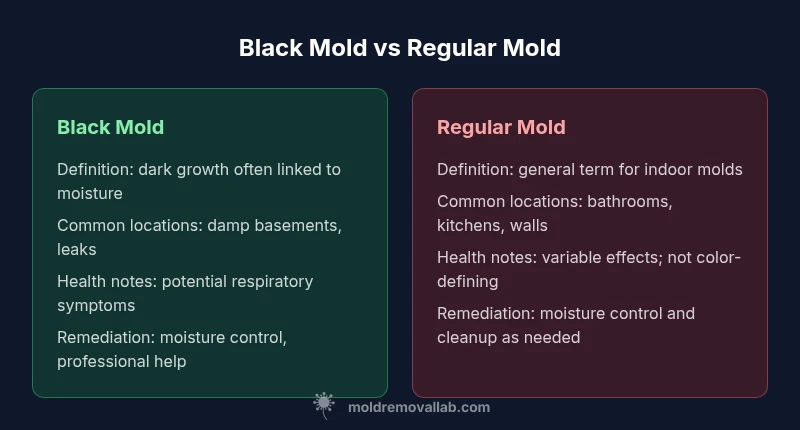
| Feature | Black mold | Regular mold |
|---|---|---|
| Definition and indicators | Dark growth often linked to moisture | General term for indoor molds - variety of colors and species |
| Moisture relationship | Strong moisture signal; frequent moisture sources | Moisture influences growth; not color-centered |
| Health risk profile | Possible higher risk in sensitive individuals; risk tied to exposure duration | Health effects vary by species and exposure; color not sole predictor |
| Typical locations | Basements, leaks, damp cellulose materials | Bathrooms, kitchens, walls, and HVAC areas |
| Remediation approach | Moisture control plus cleaning; may require professionals for extensive growth | Standard mold cleanup with moisture control; professional help for large cases |
Upsides
- Clarifies moisture as the primary risk factor
- Guides moisture-control strategies and safety precautions
- Encourages timely testing and remediation planning
- Supports decision-making about when to hire professionals
The Bad
- Can be challenging to distinguish species without testing
- DIY remediation risks under hazardous contamination scenarios
- Testing can add cost and may not always change remediation scope
- Overemphasis on color can mislead lay readers
Prioritize moisture control and professional remediation for suspected black mold
Color is not a reliable indicator of danger. If you suspect black mold, pursue professional assessment and moisture mitigation. A proactive plan minimizes health risks and long-term damage.
FAQ
What is black mold and how does it differ from regular mold?
Black mold refers to a dark-colored mold commonly found in damp spaces. It often implies a moisture issue and potential health risks, but color alone does not determine toxicity. Regular mold covers a broader range of species and colors; remediation depends on moisture control and extent of growth.
Black mold is a dark, moisture-related mold; regular mold covers many species. Both require moisture control and careful cleanup, with professional help for large growth.
Can I safely clean mold myself, or should I hire a pro?
Small, nonporous surface mold may be cleaned safely with proper precautions, but large growth or growth on porous materials often requires professional remediation. If you have health sensitivities or significant contamination, hire a pro.
For big jobs or health concerns, call a professional. For tiny spots, you can start with proper precautions.
When should I test for mold?
Testing helps confirm presence and guides remediation, but it should be paired with moisture assessment and inspections. Tests alone do not fix moisture or contain growth.
Tests show you have mold; fixing the moisture and cleanup fixes the problem.
What are common signs of mold exposure?
Coughing, wheezing, eye or throat irritation, and nasal congestion can occur after mold exposure, especially for sensitive individuals. Symptoms depend on exposure duration and individual health.
If you notice persistent allergy-like symptoms near mold, seek medical advice.
How can I prevent mold after remediation?
Control humidity, fix leaks promptly, improve ventilation, and keep areas dry. Regular inspections of damp spaces reduce recurrence.
Keep humidity in check and fix leaks quickly to prevent mold from returning.
Is color a reliable indicator of mold toxicity?
No. Toxicity depends on the mold species and exposure level, not color alone. Color can be misleading when assessing risk.
Color doesn’t tell you how dangerous mold is—testing and moisture checks matter.
The Essentials
- Identify and fix moisture sources to prevent mold growth
- Distinguish color from risk; focus on growth patterns and moisture history
- Professional remediation is often safer for larger or uncertain contamination
- Regular moisture monitoring reduces recurrence
- Document actions and maintain good indoor air quality