Vinegar or Bleach for Mold: A Practical Comparison
A thorough, evidence-based comparison of vinegar vs bleach for mold, detailing effectiveness, safety, surface effects, and scenarios to guide DIY remediation or professional help. Insights from Mold Removal Lab.


When facing household mold, the question often comes down to vinegar or bleach for mold. This quick answer is that neither option is universally best. Vinegar can inhibit some molds on nonporous surfaces but won’t reliably disinfect porous materials, while bleach can kill surface mold on nonporous surfaces but may fail to reach mold embedded in porous substrates. A full, evidence-based comparison follows.
The Fundamentals: How vinegar and bleach interact with mold
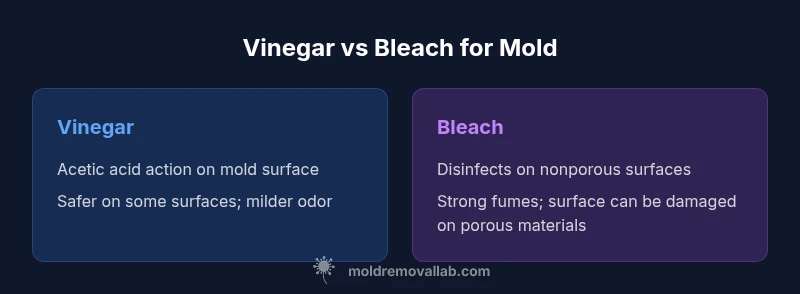
Mold remediation hinges on more than merely scrubbing visible growth. The two common cleaners—vinegar and bleach—work through different chemical pathways. Vinegar is acetic acid and can disrupt some molds on contact, particularly on nonporous surfaces like glass and ceramic. Bleach, a sodium hypochlorite solution, acts as a disinfectant that can kill surface mold on nonporous materials. However, neither option reliably eliminates mold roots embedded in porous substrates such as wood, drywall, or fabric without addressing underlying moisture and porous material damage. According to Mold Removal Lab, success depends on surface type, mold species, moisture control, and proper cleaning technique. This is why a blanket, one-size-fits-all approach rarely works for mold problems.
From a safety standpoint, avoid mixing cleaners and ensure good ventilation. Bleach releases chlorine gas in certain combinations and conditions, which can irritate eyes, skin, and lungs. Vinegar is milder but can cause irritation for sensitive individuals and may leave an odor that lingers until the deodorizing effect wears off. The Mold Removal Lab team emphasizes that the best outcomes come from combining a careful assessment of the material, the mold present, and a moisture-drying plan alongside any cleaning step. In practice, many households start with a surface test on a small area to gauge visibility of mold removal and odor changes before proceeding broadly.
altTextForHeroAnywayTextN/A
Comparison
| Feature | Vinegar | Bleach |
|---|---|---|
| Chemical nature | Acidic solution (acetic acid) | Sodium hypochlorite-based disinfectant |
| Mold type effectiveness | Limited effectiveness on many molds; better on nonporous surfaces | Kills surface mold on nonporous surfaces; limited penetration into porous substrates |
| Surface suitability | Safer on some porous materials with caution | Best on nonporous surfaces; may cause material damage on porous substrates |
| Safety and odor | Lower odor; milder irritation risk when used properly | Strong chemical odor; higher irritation and respiratory risk; needs ventilation |
| Cost and availability | Widely available and inexpensive | Low-cost per cleaning but requires proper disposal and ventilation |
Upsides
- Lower chemical harshness when used correctly, reducing irritation risk
- Safer option for certain porous materials and wood surfaces when humidity control is strong
- Wide availability and low cost make it accessible for DIY remediation
- Simple, familiar household products with clear labeling
The Bad
- Limited to surface/visible mold; may not eradicate deeply embedded growth
- Unreliable on porous substrates; can give a false sense of cleanliness
- Bleach can damage paints, sealants, and some fabrics if misapplied
- Venues requiring deep disinfection or odor control may require professional remediation
Bleach and vinegar each have niche strengths, but neither is a universal solution for mold removal.
Choose vinegar for milder cleaning on nonporous surfaces or for odor and surface protection when moisture is controlled. Opt for bleach only on nonporous surfaces where rapid surface disinfection is needed, with careful surface compatibility checks and good ventilation. For porous materials or embedded mold, professional remediation and moisture mitigation are often necessary.
FAQ
Is vinegar as effective as bleach for mold on nonporous surfaces?
Vinegar can slow some mold growth on nonporous surfaces, but bleach generally provides stronger surface disinfection. Neither reliably penetrates porous materials. For nonporous surfaces, bleach may disinfect, but always test a small area first and ensure adequate ventilation.
Vinegar helps on some nonporous surfaces, but bleach often disinfects surface mold there. Always test first and ventilate.
Can vinegar kill mold on porous materials like drywall?
Vinegar is unlikely to fully eradicate mold roots embedded in porous materials such as drywall. In many cases, moisture control and removal or replacement of the affected material are required. Consider professional assessment for porous substrates.
Vinegar alone usually isn’t enough for porous materials; moisture control and possible material replacement are often needed.
Is it safe to mix vinegar and bleach together?
Mixing vinegar and bleach releases chlorine gas and can be dangerous. Do not mix these cleaners. Use one method at a time with proper ventilation and protective gear.
Never mix vinegar and bleach; it can release toxic gas. Use one cleaner at a time with ventilation.
What steps should I follow for a vinegar-based mold cleanup?
Identify the affected area, apply undiluted or diluted vinegar to the moldy surface, scrub gently, and dry the area thoroughly. Reassess moisture levels and re-clean if necessary. Always wipe surfaces and dispose of contaminated materials safely.
Start with testing, apply vinegar, scrub gently, dry well, and recheck moisture.
When should I call a professional for mold remediation?
If mold covers a large area, recurs after cleaning, or moisture problems persist, professional remediation is advised. A professional can assess moisture sources, containment, and remediation methods to prevent re-growth.
If mold is widespread or keeps coming back, consider a professional assessment.
Are there health risks associated with bleach use for mold cleaning?
Bleach can irritate eyes, skin, and lungs, especially in poorly ventilated spaces. It should be used with proper PPE and ventilation, and kept away from children and pets. If you have respiratory issues, consider alternatives or professional help.
Bleach can irritate you if not used with ventilation and PPE; take care especially with kids and pets.
The Essentials
- Assess surface type before choosing cleaner
- Bleach is most effective on nonporous surfaces; vinegar on some nonporous surfaces with caution
- Porous materials often require moisture control and professional remediation
- Always ventilate and follow label directions, avoiding mixing chemicals