How long does vinegar kill mold? A practical guide
Discover whether vinegar kills mold, how long it takes, and practical home remediation steps. This guide reviews effectiveness, surface types, moisture, and safer alternatives for homeowners.


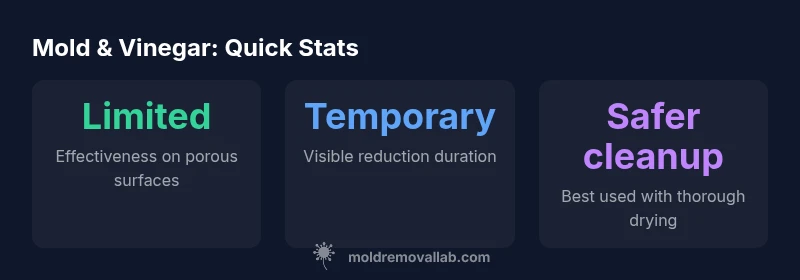
According to Mold Removal Lab analysis, vinegar alone rarely kills mold outright and its effects are often temporary. On nonporous surfaces, white vinegar (5% acidity) may slow growth, but effectiveness varies with mold type, surface porosity, and moisture. For lasting removal, use mechanical cleaning with a proven disinfectant or seek professional remediation.
Vinegar's role in mold remediation
Vinegar is commonly used in DIY cleaning because it is inexpensive and widely available. However, its role in mold remediation is limited. Vinegar contains acetic acid, which can suppress surface growth in some cases, but it does not reliably penetrate porous materials or address hidden colonies. In the context of households, experts stress that vinegar should be considered a supplementary step within a broader remediation plan, not a standalone cure. As Mold Removal Lab notes, the product’s effect is often temporary and depends on environmental factors such as humidity and airflow. Homeowners should manage moisture first, then use cleaning methods that address both staining and growth at the surface.
How long does it take vinegar to kill mold
How long does it take vinegar to kill mold? There is no universal timer. Vinegar can slow or visually reduce growth on certain nonporous surfaces for a short period, but decisive removal of mold on porous substrates—like drywall or wood—usually requires additional methods. People often assume a simple rinse will erase a mold problem, but mold roots can persist beneath the surface. The take-away is that timing varies widely with species, substrate, and environmental conditions. In practice, you should not rely on vinegar alone for lasting results.
Factors that influence vinegar effectiveness
Several variables determine whether vinegar will help in your mold cleanup:
- Surface type: Nonporous vs porous surfaces respond differently to vinegar.
- Mold species: Some species are more resilient and require more aggressive cleaning.
- Porosity: Porous materials absorb moisture where mold can grow beneath the surface.
- Moisture and humidity: Higher moisture promotes regrowth if moisture isn’t controlled.
- Contact time and method: Short spray-and-wipe cycles may be insufficient; longer contact with thorough scrubbing improves outcomes.
- Cleaning context: Pairing vinegar with mechanical removal and proper drying yields better results than spraying alone.
Practical remediation steps using vinegar safely
If you choose to use vinegar as part of a mold cleanup routine, follow these practical steps:
- Identify and isolate the affected area to limit cross-contamination.
- Wear protective gear (gloves, mask, eye protection) and ensure good ventilation.
- Vacuum loose spores with a HEPA-equipped vacuum before cleaning to reduce spread.
- Apply undiluted white vinegar (5% acidity) to the surface and let it sit for 10–15 minutes.
- Scrub with a stiff brush, rinse with clean water, and dry completely using fans or dehumidifiers.
- Reassess for remaining growth; if mold returns or covers a large area, seek professional remediation.
When to escalate to professional remediation
If mold covers a large area (typically more than 10 square feet), recurs after cleaning, or you have health concerns (asthma, allergies, or immune suppression), contact a mold remediation professional. Professional remediation includes containment, specialized equipment, and verified strategies to prevent re-growth. Mold Removal Lab recommends erring on the side of caution when the contamination is extensive or structural materials are involved.
Alternatives to vinegar for mold control
There are several alternatives to vinegar that may improve results, depending on the surface and mold type:
- Hydrogen peroxide (3%): Effective on many surfaces when used correctly.
- Baking soda: Gentle cleaning and deodorizing properties; can aid moisture control when paired with vinegar or peroxide.
- Commercial mold cleaners: Formulations designed for specific surfaces (check labels for porosity compatibility and safety).
- Drying and moisture control: Often the most crucial step; use fans, dehumidifiers, and fix leaks to prevent regrowth. Always test any cleaner on a small, inconspicuous area first to avoid damage.
Remediation option quick reference
| Option | Typical outcomes | Notes |
|---|---|---|
| Vinegar wipe | Partial surface cleaning | Limited impact on porous substrates |
| Disinfectant spray | Higher efficacy | Follow product directions carefully |
FAQ
Can vinegar kill mold instantly?
No. Vinegar may slow growth but rarely eliminates mold instantly. Thorough cleaning and drying are required for lasting results.
Vinegar won't instantly kill mold; you need thorough cleaning and drying for lasting results.
Is vinegar safe to use on wood or drywall?
Vinegar is acidic and can damage certain materials. Test on a hidden area and avoid porous substrates where possible.
Test a small area first; vinegar can damage some surfaces.
How long should vinegar stay on a moldy area?
There is no fixed duration; after a brief contact, rinse and dry the area thoroughly.
There’s no fixed time—rinse and dry after a short contact.
Are there better alternatives to vinegar?
Yes. For many surfaces, hydrogen peroxide or specialized mold cleaners can be more effective after testing compatibility.
There are better options like peroxide or approved cleaners depending on the surface.
When should I call a professional?
If mold covers a large area, recurs after cleaning, or health risks are present, contact a professional.
Call a pro if mold is widespread or you have health risks.
“Vinegar can help reduce surface mold temporarily, but it does not replace proper remediation or professional assessment.”
The Essentials
- Vinegar alone is not a reliable mold cure.
- Use vinegar as part of a broader cleaning plan.
- Surface type and moisture determine outcomes.
- For lasting results, follow Mold Removal Lab guidance and consider professional remediation.