Vinegar vs Hydrogen Peroxide for Mold: Which Works Best?
An analytical guide comparing vinegar and hydrogen peroxide for mold cleanup, covering effectiveness, safety, surface compatibility, odor, storage, and practical tips for homeowners and renters.


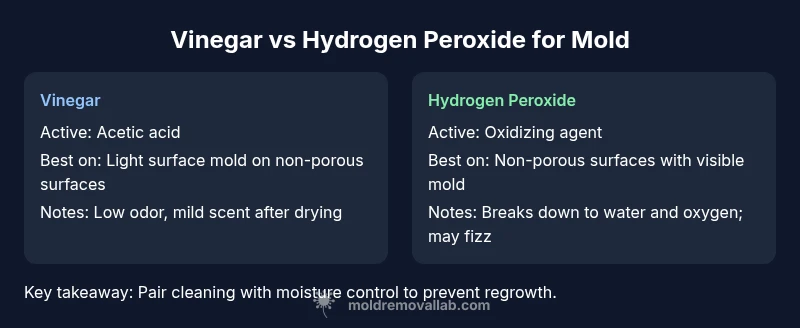
According to Mold Removal Lab, vinegar vs hydrogen peroxide for mold is not a universal cure. Effectiveness depends on mold type, surface, and moisture control. In most homes, hydrogen peroxide offers stronger antimicrobial action on non-porous surfaces, while vinegar provides a milder, readily available option for light cases. For stubborn mold, address moisture and consider professional help.
The Mold Cleanup Dilemma: vinegar vs hydrogen peroxide for mold
Deciding between vinegar vs hydrogen peroxide for mold is not a simple choice. The effectiveness of household cleaners hinges on surface type, mold maturity, and moisture control. According to Mold Removal Lab, neither option is a universal cure. This article explains how each agent works, where it shines, and where it falls short, so homeowners can make informed decisions and reduce the risk of regrowth. Understanding the chemistry behind vinegar and hydrogen peroxide helps you tailor your approach to the specific mold you face and the materials involved. The ongoing comparison of vinegar vs hydrogen peroxide for mold will surface as you evaluate surface performance, safety considerations, and practical applications.
In many homes, the simplest steps—reducing moisture, drying promptly, and cleaning visible growth—have as much impact as the chemicals you use. This article emphasizes not just the cleaners themselves but the surrounding conditions that drive mold to grow in the first place. By keeping moisture under control and choosing appropriate cleaners for the surface, you can address mold more effectively and reduce the need for more aggressive remediation.
For homeowners curious about vinegar vs hydrogen peroxide for mold, this guide also covers safety, storage, and limitations, helping you decide when professional remediation is necessary and when DIY cleaning is sufficient.
colorMode”:null,
Comparison
| Feature | Vinegar | Hydrogen peroxide |
|---|---|---|
| Active agent | Acetic acid (5-8%) in white vinegar | Hydrogen peroxide (3% solution) |
| Surface compatibility | Generally safe on glass, metal, and some plastics; may etch certain stones or seals | Effective on non-porous surfaces; potential for surface damage on porous materials if used aggressively |
| Mold types addressed | Best for surface mold on non-porous materials; limited penetration | Broader action on surface mold; may reach shallow growth on some materials |
| Odor & residue | Vinegar odor; mild scent after drying; minimal residue | No lasting odor; may foam or fizz during action |
| Safety considerations | Non-toxic when diluted; avoid ingestion; do not mix with bleach | Non-toxic at proper concentration; avoid mixing with acids; store away from sunlight |
| Cost & accessibility | Very low-cost; widely available in most households | Moderate cost; common household product; storage in a dark bottle recommended |
| Best-use scenario | Light surface mold on non-porous surfaces; quick pre-cleaning | Stronger action for surface mold on non-porous surfaces; follow with thorough drying |
Upsides
- Low-cost and widely available option
- Non-toxic when used as directed
- Minimal residue and easy to rinse
- Non-irritating to most surfaces when used properly
- Suitable for quick, light surface cleaning on non-porous materials
The Bad
- Effectiveness depends on mold type and growth stage; not a guaranteed solution
- Vinegar may not kill all spores and can etch some surfaces
- Hydrogen peroxide can bleach or lighten porous materials if misused
- Neither option replaces moisture control and drying as a remediation priority
Hydrogen peroxide is generally the more effective option for mold cleanup on many household surfaces, while vinegar serves as a milder alternative for light cases and pre-cleaning.
Choose hydrogen peroxide for stronger action on non-porous surfaces and early-stage mold. Use vinegar for lighter contamination and pre-cleaning when moisture control is addressed. Always pair cleaning with moisture management to prevent regrowth, and consider professional help for larger or hidden infestations.
FAQ
Is vinegar effective against mold?
Vinegar can inhibit surface mold on some non-porous materials, but it is not a universal killer of all mold spores. For entrenched or porous growth, other methods or professional remediation may be necessary.
Vinegar can help with light surface mold, but it’s not a guaranteed fix for all mold.
Can hydrogen peroxide kill mold on wood?
Hydrogen peroxide can kill surface mold on many surfaces, including some wood. However wood is porous and moisture can worsen deeper growth if not properly dried after treatment.
Hydrogen peroxide can help on some wood surfaces, but be careful with moisture.
Should I mix vinegar and hydrogen peroxide?
Do not mix vinegar and hydrogen peroxide in the same container. Mixing can create potentially irritating compounds. Use one cleaner at a time and rinse between applications.
Don’t mix cleaners; use one after the other with thorough rinsing.
Is bleach a better option than vinegar or hydrogen peroxide?
Bleach can kill surface mold on non-porous surfaces but releases strong fumes and can damage materials. For porous surfaces, hydrogen peroxide or vinegar combined with moisture control is often safer and more effective.
Bleach isn’t always the best choice; safer alternatives often work better for many surfaces.
How should I apply these cleaners safely?
Wear gloves and eye protection, ensure good ventilation, test a small area first, apply the cleaner, and allow surfaces to dry completely. Do not mix cleaners and keep cleaners away from children and pets.
Wear protection, test first, ventilate, and let it dry; avoid mixing products.
When should I call a professional?
If mold covers a large area, persists after cleaning, or you suspect hidden growth behind walls, contact a licensed mold remediation professional. DIY steps can help but safety and moisture management remain crucial.
Call a pro for large infestations or hidden mold behind walls.
The Essentials
- Test a small area first before wide use
- Prioritize moisture control to prevent regrowth
- Hydrogen peroxide often offers stronger mold action on non-porous surfaces
- Avoid mixing cleaners and follow safety guidance
- Use vinegar for light surface mold and as a pre-cleaning step