Bleach for Mold Removal: Pros, Cons, and Safe Practices
A practical, science-based guide on using bleach for mold removal, including when it works, safety tips, surface limitations, and safer alternatives for homeowners and renters.


Bleach for mold removal can kill mold on nonporous surfaces, but it is not a universal remedy. It’s most effective for exposed, surface mold on hard, nonporous materials and should be used with caution. For porous materials or deeply embedded growth, drying, cleaning, and professional remediation are often necessary. Always prioritize safety and follow label directions.
What bleach for mold removal actually does
Bleach is a chemical disinfectant that can kill surface mold on nonporous surfaces such as tile, glass, metal, and sealed countertops. When used correctly, it can show immediate visible results by whitening mold stains and reducing surface spores. However, recent guidance from health authorities emphasizes that bleach does not effectively penetrate porous materials like wood, drywall, and upholstered fabrics. In many cases, once moisture remains or the growth is embedded within the material, the mold can persist beneath the surface even after cleaning. For homeowners and renters, this means bleach is not a universal cure for mold problems. The Mold Removal Lab team notes that treating the visible mold without addressing moisture sources may lead to recurring growth.
Surface limitations of bleach
Nonporous surfaces respond to a bleach solution by removing the visible mold on the surface, but porous substrates can trap mold roots and hidden colonies. This is why bleach is often provided as a surface treatment rather than a full remediation solution. If you see mold on materials like plywood, ceiling paneling, or porous fabrics, there is a higher risk that cleaning alone will not fully remove the contamination. In these cases, consider alternative cleaners or professional assessment to prevent regrowth.
Safety and environmental considerations
Bleach releases strong fumes that can irritate the eyes, throat, and lungs, especially in small or poorly ventilated spaces. Always ventilate the area with open windows and a fan directed outward. Never mix bleach with ammonia or acidic cleaners, as this creates dangerous gases. Use a properly fitted mask, gloves, and eye protection. If children or pets are present, evacuate the area during treatment and thoroughly ventilate after cleaning. The Mold Removal Lab team emphasizes that safety should come first to minimize exposure and avoid chemical reactions that could worsen indoor air quality.
Practical, safer alternatives to bleach
For many mold scenarios, alternatives such as detergent and water, hydrogen peroxide, or vinegar can be effective on certain surfaces and are less harsh than chlorine bleach. Detergent solutions can physically scrub away mold on hard surfaces, while hydrogen peroxide can be useful for light mold on porous-but-cleanable surfaces when used carefully. Vinegar is mildly acidic and can reduce some surface mold, though it may not be as effective on heavy growth. When mold is extensive or recurring, bleach may not address the root moisture issue and may delay proper remediation. Mold Removal Lab recommends evaluating the extent of growth and moisture sources before choosing an approach.
Aftercare and prevention strategies
After cleaning, ensure the area dries completely to prevent regrowth. Use a dehumidifier, improve ventilation, repair leaks, and consider mold-resistant paints or sealants on appropriate surfaces. Regular inspections of damp areas like bathrooms, basements, and kitchens can catch mold early. If the growth problem is linked to structural moisture or hidden leaks, addressing these sources is essential for long-term prevention and is often more effective than repeated cleaning alone.
Tools & Materials
- household bleach (sodium hypochlorite)(Choose a regular, unscented household bleach; never use concentrated industrial formulations.)
- detergent or dish soap(For pre-cleaning and final rinsing.)
- spray bottle(Label as bleach solution container; use a dedicated bottle to avoid mixing with other cleaners.)
- non-ammonia cleaner (optional)(Useful for initial removal or on surfaces where bleach may discolor.)
- scrub brush or sponge(Stiff-bristled brush for nonporous surfaces; softer for delicate ones.)
- gloves (rubber or nitrile)(Protect skin from chemical exposure.)
- eye protection (safety goggles)(Prevent splashes from reaching eyes.)
- respirator or well-fitted mask(Prefer an organic vapor cartridge or NIOSH-rated respirator for mold exposure.)
- plastic sheeting or tape(Containment for larger areas to limit spread.)
- trash bags (heavy-duty)(Seal and dispose of contaminated materials safely.)
- dehumidifier or fan(Help dry the area quickly to prevent regrowth.)
- test patch material (optional)(Test a small area for colorfastness on delicate surfaces.)
Steps
Estimated time: 60-120 minutes
- 1
Prepare the area and outfit
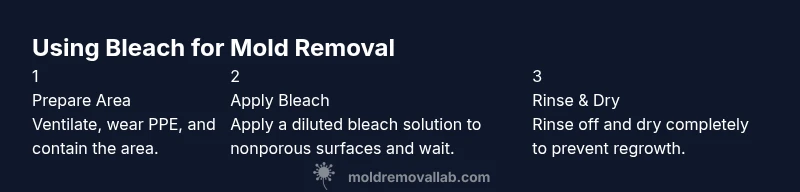
Ventilate the space well; wear gloves, goggles, and a respirator. Remove nearby textiles if possible to limit contamination. Set up containment if the area is large to prevent mold spores from migrating.
Tip: Open windows toward the outside and use a fan to push air out of the room. - 2
Identify surface type
Assess whether the mold is on a nonporous or porous surface. Bleach is more appropriate for nonporous surfaces; avoid porous materials if possible.
Tip: If in doubt, perform a small patch test and observe for color change. - 3
Prepare the bleach solution
In a well-ventilated area, prepare a mild bleach solution by mixing household bleach with water according to label directions. Do not mix with ammonia or acids.
Tip: Label the spray bottle and never mix cleaners in the same container. - 4
Apply and scrub
Spray the solution onto the moldy area and let it sit for several minutes. Scrub with a brush until visible mold is removed. Rinse with clean water after scrubbing.
Tip: Avoid soaking porous materials; excessive moisture drives deeper mold growth. - 5
Rinse and dry thoroughly
Wipe away residue with clean water and dry the area completely using towels and a dehumidifier or fan. Ensure no damp pockets remain behind walls or baseboards.
Tip: Drying is critical; moisture control prevents regrowth. - 6
Inspect and dispose
Check for any remaining mold; if you still see growth, repeat the cleaning or consider professional assessment. Bag and discard disposable cleaning materials in sealed trash bags.
Tip: Do not reuse contaminated rags; seal them before disposal. - 7
Address moisture sources
Fix leaks, improve ventilation, and monitor humidity levels to prevent future growth. Consider mold-resistant products for long-term protection.
Tip: Regular maintenance reduces the chance of recurrence.
FAQ
Can bleach truly kill all mold in a home?
Bleach can kill mold on nonporous surfaces but may not reach mold roots inside porous materials. For extensive growth, remediation and moisture control are essential. Always address the moisture source to prevent regrowth.
Bleach can kill surface mold on nonporous surfaces, but it may not reach mold roots inside porous materials; fixing moisture is essential for lasting results.
Is bleach safe to use on wood or drywall?
Bleach can discolor or damage some wood finishes and may not effectively remove mold embedded in drywall or other porous substrates. In such cases, consult a professional and consider alternative cleaners designed for porous materials.
Bleach can damage wood finishes and is not ideal for porous surfaces like drywall; seek alternatives or professional help for those areas.
What should I use instead of bleach for mold cleanup?
Detergent and water, hydrogen peroxide, and vinegar are common alternatives. Each has its own limitations based on surface type and mold severity. Always ensure adequate ventilation and moisture control.
Detergent and water or hydrogen peroxide can work on some surfaces, but ventilation and drying are crucial.
When should I call a mold remediation professional?
If mold covers a large area, recurs after cleaning, or is linked to leaks or widespread moisture problems, professional remediation is recommended. They can assess structural issues and safely remove contamination.
Call a pro if the mold is widespread, keeps coming back, or comes with moisture problems.
Do I need PPE when using bleach for mold removal?
Yes. Wear gloves, eye protection, and a respirator or mask, and ensure good ventilation. PPE reduces exposure to fumes and protects your eyes and skin during cleaning.
Yes, wear gloves, goggles, and a respirator, and keep the area ventilated.
Can I reuse materials after cleaning mold with bleach?
Discard disposable items that contacted mold, like paper towels or rags, in sealed bags. Reuse of porous materials is not recommended; clean nonporous tools thoroughly.
Dispose of contaminated disposables in sealed bags and be careful with porous materials.
Watch Video
The Essentials
- Bleach can kill surface mold on nonporous surfaces.
- Porous materials often require alternative approaches or professional help.
- Moisture control is essential to prevent mold recurrence.