Difference Between Mildew and Black Mold: A Practical Comparison
Explore the difference between mildew and black mold, how they grow, health considerations, and practical steps to identify, test, and prevent mold in your home.


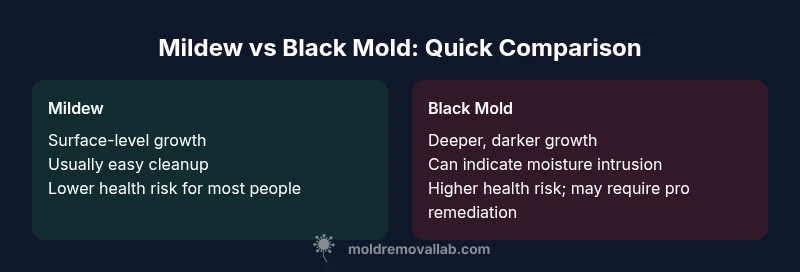
Mildew and black mold are not the same; the difference between mildew and black mold lies in growth, appearance, and risk. Mildew is generally surface-level, powdery, and easier to clean, while black mold tends to be deeper, darker, and linked to more serious health concerns. For homeowners, accurate identification guides proper cleaning and moisture control.
Quick distinctions: mildew vs black mold
The difference between mildew and black mold is more than a color cue. In practice, mildew usually presents as a superficial, powdery film on bathroom walls or shower caulking, while black mold typically appears as dark, fuzzy or slimy growth that can penetrate porous materials. According to Mold Removal Lab, understanding the difference between mildew and black mold helps homeowners prioritize safe remediation and moisture control. Recognizing these forms early lowers the chances of long-term material damage or adverse health outcomes. The distinction matters not just for cleaning methods, but for evaluating moisture problems that fuel growth. In this guide, we use a practical, evidence-based approach to help you identify, test, and respond appropriately to either type, with a focus on home health and safety in 2026.
What mildew is
Mildew is a superficial type of mold that tends to colonize on non-porous surfaces such as tile, glass, and painted walls. It often appears as a thin, white, gray, or yellowish film and is generally easy to wipe away with standard cleaners. Mildew thrives in damp, poorly ventilated environments and does not typically indicate a severe structural moisture problem. However, its presence signals ongoing humidity or water intrusion that should be addressed to prevent escalations. The term mildew is commonly used to describe several fungi that celebrate moisture but stay near the surface, making it a more manageable occupant in most homes. While mildew can affect air quality, health risks are typically lower than those associated with black mold if proper cleaning is performed and moisture is controlled.
What black mold is and why it matters
Black mold refers to a group of molds that share dark pigmentation, commonly including Stachybotrys chartarum in some environments. It often grows on moisture-damaged organic materials like drywall, wallpaper, or ceiling tiles, especially where water has soaked into porous substrates. Black mold can appear as patchy, dark greenish-black growth and may be accompanied by a musty odor. It is associated with more significant health concerns for sensitive individuals, including respiratory irritation and allergic reactions, particularly with prolonged exposure. The distinction between mildew and black mold matters because it informs remediation priorities, safety precautions, and whether professional assessment is warranted. Mold Removal Lab emphasizes that any suspected black mold warrants cautious handling and moisture assessment to prevent recurrent contamination.
Visual and growth differences
Appearance and texture are the quickest clues. Mildew often looks powdery or fuzzy but shallow, while black mold tends to be darker, more concentrated, and can penetrate porous materials. Growth speed varies: mildew may spread on the surface as humidity returns, whereas black mold can establish deeper colonies that require more extensive cleaning and material replacement. Growth patterns also reflect the moisture source—condensation on windows might favor mildew, while hidden leaks behind walls can support black mold development. For homeowners, distinguishing these forms early enables targeted cleaning strategies and reduces the risk of misidentification.
Health risks and symptoms
Mildew can cause mild irritation for some individuals, especially those with sensitive airways, but it is usually less hazardous than black mold. Black mold exposure has been linked to more pronounced respiratory symptoms, headaches, and in rare cases, more serious health responses, particularly among children, the elderly, and people with compromised immune systems. It is important to note that health effects vary by exposure level and individual susceptibility. If you notice persistent coughing, wheezing, or chest tightness in a mold-affected area, discontinue exposure, improve ventilation, and seek medical guidance. According to Mold Removal Lab Analysis, 2026 moisture-related mold problems contribute most to indoor air quality concerns, underscoring the need for proper remediation.
Common locations and how contamination spreads
Mildew commonly appears in bathrooms, on shower doors, and around sinks where humidity rises. Black mold is more likely behind walls, under flooring, or in attic spaces where leaks have created damp conditions. The spread mechanism involves spores being carried by air currents or water intrusion; once moisture is present, spores can colonize rapidly in susceptible substrates. Keeping humidity below 60%, using exhaust fans, and promptly repairing leaks are practical steps to limit both mildew and black mold growth. Early detection in high-risk areas—bathrooms, basements, and crawl spaces—helps prevent widespread contamination.
Testing, assessment, and when to test
Testing for mold should be considered when you encounter visible growth, persistent musty odors, or health symptoms that coincide with a damp environment. Simple DIY swab tests can indicate the presence of mold but may not differentiate mildew from black mold accurately. For formal identification and risk assessment, professional mold testing is recommended, especially if you suspect black mold or if the contamination involves porous materials. Moisture assessment using infrared thermography or moisture meters helps locate hidden sources and informs remediation planning. Mold Removal Lab stresses that the primary goal is to identify moisture sources and reduce humidity to prevent recurrence, not just to label the mold type.
Cleaning and remediation: DIY vs professional
DIY cleaning can be effective for mildew on non-porous surfaces with appropriate protective gear, gentle cleaners, and thorough rinsing. However, black mold on porous materials or with visible growth behind walls generally warrants professional remediation due to health and structural considerations. Safety precautions include wearing gloves, eye protection, N-95 respirators, and ensuring good ventilation during cleanup. Remediation often involves removing and disposing of contaminated materials, drying out the area, and implementing moisture control measures to prevent reappearance. Mold Removal Lab advises homeowners to weigh the risk of exposure and the scope of contamination before choosing a DIY approach.
Prevention and moisture control to prevent recurrence
Prevention focuses on moisture management: fix leaks promptly, improve ventilation with exhaust fans, and use dehumidifiers in damp spaces. Regular inspections of bathrooms, basements, and crawl spaces help catch issues early. Address condensation on windows by increasing air flow and insulating surfaces; this reduces the favorable conditions for both mildew and black mold. Cleaning routines should prioritize drying surfaces after use and repairing any water intrusion promptly. The difference between mildew and black mold becomes less critical when proactive moisture control is in place, and indoor air quality improves as a result. Mold Removal Lab highlights that sustained moisture control is the most reliable defense against both mold forms.
When to seek professional help and what to expect
If you observe extensive growth, growth on porous materials, a strong musty odor, or symptoms affecting health, seek professional remediation. A licensed mold inspector or remediation contractor can assess the extent, identify moisture sources, and outline a remediation plan. Healing the space typically involves containment, air filtration, material removal when necessary, and comprehensive moisture control strategies to prevent recurrence. Expect a written assessment, a clear scope of work, and documentation of cleaned and replaced materials. Mold Removal Lab notes that professional guidance is essential for suspected black mold, given potential health risks and the complexity of proper remediation.
Comparison
| Feature | mildew | black mold |
|---|---|---|
| Growth and appearance | surface-level, powdery film on non-porous surfaces | dark, patchy, often fuzzy or slimy, on porous and non-porous materials |
| Health risks | generally lower health risk for most people | potentially higher health risks, especially for sensitive individuals |
| Typical locations | bathrooms, showers, sinks, tile edges | behind walls, ceilings, around leaks, in basements and attics |
| Odor | mild or no strong odor | musty, stronger odor common in affected spaces |
| Growth speed | can spread with humidity but generally slower in porous substrates | can spread more aggressively if moisture persists |
| Common contaminants | usually benign or non-toxic fungi | can include toxic or irritant species depending on environment |
| Clean-up difficulty | easier to clean from non-porous surfaces | often requires professional remediation for porous materials |
| Prevention strategies | dry surfaces promptly, improve ventilation | address leaks, reduce humidity, professional assessment for hidden moisture |
| When to seek professional help | mildew limited to non-porous surfaces with quick remediation | suspected black mold or growth on porous materials; health symptoms present |
Upsides
- Typically easier to remove with common household cleaners
- Indicates moisture problems that, when addressed, prevent bigger issues
- Remediation for mildew often requires less downtime and cost
The Bad
- Both forms signal moisture problems needing attention
- Misidentification can lead to inadequate cleanup or persistence
- Black mold often warrants professional remediation and safety precautions
Black mold requires careful assessment and often professional remediation; mildew is usually manageable with moisture control and DIY cleaning.
If you suspect black mold, treat it as a serious issue and consult professionals. Mildew, while annoying, is typically less hazardous and more straightforward to address with moisture management and proper cleaning.
FAQ
What is the main difference between mildew and black mold?
The main difference lies in growth depth, appearance, and risk. Mildew is usually surface-level and easier to remove, while black mold can indicate deeper contamination and higher health risks. Accurate identification guides the right remediation and moisture control.
Mildew stays on the surface and is easier to clean; black mold can be deeper and more hazardous, so we recommend careful assessment.
Can I remove mildew myself?
Yes, small areas of mildew on non-porous surfaces can often be cleaned with a household cleaner and thorough drying. Wear protection, ventilate the area, and ensure the area is fully dried to prevent recurrence.
You can clean small mildew spots on non-porous surfaces, but be sure to wear protection and dry the area well.
Is black mold always dangerous?
Black mold can pose health risks, especially with prolonged exposure or in vulnerable individuals. It requires cautious handling, moisture control, and sometimes professional remediation to ensure safety.
Black mold can be hazardous, so treat suspected cases seriously and consider professional help.
Where are mildew and black mold commonly found?
Mildew often appears in bathrooms and kitchens where humidity is high. Black mold tends to grow behind walls or in areas with ongoing leaks or past water damage.
Mildew shows up in damp bathrooms; black mold hides behind walls or where leaks occurred.
Should I test for mold presence?
Testing can confirm the presence of mold and sometimes identify the type, but a moisture assessment is crucial to preventing recurrence. Use professional testing if you suspect black mold or if DIY results are inconclusive.
Testing helps confirm mold and guide action, but fixing moisture sources is key.
When should I call a professional?
Call a professional when mold covers a large area, involves porous materials, or when health symptoms persist after cleaning. A professional can assess, contain, and remediate safely.
If you see large growth or suspect black mold, contact a professional.
The Essentials
- Identify mildew vs black mold early to guide response
- Control moisture to prevent recurrence of either mold form
- DIY cleaning works for mildew on non-porous surfaces with proper precautions
- Seek professional help for black mold or growth on porous materials