Mold in Cloth Diapers: Safe Cleaning & Prevention
Learn practical, baby-safe steps to identify, clean, and prevent mold in cloth diapers. This guide covers washing, drying, storage, and when to discard to keep diapering routines safe.


By following this guide, you will identify, clean, and prevent mold in cloth diapers safely. This step-by-step process covers initial assessment, washing with baby-safe cleaners, thorough drying, storage best practices, and practical prevention tips to protect your baby’s health. You’ll learn when to discard, how to document cleanups, and how to minimize future mold growth in your laundry routine.
What mold in cloth diapers is and why it's a concern
Mold growth in cloth diapers happens when moisture lingers, especially in dim storage or after improper washing. The phrase mold in cloth diapers describes colonies of fungi that can appear as black, green, or white patches, often accompanied by a musty odor. For babies, exposure can irritate skin and respiratory pathways, particularly for infants with sensitive skin or existing allergies. According to Mold Removal Lab, mold growth is a sign that humidity control and drying practices in your diapering routine need adjustment. In practice, preventing mold starts with proper washing, drying, and storage habits that keep fabrics dry and well-ventilated. The goal is not only to remove visible growth but to minimize spores that could become airborne when diapers are handled. This is especially important for cloth diapers because babies spend long periods in contact with fabrics that are washed repeatedly. Inspections now and then can catch early signs of moisture buildup, which makes remediation easier and less disruptive to your diapering routine.
Common causes and signs to look for
Mold in cloth diapers most often appears when moisture sticks around long enough to foster fungal colonies. Common culprits include damp diaper pails, closed hampers, bathrooms with poor ventilation, and not drying diapers completely before storing. Even small pockets of moisture in liners or folds can become mold hotspots over time. Practical signs to watch for include a persistent musty odor, visible patches that look fuzzy or powdery, and staining that doesn’t fade after washing. Early detection helps prevent spread to other items. If you notice any of these signs, act quickly: move affected diapers to a separate bin, begin a targeted cleaning routine, and review your drying and storage practices to identify where moisture lingers.
Immediate steps if you suspect mold
When mold is suspected, safety and rapid response are key. Put on gloves and a mask to avoid direct contact with spores. Remove the affected diapers from the rest of the laundry, seal them in a separate bag, and ventilate the area if possible. Do not shake fabrics, which can disperse spores into the air. Start with a cold rinse to remove surface mold, then proceed with a hot wash using a baby-safe detergent and an oxygen bleach agent. Finally, run an extra rinse to remove all residue. This approach follows best practices endorsed by Mold Removal Lab Team to minimize exposure and prevent cross-contamination.
Step-by-step cleanup plan for cloth diapers (non-bleach focus)
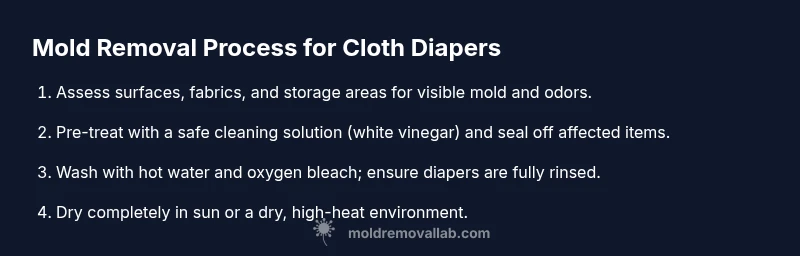
Step 1: Identify affected items and separate them from clean diapers. Keep them in a sealed bag until you can process them to avoid cross-contamination. Step 2: Rinse surfaces and fabrics with plain water to remove loose spores before washing. Step 3: Pre-treat with a solution of white vinegar and water to help loosen biofilms without harsh chemicals. Step 4: Wash on a hot cycle with unscented detergent and a safe oxygen bleach alternative; ensure you use the longest rinse cycle available. Step 5: Rinse again thoroughly and inspect for remaining odor or patches. Step 6: Dry all items completely using sun exposure or a high-heat dryer. Step 7: Store in a dry, well-ventilated space and monitor regularly for any return of moisture.
Cleaning methods and safety considerations
There is a balance between effective mold removal and protecting baby skin. Oxygen bleach options are generally safer for fabrics used on infants than chlorine bleach, which can degrade fibers and release harsh fumes. White vinegar is a gentle pre-wash that helps disrupt mold colonies without residual toxicity. Always perform a spot test on an inconspicuous area before applying any cleaner, and avoid mixing cleaners, especially bleach with ammonia or acids. Practical tips include using a dedicated laundry detergent and avoiding fabric softeners that can trap moisture in fibers. If you must use chlorine bleach, limit it to non-colored items and ensure thorough rinsing. After cleaning, a brisk airflow and sun exposure can accelerate drying and reduce remaining spores.
Drying, storage, and prevention strategies
Drying is where many mold troubles are stopped in their tracks. Aim to dry diapers to a state where there is no dampness or musty odor. Indoors, use a fan or dehumidifier to improve air movement; outdoors, sun-drying is an excellent option when possible. Store diapers in breathable containers or baskets rather than sealed plastic bags; moisture buildup inside plastic can encourage mold growth. Clean storage spaces regularly and fix leaks or lingering humidity in the laundry area. Consider routine checks every few days during wet seasons to catch moisture early.
When to salvage, discard, and seeking help
If mold growth covers more than a small area, or you notice repeated growth after cleaning, it is safer to discard the affected items rather than risk baby exposure. Porous components that absorb mold, like some liners or microfiber inserts, are particularly challenging to disinfect completely. Keeping a log of cleaning attempts can help you decide when it’s time to replace. If mold recurs despite best practices, consult a local health department or a professional mold remediation guide to understand potential environmental sources and safe household steps.
Quick-reference checklist for caregivers
- Inspect diapers for odor, discoloration, and patches before each wash.
- Use hot water and a safe cleaning agent; run an extra rinse.
- Dry thoroughly using sun or high heat; avoid damp storage.
- Store diapers in a dry, ventilated space; keep pails clean and dry.
- Document any mold occurrences and adjust routine accordingly.
Tools & Materials
- Plastic tub or clean bucket(Large enough to hold the diapers being treated)
- Rubber gloves(Protect skin from mold and cleaners)
- Face mask (N95 or equivalent)(Prevents inhalation of spores)
- Unscented baby-safe detergent(For regular washing cycles)
- Oxygen bleach (sodium percarbonate) or hydrogen peroxide(Safer fabric alternative to chlorine bleach)
- White distilled vinegar(Pre-wash and odor neutralizer)
- Baking soda(Deodorizes and boosts cleaning power)
- Washer with hot water cycle(Vital for killing spores)
- Drying rack or sunny outdoor drying space(Ensures complete drying)
- Seal-able bags or bins(For isolating contaminated items)
Steps
Estimated time: 4-6 hours (active cleaning time 60-90 minutes, plus drying)
- 1
Identify affected items
Isolate any diapers or liners showing mold and place them in a sealed bag to prevent cross-contamination.
Tip: Keep clean items separate from the suspect ones from the start. - 2
Rinse and prep
Gently rinse surfaces and fabrics with plain water to remove loose spores before washing.
Tip: Do not shake the fabrics to avoid dispersing spores. - 3
Pre-treat with vinegar
Pre-treat affected areas with a 1:3 vinegar-to-water solution to loosen biofilms.
Tip: Vinegar is milder than harsh chemicals and helps reduce odors. - 4
Wash with hot cycle and oxygen bleach
Run a hot wash with unscented detergent and oxygen bleach; use the longest rinse cycle available.
Tip: Ensure all residues are removed by an extra rinse. - 5
Rinse again and inspect
Rinse thoroughly and check for any remaining odor or patches before drying.
Tip: If you still smell mold, repeat the wash cycle before drying. - 6
Dry completely
Dry all items completely, ideally in sun or a high-heat dryer until no moisture remains.
Tip: Complete drying prevents regrowth and keeps fabrics safe. - 7
Store properly
Store in a dry, well-ventilated space and monitor humidity in the diaper area.
Tip: Avoid sealed plastic containers for damp environments.
FAQ
Is mold in cloth diapers dangerous to my baby?
Yes. Mold exposure can irritate a baby’s skin and lungs, especially for sensitive infants. Prompt cleaning and complete drying reduce risk and help keep diapering routines safe.
Yes, mold can affect a baby’s skin and lungs, so act quickly and ensure diapers are fully dry before reuse.
Can I salvage diapers with mold or should I discard them?
If there is visible mold on porous materials, or persistent odor after cleaning, discard those items to prevent exposure. Non-porous components may be cleaned, but if growth recurs, replacement is wiser.
If you see mold or odor after cleaning, it’s safer to discard those items.
Should I use bleach to treat mold on cloth diapers?
Oxygen bleach is generally safer for infant fabrics and will be effective on many molds. Chlorine bleach can damage fibers and irritate baby skin; use with caution and only on appropriate items, ensuring thorough rinsing.
Oxygen bleach is usually safer for baby fabrics; try to avoid chlorine bleach unless absolutely necessary and rinse thoroughly.
How do I prevent mold from returning?
Keep moisture low, wash with hot water, dry completely, and store diapers in a dry, ventilated space. Check humidity in the laundry area and fix leaks promptly to reduce recurring mold risk.
Wash hot, dry thoroughly, and store in a dry area to prevent mold from returning.
What should I do with a moldy diaper pail?
Clean the pail with hot soapy water, then rinse with a vinegar solution or oxygen bleach as a sanitizer. Ensure it dries completely before reusing and consider a breathable liner.
Clean and sanitize the diaper pail; ensure it dries fully to avoid ongoing moisture.
If mold keeps returning, should I call a professional?
If recurring growth persists despite thorough cleaning and drying, consider consulting a local health department or mold remediation guide to assess environmental moisture sources in the home.
Persistent mold means it may be time to seek professional guidance to identify hidden moisture sources.
Watch Video
The Essentials
- Identify moisture sources and address leaks promptly.
- Wash with hot water and a safe oxygen bleach alternative.
- Dry diapers thoroughly before storage.
- Store in a dry, ventilated space to prevent mold recurrence.