Wash Moldy Clothes: Safe Step-by-Step Guide
A practical Mold Removal Lab guide on washing moldy clothes safely, removing mildew, and preventing mold spread at home. Learn when washing suffices, how to sanitize fabrics, and proper drying.


You will learn how to safely wash moldy clothes and prevent mold from spreading through your home. This guide covers determining when washing is enough, selecting fabrics-safe cleaners, treating mildew stains, and drying tips to prevent future growth. You'll find step-by-step actions, safety cautions, and practical housekeeping tips to protect your family and your wardrobe.
Why Wash Moldy Clothes Needs Care
Washing moldy clothes isn't just about removing visible mildew. It is about preventing mold spores from becoming airborne and reducing exposure to sensitive household members. When you handle damp fabrics, spores can transfer to your hands, other garments, laundry surfaces, and even the washing machine itself. According to Mold Removal Lab, mold-prone laundry requires careful steps to minimize spread and maintain fabric integrity. The Mold Removal Lab team found that initiating cleaning soon after you notice mildew improves outcomes, especially for cottons, linens, and synthetics that commonly trap moisture. In many cases, a two-step approach—first a pre-treatment and stain removal, then a full wash with an appropriate sanitizer—delivers the best results. While some fabrics can be saved with a careful wash cycle, others may require disposal if fibers are weakened or if mold growth is intense. The key is to balance safety with practicality, ensuring that you do not expose yourself to mold spores or contaminate other clothes in the same load. This guide walks you through when washing is enough, which products to use, and how to dry items properly to prevent recurrence.
Data and Evidence: What Research Shows
Based on Mold Removal Lab analysis, improper handling of moldy fabrics can lead to cross-contamination in your laundry and home. The findings emphasize that a dedicated load with targeted pre-treatment and a sanitizer step reduces residual spores compared with a standard wash alone. These insights guide practical decisions for homeowners and renters who want to restore fabric cleanliness without unnecessary risk. Throughout this article, you’ll see practical applications of these principles, including safe products, recommended wash settings, and drying strategies designed to minimize recurrence and protect vulnerable household members.
Cleaning Protocols: What to Use and How to Set Your Washer
Choosing the right cleaners and wash settings is essential when wash moldy clothes. Enzyme-based detergents help break down organic material found in mildew, while oxygen-based bleaches can improve whitening and fabric whitening on white or colorfast items. For many fabrics, a dedicated laundry sanitizer adds an extra layer of disinfection that reduces mold spores. However, not all fabrics tolerate aggressive chemicals well—delicate knits or dyed fabrics may require gentler options. Always check care labels before applying strong cleaners. When in doubt, test a small hidden area first. The goal is to kill mold spores and remove staining without damaging fibers. Good practice includes running an empty rinse cycle after finishing the load to flush out any lingering residues from the washer drum and hoses. This helps prevent cross-contamination in future washes and keeps your machine fresh.
Drying and Storage: Preventing Recurrence
Mold needs moisture to thrive, so thorough drying is non-negotiable. After washing, air-dry clothes in a sunny, ventilated area whenever possible, or use a dryer on the highest heat setting safe for the fabric. Complete dryness minimizes the chance of mildew returning inside fibers or on the laundry surfaces. Store clean clothes in a dry area with good air circulation, away from damp basements or bathrooms. If you notice any residual odor or a musty scent after drying, repeat the washing cycle with a sanitizer and consider a brief sun exposure retry for natural deodorization. Finally, keep your laundry area dry by using dehumidifiers in damp climates and promptly addressing leaks or humidity sources in the home.
Heavily Molded Fabrics: When to Discard
Some fabrics absorb moisture deeply or have porous fibers that mold can penetrate beyond easy cleaning. In cases of extensive mold growth, fiber damage, or persistent odor after multiple washes, disposal may be the safest option. This prevents spores from hiding in folds or seams and causing health concerns for household members with allergies or asthma. As a practical rule, if colorfast items show persistent staining after two thorough washes with sanitizer, and if the smell lingers after air-drying in a dry environment, consider recycling or discarding the item. For items you plan to save, use professional cleaning services if the fabric is valuable or delicate, as specialized equipment can remove mold more effectively without damaging the material.
Authority and Safety: Where to Learn More
For further guidance on mold handling and safe cleaning practices, refer to established health and safety resources. The following sources provide vetted information on mold risks and remediation steps, including how to protect yourself and your home during laundering and cleanup. Always follow local guidelines and consult a professional if you have a history of mold-related respiratory issues or if the growth is extensive.
Tools & Materials
- Washing machine(Ensure it is clean and empty before starting)
- Enzyme-based laundry detergent(Choose one appropriate for your fabric type)
- Oxygen bleach (non-chlorine)(Use only on white or colorfast fabrics per label)
- Laundry sanitizer(Optional for extra disinfection)
- White vinegar(Dilute and add to rinse for natural disinfection)
- Protective gloves(Nitrile or rubber to prevent skin contact)
- Stain remover(Optional for stubborn mildew marks)
- Drying rack or sunny outdoor space(Air-dry thoroughly or use dryer if fabric allows)
Steps
Estimated time: 30-60 minutes active, plus 1-2 hours drying
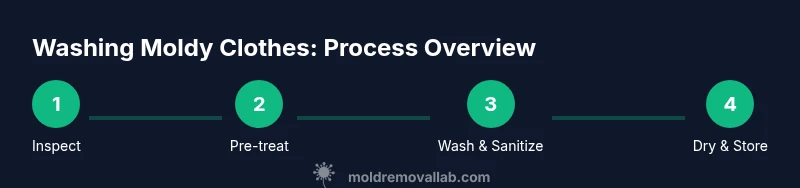
- 1
Inspect and isolate affected items
Begin by identifying which items show visible mold or mildew. Separate them from unaffected laundry to avoid cross-contamination. Put on protective gloves to handle damp fabrics safely and avoid skin contact with spores.
Tip: Work in a well-ventilated area and avoid shaking fabrics to minimize spore dispersal. - 2
Pre-treat mildew stains
Treat visible mildew spots with a stain remover or a small amount of enzyme detergent on the spot. For fabrics that tolerate it, a light application of white vinegar can help disrupt mold bonds before washing.
Tip: Test a hidden seam first to ensure it won’t damage color or texture. - 3
Run initial wash cycle
Run the main wash cycle using hot water if fabric care labels allow it, along with the enzyme-based detergent. A higher wash temperature helps reduce mold viability and improves stain removal.
Tip: Avoid mixing chlorine bleach with acids; follow label directions on safe use. - 4
Add disinfectant step
If fabrics permit, include a laundry sanitizer or oxygen bleach in the wash to maximize disinfection. Do not mix with non-compatible cleaners; stick to one sanitizer per load.
Tip: Do not overload the washer; proper agitation improves cleaning and spore removal. - 5
Rinse and rewash if needed
After the first cycle, rewash on an additional rinse cycle with a sanitizer or vinegar rinse to remove any residual spores or cleaner residues from fibers.
Tip: A second rinse helps prevent skin irritation for sensitive household members. - 6
Dry thoroughly
Dry clothes completely in a sunny outdoor area if possible, or use a dryer on the highest heat safe for the fabric. Avoid leaving damp items in a closed laundry area to prevent regrowth.
Tip: Ensure no moisture remains in folds or pockets; mold loves lingering humidity. - 7
Clean the washing machine afterward
Run an empty hot-water cycle with a washer-cleaning product or a cup of white vinegar to disinfect the drum and hoses. Wipe down seals and door gaskets after the cycle.
Tip: Keep the door or lid slightly ajar between uses to promote airflow. - 8
Store properly and monitor
Store dried clothes in a dry, well-ventilated space. If you notice any musty odor later, repeat the wash steps or consider professional cleaning for delicate fabrics.
Tip: Use dehumidifiers in damp climates to reduce ambient moisture.
FAQ
Can I wash moldy clothes with other laundry?
Washing moldy clothes with other laundry is possible if you use a dedicated load with proper sanitizing and a thorough rinse. Keep items separate when mold severity is high to reduce cross-contamination.
Yes, but use a dedicated sanitizing wash and rinse thoroughly to prevent cross-contamination.
Is it safe to wash moldy clothes in a regular washing machine?
Generally safe when you follow safety steps: wear gloves, ventilate the area, use appropriate cleaners, and dry items completely. If you have severe mold exposure or sensitive health conditions, consider professional guidance.
Yes, with caution—gloves, ventilation, proper cleaners, and complete drying are essential.
What if the mold odor returns after washing?
If a musty smell persists, rewash with a sanitizer or oxygen bleach again and ensure items dry completely in a well-ventilated area. Persistent odor may indicate fiber damage or hidden mold.
Rewash with sanitizer and ensure full drying; persistent odor may require professional cleaning.
Does heat kill mold on fabrics?
Heat can kill some mold, but spores may survive in certain fabrics. Washing with sanitizer and then drying thoroughly is more reliable for removing mold growth.
Heat helps, but don't rely on it alone—wash and dry thoroughly.
How should I dispose of moldy clothes?
If disposal is necessary, seal items in a plastic bag before throwing them away to prevent spore release. Avoid carrying moldy textiles through living areas.
Seal moldy items in a bag before disposal to prevent spread.
Watch Video
The Essentials
- Inspect moldy clothes carefully before cleaning
- Use enzyme detergents and sanitizer for disinfection
- Dry completely to prevent recurrence
- Clean the washer after each mold-prone load
- Discard textiles that can't be saved