How to Remove Mold in Fabric: A Practical Guide
Explore practical, step-by-step strategies to identify, remove, and prevent mold in fabric—from clothes to upholstery—without damaging materials. Learn testing, cleaning methods for different fabrics, safety tips, and prevention to keep your home healthy.


This guide will help you identify, treat, and prevent mold in fabric, from everyday clothes to upholstered furnishings. You’ll learn safe cleaning methods, how to test for hidden mold, which products to use or avoid, when to discard affected textiles, and practical drying strategies to prevent recurrences. Follow these steps to protect your home’s health without damaging fabrics.
Understanding mold in fabric
According to Mold Removal Lab, mold in fabric is most likely to develop when moisture lingers on textiles after washing or in damp storage areas. This is not just an aesthetic issue; mold spores can trigger allergies and respiratory symptoms in occupants. The problem affects clothing, upholstery, drapes, and even blankets. Because fabrics can trap moisture and provide a protective surface for spores, infestations often go unnoticed for long periods. In this section, we’ll cover how mold takes hold in fabrics, why some fabrics are more susceptible, and how to prevent growth from starting in the first place.
Key terms you’ll see in this guide include “mold,” “fabrics,” “drying,” and “ventilation.” These terms recur across different fabric contexts, from cotton tees to wool blankets and upholstered sofas. Recognizing the signs early helps keep you and your household safe and healthy.
Common sources of moisture that lead to mold on fabrics
Moisture sources in homes vary, but fabric mold most often takes hold where humidity lingers or leaks occur. Common culprits include damp laundry rooms, poorly ventilated bathrooms, basements, and storage areas with limited air flow. Cooking humidity, rainy seasons, and seasonal clothing swaps can also drive moisture into textiles. Finally, improper drying—such as leaving garments bunched up in a washer or closet—creates microenvironments where mold spores can settle and start to grow. Understanding these sources helps you target prevention efforts and reduce mold risk.
Signs of mold on fabric you should look for
Mold on fabric usually presents as fuzzy or powdery growth, often black, green, or white. You may notice a persistent musty odor, discoloration along seams, or staining that doesn’t wash out. Some fabrics show subtle changes under bright light or when held up to the sun. If mold is present, you might also see a powdery residue on the surface or a damp texture. Early signs are easier to treat; delayed detection makes removal more challenging and increases health risk for sensitive individuals.
Testing for mold on fabric: when and how
Testing helps confirm mold presence and guide remediation. Simple at-home checks include a visual inspection for growth and a sniff test for odor. For confirmation, you can use safe consumer mold test kits designed for textiles, or consult Mold Removal Lab guidance for professional testing options. If you observe persistent symptoms in the fabric area—such as discoloration spreading over time or odors intensifying after cleaning—consider professional assessment. Testing is especially important for items stored in damp areas or that have a history of moisture exposure.
Cleaning strategies by fabric type: washable vs delicate
Washing techniques depend on fabric type. For sturdy, machine-washable fabrics (cotton, polyester blends, denim), pre-treat moldy areas with a mild detergent and white vinegar or baking soda solution before running a hot wash, if the fabric care label allows. For delicate fabrics (silk, wool, satin, lace), avoid aggressive washing and use spot cleaning with mild detergent or specialized textile cleaners; air-dry flat to prevent distortion. Upholstery fabrics may require professional cleaning or careful spot cleaning with a fabric-safe cleaner and a damp cloth. Always check care labels before cleaning to avoid color fading or fabric damage.
To minimize damage, work with a clean, ventilated space and use gloves. After treatment, verify that mold residue is removed and odors are gone before returning items to storage.
Safe use of cleaners and what to avoid
Cleaners can be effective but must be used carefully to protect fabrics. White vinegar and hydrogen peroxide are common, fabric-safe options for light mold growth, while bleach may be suitable for white, colorfast fabrics but can discolor or weaken other textiles. Never mix cleaners, especially bleach and ammonia, as this can produce toxic fumes. Always perform a colorfast test on a hidden area before applying cleaners broadly. For fabrics with pile or nap (like velvet), use gentler methods and avoid aggressive scrubbing to prevent fiber damage.
Drying and storage practices to prevent recurrence
Thorough drying is essential after cleaning. Air-dry textiles in a well-ventilated area away from direct heat sources to prevent shrinkage and fiber damage. If possible, sun-dry white fabrics to leverage natural sunlight, but avoid prolonged sun exposure on colored textiles. Use a dehumidifier in damp rooms, and store clean fabrics in breathable containers or drawers with good airflow. Regularly inspect stored textiles for musty odors or signs of moisture to catch problems early.
When to call a professional mold remediation service
If mold coverage is extensive, if you have persistent musty odors despite cleaning, or if household members have allergies or respiratory issues, professional remediation is advised. A Mold Removal Lab professional can assess the extent of contamination, identify hidden moisture sources, and recommend a tailored remediation plan. For large items such as upholstered sofas or carpets, professional cleaning helps ensure thorough treatment and reduces the risk of recontamination.
Quick prevention tips for homes with high humidity or pets
Control humidity with dehumidifiers and proper ventilation, especially in laundry rooms and basements. Ensure windows and exhaust fans operate correctly, fix leaks promptly, and wash fabrics promptly after wear or exposure to moisture. If you have pets, clean pet bedding frequently and use washable covers on furniture. Regular laundering, thorough drying, and strategic storage are your best defenses against mold in fabric.
Tools & Materials
- All-purpose gloves(Nitrile or latex; provide barrier against mold spores)
- N95 mask or P100 respirator(Protects from airborne spores during cleaning)
- Soft-bristled brush or sponge(Gentle action to lift mold from fabric surface)
- Mild detergent(Color-safe or fragrance-free option)
- White vinegar(Dilute 1:1 with water for pre-treating)
- Hydrogen peroxide 3%(Alternative pre-treatment for white fabrics)
- Baking soda(Good for deodorizing and mild cleaning)
- Spray bottle(For applying vinegar or cleaners)
- Color-safe fabric-safe cleaner (optional)(For delicate or heavily soiled textiles)
- Laundry supplies (detergent, stain remover)(Check fabric care labels)
- Clothesline or drying rack(Promotes air circulation for thorough drying)
- Dehumidifier or fan(Helps reduce ambient humidity during drying)
- HEPA vacuum (optional)(Prevents dispersing mold spores during cleaning)
Steps
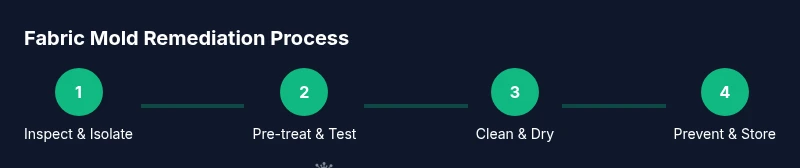
Estimated time: 60-120 minutes
- 1
Isolate and inspect the item
Remove the moldy textile from other fabrics to prevent cross-contamination. Inspect the item and note visible mold growth, odors, and any fabric care restrictions from the label. Decide if the fabric is likely salvageable based on the extent of growth and fiber type.
Tip: Work in a well-ventilated area and put items in a sealed bag after inspection to prevent spores from spreading. - 2
Test for colorfastness and fabric compatibility
Test any cleaner on an inconspicuous area first to ensure colors won’t fade or fibers won’t weaken. If the fabric reacts badly, stop and consult professional guidance. This step helps prevent irreversible damage.
Tip: Use a hidden seam or hem for your test patch. - 3
Pre-treat moldy areas
Apply a mild vinegar solution or baking soda paste to moldy spots. Gently agitate with a soft brush to lift spores without fraying fibers. Allow to sit for a short period to penetrate the surface.
Tip: Avoid soaking delicate fabrics; spot-treat instead. - 4
Wash or clean according to fabric type
For washable fabrics, launder per label instructions at the warmest water safe for the material. For delicates, spot-clean or use a fabric-safe cleaner following label directions. Upholstery or non-washable items may require professional cleaning.
Tip: Do not mix mold cleaning with chlorine bleach on colored fabrics. - 5
Rinse and recheck
Rinse thoroughly to remove cleaner residues that could irritate skin or cause fabric stiffness. Re-check the item for any remaining mold signs and odor after cleaning.
Tip: If odor persists, repeat treatment on the affected area before drying. - 6
Dry completely and store properly
Dry the item completely in a well-ventilated area or under controlled heat that the fabric tolerates. Store in breathable containers or on a drying rack away from damp spaces to prevent recontamination.
Tip: Never store damp textiles; damp storage is a mold invitation. - 7
Ventilate and monitor moisture in the home
Keep humidity low and ensure adequate airflow in laundry rooms and storage areas. Use fans or dehumidifiers, and fix leaks promptly to limit mold opportunities.
Tip: Consider keeping a quick weekly check on stored textiles during humid seasons. - 8
Decide on disposal if mold recurs
If mold returns after cleaning or affects items that are structurally compromised, consider discarding the textile to avoid health risks and repeated contamination.
Tip: Label discarded textiles to prevent accidental re-use.
FAQ
How do I know if fabric mold is safe to clean at home?
If mold growth is limited and the fabric is not labeled dry clean only, you can often clean it at home using fabric-safe cleaners. For extensive mold on fragile textiles, seek professional guidance.
If the mold growth is limited and the fabric allows cleaning, you can typically handle it at home with fabric-safe cleaners. For fragile textiles or extensive mold, consult a professional.
Can mold on fabric cause health problems?
Yes. Mold spores can irritate the skin, eyes, and lungs, especially for sensitive individuals or those with asthma or allergies. Ventilation and protective gear reduce exposure during cleanup.
Mold can irritate the skin, eyes, and lungs, especially for people with allergies. Use protection and ventilate while cleaning.
Should I discard fabric with mold?
If mold reappears after cleaning or the fabric is heavily damaged, it’s safer to discard. For valued or salvageable items, consult a professional remediation service.
If mold keeps coming back or the fabric is badly damaged, discard it. For valuable items, seek professional help.
What fabrics are most prone to mold?
Natural fibers like cotton, linen, and wool absorb moisture more readily and can harbor mold when damp. Synthetics dry faster but can still develop mold if poorly dried.
Natural fabrics tend to hold moisture and mold more easily, while synthetics dry faster but can still mold if not dried properly.
What is the best cleaner for mold on fabric?
A mild detergent with white vinegar or baking soda works for many fabrics. For white, colorfast fabrics, hydrogen peroxide can be an alternative after a colorfast test.
A mild detergent with vinegar or baking soda often works well. For white fabrics, hydrogen peroxide can be an option after testing colorfastness.
Is bleach safe for mold on fabric?
Bleach can remove mold on white or colorfast fabrics but may damage colors and fibers. Avoid using bleach on delicate or colored fabrics unless the label explicitly permits it.
Bleach can work on white or colorfast fabrics, but it can damage colors and fibers. Check the label first.
Watch Video
The Essentials
- Identify moisture sources to prevent mold recurrence.
- Treat fabrics based on fiber type and care labels before cleaning.
- Dry fabrics thoroughly after treatment to avoid recontamination.
- Use ventilation and dehumidification to maintain low humidity.
- Know when to seek professional help for large or persistent mold issues.