Mold in Carpet: Detection, Causes, and Safe Removal
A practical guide for homeowners and renters on identifying mold in carpet, understanding sources, cleaning methods, safety tips, and prevention to protect indoor air quality.


Mold in carpet can be identified and safely remediated by inspecting for musty smells, visible staining, and damp patches; address moisture sources, isolate the area, and begin careful cleaning. Use a vacuum with a HEPA filter, then remove contaminated carpet padding if needed. Thorough drying and, when in doubt, call a professional for large or persistent mold growth.
What mold in carpet means
Mold in carpet is more than a surface nuisance; it's a sign that moisture is moving through your home and that fibers, padding, and even subflooring may be at risk. When mold colony forms on carpet, it can trap allergens and odors that degrade indoor air quality, particularly for people with allergies or asthma. Detecting it early matters because spores can become airborne when walked on, vacuumed, or disturbed. In many homes, the root causes are spills that weren't dried promptly, high humidity, or frequent exposure to water leaks. The Mold Removal Lab team emphasizes that the health impact of carpet mold depends on the species, the extent of the growth, and the occupants' sensitivity, but all cases deserve a cautious approach. If you notice a persistent musty odor, dark staining, or visible fuzzy growth on carpet fibers, treat it as a mold issue rather than a routine stain. Your response should focus on moisture control, safe cleaning, and timely remediation to prevent recurrence. According to Mold Removal Lab, early action reduces spread and protects occupants.
Common sources and risk factors
Carpet mold commonly arises after a spill that isn’t dried promptly or after a leak that keeps moisture trapped in the carpet backing and padding. In basements and ground-floor rooms, poor ventilation and high humidity magnify the problem. Regular household activities—like showering, cooking, or laundry—can contribute to cumulative moisture if air movement is limited or if there are hidden leaks. Pets, heavy foot traffic, and recent flood events are notable risk factors because they continually saturate fibers and create microenvironments where mold can take hold. HVAC systems may spread spores if moisture is present in ducts or if filtration is poor. By recognizing these sources, you can prioritize fixes: seal leaks, improve airflow, and dry affected areas quickly after any incident. The Mold Removal Lab team notes that mitigating moisture and improving ventilation are first-line defenses against carpet mold.
How to assess extent safely
Assessing how far mold in carpet has spread requires a calm, methodical approach. Start with a visual inspection to locate stained patches and check for a musty odor, which often accompanies hidden growth. Use a moisture meter to identify damp zones beyond what is visible and check padding and subflooring under the measured area. Photograph the area from multiple angles to document changes over time. If you see mold growth on the carpet backing, padding, or subfloor, or if the area is large, dusty, or recurring after cleaning, plan for professional assistance. When uncertain, treat symptoms as potential mold contamination and proceed with caution. Always wear PPE and avoid disturbing mold colonies unnecessarily, as disturbance can release spores.
Cleaning strategies for small areas
For small, localized patches, you can often manage cleaning with consumer-grade products designed for textiles, paired with proper drying. Begin by removing furniture and sealing off the area with plastic sheeting to prevent spores from spreading. Vacuum the surface with a HEPA-equipped vacuum, then apply a textile-safe cleaning solution and blot rather than scrub to avoid embedding mold deeper into fibers. Rinse with clean water and blot again. After cleaning, dry the carpet thoroughly with fans and a dehumidifier. If the padding beneath is damp or moldy, it should be removed and replaced to avoid a relapse. Finally, test for residual moisture over the next 24–72 hours and re-clean if necessary. See accompanying diagrams for layout recommendations and safe handling steps.
When to replace carpet and when to call pros
Carpet mold that covers a large area, penetrates deeply into fibers, or recurs after cleaning usually warrants replacement. If padding is contaminated or if the subfloor shows signs of moisture damage, replacing more than just the surface fiber becomes essential. When moisture issues persist despite repairs or if mold type is unknown, professional remediation offers access to specialized equipment and containment practices. A pro can safely remove contaminated padding, treat adjacent materials, and verify that moisture levels stay within safe ranges after service. In these cases, attempting DIY remediation beyond the tiny, clearly contained patches may prolong the problem.
Preventing future mold growth in carpets
Prevention starts with controlling moisture and improving air movement. Fix leaks promptly, dry spills within hours, and use dehumidifiers in damp spaces like basements or bathrooms with carpeted floors. Improve ventilation by opening windows or running exhaust fans during and after activities that introduce moisture. Consider applying a barrier underlayment or replacing padding with moisture-resistant options in high-humidity areas. Regular cleaning routines that remove dust and reduce organic debris on carpet fibers also help limit mold food sources. Finally, conduct periodic moisture checks in low-airflow rooms and address any detected dampness quickly to minimize reseeding opportunities for mold in carpet.
Case studies and practical scenarios
Scenario A: A spill in a living room leads to a musty odor and visible staining under a sofa. Quick action, moisture management, and targeted cleaning prevent spread to the rest of the room. Scenario B: A basement carpet becomes damp after seasonal rain; with professional moisture control and pad replacement, the area remains mold-free after drying. Scenario C: Prolonged humidity in a guest room causes recurrent mold patches despite cleaning; a pro remediation plan and HVAC adjustments resolve the issue and restore air quality.
mainTopicQuery section
Tools & Materials
- Nitrile gloves(Non-latex; protect hands from irritants)
- N95 mask or respirator(Face protection against spores)
- HEPA vacuum(Use outdoors if possible to prevent indoor dissemination)
- Textile-safe cleaner(Mold cleaner or mild detergent; avoid bleach on colorfast carpet)
- Plastic sheeting(Seal off the work area to contain spores)
- Moisture meter or hygrometer(Identify damp zones and verify dryness)
- Dehumidifier or air mover(Promote rapid drying of carpet and padding)
- Trash bags(Seal and remove contaminated padding or materials)
- Color-safe pad or replacement padding(Optional when padding is compromised)
Steps
Estimated time: 2-4 hours
- 1
Identify moisture sources
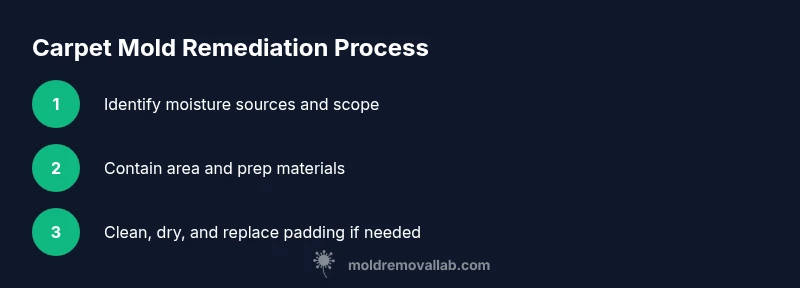
Begin with a thorough visual check for stains, damp patches, and any leaks around the affected area. Document findings with photos and notes, and determine whether the moisture is from a recent spill or a longer-term source like a leak. This helps guide containment and cleanup priorities.
Tip: Take measurements of the affected patch and mark edges with painter's tape to guide later work. - 2
Contain the area
Cover nearby carpets and floors with plastic sheeting to prevent spores from spreading to other rooms. Keep doors closed and use tape to seal seams. Ensure ventilation is minimized in the immediate area while containment is in place to avoid cross-contamination.
Tip: Wear a fitted respirator when working near mold, even in small areas. - 3
Vacuum and remove contaminated materials
Carefully vacuum visible surface mold with a HEPA-equipped vacuum. If padding or carpet underlay is damp or moldy, remove and seal it in a bag for disposal. Do not reuse damp padding; replacing it reduces the chance of rebound mold growth.
Tip: Vacuum outside the main area if possible to minimize indoor dispersion. - 4
Clean affected carpet and padding if possible
Apply a textile-safe mold cleaner or mild detergent solution and blot rather than scrub to avoid pushing mold deeper into fibers. Rinse with clean water and blot dry. If colorfastness is uncertain, test a hidden corner first or follow manufacturer instructions.
Tip: Avoid mixing cleaners; some combinations can release fumes or damage carpet fibers. - 5
Dry thoroughly
Run a dehumidifier and air movers to dry both carpet and padding completely. Monitor moisture levels over 24–72 hours with a meter to confirm dryness before considering replacement or final sealing.
Tip: Never rely on surface dryness alone; moisture can linger inside padding. - 6
Decide on replacement or professional remediation
If mold recurs after cleaning, or the moisture source cannot be resolved, replacement and professional remediation are usually warranted. A professional can contain the area, treat adjacent materials, and verify that airflow and humidity are back to safe levels.
Tip: Document moisture issues and remediation steps in case future issues arise.
FAQ
Can mold in carpet be completely removed with DIY methods?
DIY methods can address small, contained patches, but extensive growth or mold behind padding often requires professional remediation to ensure removal and moisture control.
DIY can help small patches, but big growth usually needs a professional remediation.
Is mold in carpet dangerous to health?
Carpet mold can impact indoor air quality and trigger allergies or asthma symptoms, especially for sensitive individuals. Avoid disturbing mold and seek professional guidance for remediation.
Carpet mold can affect air quality and trigger symptoms; avoid disturbing it and get expert help if needed.
How can I tell if carpet is moldy or just dirty?
Mold typically produces a musty smell, visible discoloration, and a fuzzy texture. Dirty carpet may look stained but lacks a persistent odor or growth. When in doubt, treat suspicious cases as mold and follow proper cleanup steps.
Mold has a musty odor and fuzzy growth; dirt usually looks like stains but lacks odor and spread.
Do I need to hire a professional to remove carpet mold?
Not always, but professional remediation is advised for large areas, complicated moisture sources, or when mold recurs after cleaning. A pro can ensure containment, padding replacement, and verified dryness.
A professional is best for large areas or recurring mold to ensure proper containment and drying.
Can I prevent mold in carpet after a spill?
Yes. Act quickly to dry the area, improve ventilation, and monitor humidity. Using a dehumidifier and ensuring padding remains dry reduces the chance of mold returning.
Dry promptly, improve airflow, and keep humidity low to prevent mold after spills.
Should padding be replaced if mold is present?
If padding is damp or moldy, replacement is generally recommended because padding can harbor mold and reintroduce spores even after surface cleaning.
Padding that is damp or moldy should usually be replaced to stop mold from returning.
Watch Video
The Essentials
- Identify moisture sources and address them promptly.
- Contain the work area to prevent mold spread.
- Use HEPA filtration and proper cleaners for carpet mold cleanup.
- Dry thoroughly and decide on replacement or professional remediation when needed.