How to Clean Carpet Mold: A Practical Guide
Learn practical, safe methods to remove carpet mold, dry quickly, and prevent recurrence. This Mold Removal Lab guide covers PPE, cleaning agents, and when to call pros.


By following these steps, you can safely clean carpet mold and prevent regrowth in most cases. Begin with proper PPE, ventilate the area, and isolate the affected zone. Use safe cleaners, treat the fibers, blot and rinse, then dry thoroughly with airflow and dehumidification, while monitoring moisture. This approach protects indoor air quality and reduces exposure during cleanup.
What carpet mold is and why it matters
According to Mold Removal Lab, mold in carpet fibers typically results from persistent moisture after spills, leaks, or high humidity. Carpet provides a porous substrate that can trap moisture and organic debris, creating an ideal food source for mold growth. The Mold Removal Lab team found that mold spores released from carpet can aggravate allergies and asthma in sensitive individuals, and hidden mold can spread to padding and subfloors if left untreated. Addressing moisture control is the single most important step to limit contamination and make cleanup safer. By understanding how mold behaves in textiles, homeowners can choose safer cleaning methods and prevent recurrence.
This guide emphasizes practical steps homeowners can take to reduce exposure, protect family health, and maintain carpet integrity during cleanup.
Common sources of carpet moisture and mold
Most carpet mold starts when moisture penetrates the carpet backing or padding. Common sources include leaks from roofs or plumbing, flood damage, high indoor humidity, and spills that are not fully cleaned or dried. A damp carpet creates a hospitable environment for fungi that release spores into the room, aggravating indoor air quality. Even if the surface looks dry, the padding beneath may remain damp, sustaining growth and spreading spores to adjacent rooms over time. Understanding these sources helps homeowners target moisture reduction and avoid repeated cleanups.
PPE and safety practices to protect you
Before handling mold, wear appropriate PPE and ensure good ventilation. Use an N‑95 or higher respirator, chemical-resistant gloves, protective goggles, and a disposable coverall or long clothing. Ventilate the space with open windows or a fan placed to exhaust air outward. Never shake moldy fabrics as this disperses spores. Keep children and pets away from the cleanup zone. After removing cleaning materials, wash hands thoroughly and launder contaminated clothing separately to prevent cross-contamination. These safety steps align with best practices outlined by Mold Removal Lab and widely recommended by health authorities.
Cleaning agents that work and what to avoid
Safe options for carpet mold cleanup include white vinegar (5–7%), hydrogen peroxide (3%), baking soda, and a mild detergent soap in water. Apply vinegar to the affected area, let it sit for 15–30 minutes, then blot. For tougher spots, spray hydrogen peroxide and allow it to bubble, then blot again. Sprinkle baking soda after treatment to deodorize and lift residual moisture, then vacuum once dry. Avoid ammonia-based cleaners and never mix cleaners with bleach, as reactions can release toxic gases. Always test cleaners on a hidden area first to prevent discoloration.
Cleaning approaches by severity
For small, isolated patches, a DIY approach with vinegar or hydrogen peroxide can suffice if moisture is already controlled. For larger areas or persistent mold that covers carpet backing or padding, the cleaning may require professional equipment and padding replacement. If moisture intrusion persists or mold reappears after cleanup, this indicates ongoing moisture problems beyond surface mold and warrants a professional assessment to prevent recurrence and protect indoor air quality.
Cleaning workflow overview (high-level)
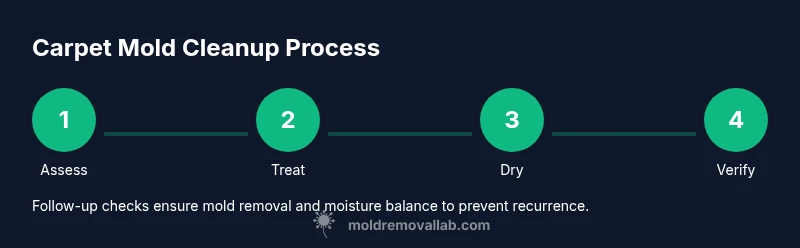
Carpet mold cleanup follows a logical workflow: assess the area, protect yourself, isolate the zone, treat with safe cleaners, blot and rinse, dry thoroughly, then monitor moisture. Good record-keeping of the steps helps validate that the area has returned to a mold-free state and reduces the chance of relapse. This section provides context for the more detailed Step-by-Step instructions that follow.
Drying and odor control after cleaning
Drying is often the most critical phase of mold cleanup. Use fans directed across the carpet surface and a dehumidifier to reduce ambient humidity. Remove moisture promptly; damp fibers can re-activate mold growth even after treatment. Odors typically decline as the area dries, but persistent musty smells may indicate hidden mold in padding or subflooring that requires closer inspection. Ongoing monitoring helps ensure lasting results.
When to call professionals and what to expect
If mold covers a large area, moisture control is difficult, or there is suspected damage to padding or subflooring, call a mold remediation professional. A pro can assess structural moisture, remove contaminated padding, and implement a more thorough remediation plan. Early professional advice can prevent long-term damage and protect occupants, especially sensitive individuals who may experience health symptoms from mold exposure.
Aftercare and ongoing monitoring
After cleanup, maintain low humidity levels (generally below 50-60% relative humidity) and promptly address any new leaks or spills. Use venting and, if possible, a dehumidifier during humid seasons. Regular inspections of carpets near water sources can catch issues early, reducing the chance of re-growth. Documentation of cleaning steps helps track effectiveness over time and can be useful if further remediation is needed.
Tools & Materials
- N-95 respirator or higher(Ensure a proper seal for effective protection)
- Protective gloves (nitrile or latex)(Double-gloving can offer extra protection)
- Goggles or face shield(Protect eyes from splashes and spores)
- Disposable coveralls or old clothing(Keep contamination contained)
- HEPA-filter vacuum(Use on dry surfaces only; avoid spreading spores)
- Spray bottle (quart-size)(For applying solutions and cleaners)
- White vinegar (5–7% acidity)(Natural disinfectant and deodorizer)
- Hydrogen peroxide 3%(Used after vinegar for additional cleaning)
- Baking soda(Deodorizes and absorbs moisture)
- Mild dish soap or detergent(Light cleaning for soiled areas)
- Soft-bristled scrub brush(Gentle agitation to lift mold)
- Microfiber cloths(For blotting and drying)
- Plastic scraper or dull knife(For stubborn residues)
- Heavy-duty trash bags(For disposal of contaminated materials)
- Dehumidifier or electric fan(Speeds up drying)
- Moisture meter (optional)(Help verify dryness)
- Carpet cleaner or enzymatic cleaner(Optional for deep stains)
Steps
Estimated time: 60-90 minutes
- 1
Put on PPE and prep the space
Don your respirator, gloves, goggles, and coveralls. Ventilate by opening windows or using exhaust fans. Contain the area with plastic sheeting or barriers to prevent spores from migrating to other rooms.
Tip: Check mask fit and test for comfort before starting to ensure full protection. - 2
Vacuum with HEPA to remove loose spores
Carefully vacuum the carpet surface using a vacuum equipped with a HEPA filter. Move slowly to lift loose spores without dispersing them into the air. Empty the vacuum bag or canister into a sealed bag immediately after use.
Tip: Vacuum after dry brushing to minimize disturbance of spores. - 3
Pre-treat with vinegar solution
Spray undiluted white vinegar on the affected area and allow it to sit for 15–30 minutes. This step helps reduce mold viability and deodorizes the carpet fibers before deeper cleaning.
Tip: Do not mix vinegar with bleach or hydrogen peroxide in the same container. - 4
Apply cleaning solution and blot
Apply a mild soap solution or dish soap with water, then blot with a microfiber cloth to lift dirt and mold. Avoid soaking the carpet; excess moisture fuels mold growth.
Tip: Work from the outer edges toward the center to avoid spreading spores inward. - 5
Apply hydrogen peroxide and baking soda
Spray 3% hydrogen peroxide on still-damp areas and let it fizz for a few minutes. Sprinkle baking soda, scrub lightly, and blot to remove moisture and odors.
Tip: Test a hidden patch first to ensure colorfastness before full application. - 6
Rinse, blot, and begin drying
Rinse any residue with a small amount of clean water, then blot thoroughly with microfiber cloths. Start drying with fans directed at the surface and run a dehumidifier in the room.
Tip: Avoid saturating padding—excess moisture is the primary driver of recurrence. - 7
Verify dryness and monitor
Use a moisture meter if available or rely on feel and odor to assess dryness. Keep the area dry for 24–48 hours and recheck for any musty smells or dampness.
Tip: If after 24–48 hours there’s still moisture or odor, escalate to professional remediation.
FAQ
Is carpet mold dangerous to health?
Carpet mold can trigger allergies and respiratory symptoms in sensitive individuals. Proper cleaning and moisture control reduce exposure and improve air quality. If symptoms persist, consult a healthcare professional.
Carpet mold can affect health, especially for sensitive people. Clean it safely and monitor symptoms; seek professional help if issues continue.
Can I clean carpet mold myself at home?
For small, localized patches and light moisture, DIY cleaning can work with safe cleaners and drying. Large areas, persistent moisture, or damaged padding should be handled by a professional.
Yes, for small spots you can clean at home, but large areas or persistent moisture should be addressed by a pro.
What cleaners are safe for carpet mold?
White vinegar, hydrogen peroxide, baking soda, and mild detergents are generally effective. Always test first and avoid mixing cleaners, especially bleach with ammonia.
Safe options include vinegar, hydrogen peroxide, and baking soda; test first and never mix cleaners.
How long does it take to dry after cleaning?
Drying times vary with room humidity and carpet padding. Use fans and a dehumidifier, and check for dryness before reoccupation.
Drying depends on conditions; ensure thorough drying with airflow and dehumidification before reoccupying.
Should I replace the carpet if mold returns?
If mold recurs after cleaning or if padding is contaminated, replacement and professional remediation may be necessary to prevent recurrence.
If mold keeps coming back, you may need to replace the carpet and have the area professionally inspected.
What signs indicate hidden mold beyond the carpet?
Musty odors, persistent dampness, and discoloration behind carpet or under padding suggest hidden mold that requires a thorough inspection.
A musty smell or dampness behind the carpet can signal hidden mold; consider a professional evaluation.
Watch Video
The Essentials
- Identify moisture sources and address them first
- Wear proper PPE and ventilate thoroughly
- Apply safe cleaners and avoid mixing chemicals
- Dry thoroughly to prevent regrowth
- Monitor moisture and seek pro help when needed