Mold in AC Vents: A Practical Remediation Guide
Discover practical steps to identify, safely remove, and prevent mold in AC vents. Includes inspection, containment, cleaning, drying, and guidance on when to seek professional help from Mold Removal Lab.


Mold in AC vents is a moisture-driven issue where mold grows inside ductwork or on registers, often spreading a musty odor. According to Mold Removal Lab, identifying moisture sources and limiting airflow are essential first steps. This quick definition explains why remediation matters and what homeowners should prioritize before deeper steps.
What mold in AC vents looks like
Mold growth in air conditioning systems can appear in several forms, from black or green fuzz on grille surfaces to fuzzy colonies tucked inside ductwork. You might notice a persistent musty odor, especially when the system runs, and you may see staining or discoloration on registers, damp insulation, or around the furnace or air handler. Correct identification matters, because mold can grow where moisture remains, even behind walls. According to Mold Removal Lab, the most reliable clue is a combination of visible growth and moisture indicators, such as condensation on ducts or a history of water intrusion. If you see any of these signs, treat the area with caution and plan a remediation approach that addresses moisture, airflow, and surface contamination.
Health and indoor air quality risks
Mold in AC vents can affect air quality and respiratory comfort. Exposures may trigger sneezing, coughing, itchy eyes, and aggravate asthma or allergies in sensitive individuals. People with weakened immune systems or chronic lung conditions should be especially cautious. The risk is not limited to the obvious growth; mold spores can travel through the duct system and settle in other rooms, potentially causing broader contamination. Reducing indoor moisture and improving ventilation are practical steps that help protect occupants while you plan remediation. This is why a thorough cleanup should address both the visible mold and any hidden colonies within the ductwork.
Common moisture and contamination sources
Mold growth in ductwork is fed by consistent moisture. Common sources include leaky or poorly sealed ducts, high humidity in humid climates, condensation on cooling coils, frequent door or window opening causing drafts, and leaks from roofs or pipes near the air handler. In homes with centralized air, even small amounts of standing water or damp insulation can provide a hospitable environment for mold. Regular checks of supply and return ducts, coil housings, and insulation can help catch problems early. If you notice rising humidity or frequent musty smells, investigate the HVAC components and seal any leaks.
Safety and PPE you should use
Before you touch any moldy surfaces, put on appropriate PPE: a properly fitted N95 respirator, disposable gloves, and eye protection. If you’re cleaning larger areas or doing any demolition, consider a disposable coverall. Work slowly to minimize aerosolization, and keep children and pets away. Use plastic sheeting to isolate the work area and seal off vents as needed. After finishing, remove gear carefully to avoid spreading spores.
Cleaning methods: when to DIY vs when to call a professional
For small, surface-level mold on accessible surfaces like registers, a DIY approach with careful cleaning and moisture control may suffice. Use a detergent solution or a disinfectant recommended for mold and follow label directions. Do not mix cleaners that release dangerous gases. For concealed mold inside ducts, substantial growth, or signs of water intrusion, professional remediation is advised. Professionals can use HEPA vacuums, controlled containment, and proper disposal to minimize spread.
Preventing future mold growth in AC vents
Moisture control is the cornerstone of prevention. Maintain indoor humidity below acceptable levels, fix leaks promptly, and ensure the HVAC system is properly maintained with clean coils and filters. Regularly replace filters according to the manufacturer’s guidance and consider a yearly professional inspection if you live in humid areas. Proper drainage around outdoor units and sealing gaps around ductwork reduces the chance of mold returning. Mold Removal Lab emphasizes consistent moisture management and routine duct cleanings to minimize regrowth.
Authority sources and further reading
Official guidance can help you understand mold and how to prevent it in HVAC systems:
- EPA: https://www.epa.gov/mold
- CDC: https://www.cdc.gov/mold/default.htm
- OSHA: https://www.osha.gov/molds
Tools & Materials
- N95 respirator(Fit-tested if possible; ensure a snug seal)
- Disposable gloves (nitrile or latex)(Change gloves if contaminated)
- Safety goggles or face shield(Protect eyes from spores)
- Disposable coveralls (optional)(Good for larger cleanup areas)
- Mold cleaning solution or detergent(Follow label directions)
- Bleach solution (non-porous surfaces, optional)(Do not mix with ammonia or acids)
- Spray bottle(For applying cleaners and disinfectants)
- Soft-bristle brush(Gently scrub grilles and surfaces)
- Cloths or towels(Wipe and dry surfaces)
- Plastic sheeting and tape(Containment to minimize spores spreading)
- Trash bags(For disposing contaminated materials)
- Dehumidifier or fans(Aid in drying the area)
- HEPA vacuum (optional)(Capture spores during cleanup)
- Moisture meter or humidity gauge(Monitor moisture levels during remediation)
Steps
Estimated time: 1-3 hours
- 1
Prep and PPE
Gather PPE and materials, set up a plan for containment, and move furniture away from the work area to protect occupants. This reduces exposure and contains potential spread during cleanup.
Tip: Lay out all PPE and tools within arm's reach before starting. - 2
Power down HVAC and isolate area
Turn off the furnace or air handler at the breaker. Close nearby registers with plastic or seal off the area to prevent cross-ventilation of spores.
Tip: If possible, create a negative pressure zone to keep spores from escaping. - 3
Inspect and map mold presence
Check registers, drip pans, coils, and accessible duct surfaces for visible growth. Photograph or document extent for reporting and tracking progress.
Tip: Note moisture sources (condensation, leaks) to inform moisture-control actions. - 4
Contain the area
Apply plastic sheeting to walls and doorways to isolate the contaminated zone. Seal seams with tape to minimize air leakage into living spaces.
Tip: Keep plastic as taut as possible to avoid tearing during work. - 5
Remove affected components and clean exteriors
Carefully remove registers and exterior components. Clean the exterior surfaces with detergent and rinse; do not push contaminants back into ducts.
Tip: Do not drag contaminated parts through clean areas. - 6
Treat interior duct surfaces
Wipe interior duct surfaces with a suitable cleaner, avoiding excessive soaking. Allow surfaces to dry thoroughly before reassembly.
Tip: Work from the nearest area outward to prevent recontamination. - 7
Dry and dehumidify
Run a dehumidifier or fans to dry the area; monitor humidity with a gauge until consistent dryness is achieved.
Tip: Use moisture readings to confirm drying before proceeding. - 8
Reassemble and test
Reinstall components, restart the HVAC system, and observe for odors or moisture changes. Schedule a follow-up check if humidity remains high.
Tip: Document the process and set a maintenance reminder.
FAQ
Is mold in AC vents dangerous to health?
Yes. Mold in AC vents can affect indoor air quality and trigger allergic or respiratory symptoms in sensitive people. If you notice symptoms or extensive growth, consult a professional remediation service.
Yes, mold in AC vents can impact air quality and health; seek professional help if you have symptoms or large areas of growth.
How can I tell if there's mold in my AC vents?
Look for visible growth, musty odors, and moisture problems around ducts and registers. For a definitive assessment, a professional mold inspection can confirm whether ducts are contaminated.
Visible growth or a musty smell is a strong clue, but a pro can confirm the extent.
Can I clean mold in AC vents myself?
Small, surface mold on accessible surfaces may be cleaned with proper PPE and cleaners. Mold inside ducts or extensive growth should be handled by professionals to ensure containment and safety.
You can clean small, surface mold if you’re careful; for hidden or large mold, call a pro.
What supplies do I need to start mold cleanup safely?
PPE (N95 mask, gloves, eye protection), cleaners, spray bottle, brushes, cloths, plastic sheeting, tape, and disposal bags. Follow label directions and never mix cleaners.
Have PPE, cleaners, plastic containment, and bags ready before you start.
How long does remediation take?
Timeline depends on the extent of mold and moisture. Small areas may be completed in a day; larger or concealed growth may require more time and professional scheduling.
It varies, but expect a day or more for larger problems.
Should I replace ductwork after mold is found?
Duct replacement is only necessary if ducts are structurally damaged or heavily contaminated beyond cleaning. An HVAC professional can assess whether cleaning or replacement is needed.
Duct replacement is only sometimes needed; a pro will decide.
Watch Video
The Essentials
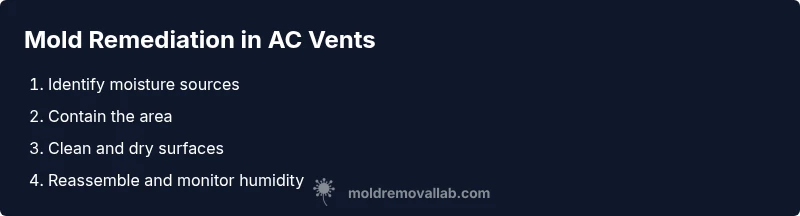
- Identify moisture sources before cleaning
- Contain the work area to prevent spread
- Dry thoroughly to reduce recurrence
- Call a professional for concealed mold or extensive growth