Mold and Baking Soda: Safe DIY Cleaning Guide for Homes
Learn a practical, safety-first approach to using mold and baking soda for mild cleanup, when it's appropriate, and when to call professionals for larger mold issues. Includes a step-by-step routine, safety tips, and prevention strategies.


This guide shows how mold and baking soda can be used for mild cleaning on nonporous surfaces, what it cannot do, and how to perform a safe, step-by-step routine. You’ll learn safety practices, when to escalate to professional remediation, and practical prevention tips to reduce recurring growth.
What mold is and how baking soda interacts with it
Mold is a type of fungus that thrives in damp conditions and can grow on many household surfaces. Baking soda, a mild alkali, is often suggested as a cleaning aid because it can help lift surface mold and deodorize areas with a musty odor. This guide focuses on mild, surface mold on nonporous materials like tile, glass, metal, and sealed countertops. It is not a substitute for professional remediation on large infestations or on porous materials that have absorbed moisture. According to Mold Removal Lab analysis, baking soda can assist in initial cleanup by loosening surface mold spores and improving cleaning friction, but it does not replace bleach or professional-grade cleaners for persistent growth.
Key takeaway: For small, visible patches on nonporous surfaces, you can start with baking soda; for larger or hidden mold, seek professional guidance. In the long run, keep humidity low and fix leaks promptly to prevent regrowth.
The science: baking soda vs. mold growth
Baking soda works primarily as a gentle abrasive and deodorizer. When mixed with water, it forms a mild paste that can scrub away superficial mold residues. It does not sterilize or deeply penetrate porous materials where mold roots or hyphae may reside. On nonporous surfaces, this approach can reduce visible mold and lingering odor, especially after a water event such as a spill or shower leakage. However, mold growth is a symptom of moisture; without addressing moisture sources, the mold can return quickly.
Clinical note: Repeated cleaning without moisture control will yield diminishing returns. Mold spores can become airborne during cleaning, so using a dampened cloth rather than a dry scrub helps limit particle dispersion. Mold Removal Lab recommends pairing cleaning with moisture management strategies for lasting results.
When baking soda is a practical option
Baking soda is most helpful for: quick deodorization, gentler surface cleaning, and small patches on nonporous surfaces. It is less effective on porous materials like drywall or wood that have absorbed moisture and mold. For these materials, mechanical removal or professional remediation is often required, and replacement of damaged sections may be necessary.
Practical tip: Before you start, test a hidden area for colorfastness and material integrity. If you notice staining or warping, stop and consult a professional. In damp basements or bathrooms, address the moisture source first, then proceed with a cautious cleaning routine.
Mold Removal Lab emphasizes that baking soda should be part of a broader moisture-control plan rather than the sole remediation method.
Preparing the space and materials
Set up in a well-ventilated area and gather your tools. Put on gloves, eye protection, and a mask if mold is present. Clear the space of items that could be damaged by moisture. Use a damp microfiber cloth to avoid dispersing spores, and keep a dedicated trash bag for contaminated rags. A spray bottle with warm water and baking soda paste (paste made by mixing baking soda with a small amount of water) will be your primary cleaning tool. Having a second clean cloth for drying helps prevent re-moisture, which can fuel regrowth.
Note: Never mix baking soda with bleach or ammonia, as this can create harmful gases. Ventilation is essential, especially in confined spaces.
Step-by-step cleaning protocol for mild mold on nonporous surfaces
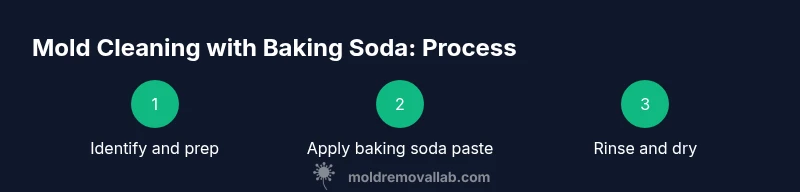
Use a gentle approach that minimizes exposure and maximizes cleanliness. Begin by applying a baking soda paste to the moldy patch, let it sit for a few minutes, then scrub with a soft brush or cloth. Rinse with clean water and dry thoroughly. Inspect the area to ensure the mold is removed and there are no color changes indicating deeper damage. If mold returns after drying, consider repeating the process once and evaluate whether to escalate to professional remediation. This routine is designed for small patches and surfaces that do not readily absorb moisture.
Observation: Consistent moisture control after cleaning is critical; otherwise, the mold may reappear even after cleaning.
Safety practices and PPE
Wear nonporous gloves, protective eyewear, and a mask to reduce inhalation risk. Work in a ventilated area by opening windows or using a fan with fresh air intake away from the work zone. Keep children and pets away from the area during and after cleaning until surfaces are fully dry. If you experience persistent coughing, wheezing, or eye irritation, pause work and seek medical advice. Do not reuse contaminated rags for other areas; place them in a sealed trash bag for disposal.
Safety rule: If the patch is large or the material is porous, do not attempt to clean—contact a professional.
Limitations and when to call professionals
Baking soda is not a cure-all. For extensive growth, mold that penetrates porous materials, or mold associated with water damage, professional remediation is recommended. If you notice persistent moisture problems, structural damage, or health symptoms after exposure, stop cleaning and contact a qualified mold remediation contractor. A professional can perform a moisture assessment, containment, and remediation that reduces the risk of recontamination.
Mold Removal Lab advises homeowners to seek professional help when in doubt, especially with large or widespread mold issues.
Prevention strategies to stop future mold growth
Preventing mold requires controlling moisture and improving ventilation. Fix leaks promptly, use exhaust fans in bathrooms and kitchens, and keep indoor humidity below 60%, ideally around 30-50%. Regularly inspect areas prone to dampness, such as basements, bathrooms, and around windows. Clean up spills quickly and dry surfaces thoroughly. Consider using mold-resistant products in bathrooms and kitchens and maintain clean, dry storage areas.
Taking a proactive approach reduces the likelihood of recurring mold, making baking soda a helpful complementary tool rather than the sole strategy.
Debunking common myths about mold and baking soda
Myth: Baking soda kills mold spores. Fact: It helps remove surface residues and deodorize but is not a disinfectant. Myth: You can expect baking soda to fix severe mold problems. Fact: Severe mold requires moisture control and professional remediation. Myth: Any mold cleaned with baking soda is safe. Fact: If mold is extensive, health risks exist, and professional guidance is essential.
Tools & Materials
- baking soda(Powder form; keep a small jar for paste)
- water(Warm water helps dissolve baking soda)
- spray bottle(For applying diluted solutions)
- microfiber cloths(Use one damp and one dry cloth)
- nonporous scrub brush or soft sponge(Avoid hard scrapers that can scratch surfaces)
- protective gloves(Nitrile or rubber gloves)
- eye protection(Safety glasses or goggles)
- mask (N95 or better)(Use if mold spores are present or area is poorly ventilated)
- trash bag(Seal for disposal of contaminated cloths)
- ventilation aid(Box fan or opened window to improve airflow)
Steps
Estimated time: 25-40 minutes
- 1
Identify mold area and prep space
Assess the mold patch and surrounding area. Remove fragile items if possible and protect adjacent surfaces with a cloth or plastic to avoid overspray. Put on PPE before you begin.
Tip: Limit exposure by containing the work area with a plastic sheet if needed. - 2
Make the baking soda solution
Mix a paste by combining baking soda with a small amount of warm water until spreadable. A paste gives better scrubbing power on patches.
Tip: Keep the mixture thick enough to stay on the surface without dripping. - 3
Apply and scrub the patch
Apply the paste to the mold patch. Scrub with a soft brush or sponge in a circular motion until the mold loosens and residue lifts.
Tip: Work in gentle, steady strokes to avoid spreading spores. - 4
Rinse and dry thoroughly
Wipe away paste with a damp cloth, then dry the area completely using a clean, dry cloth. Ensure there is no moisture left.
Tip: If possible, use a fan to speed up drying and reduce humidity. - 5
Assess and repeat if needed
Inspect for any remaining mold. If patch reappears, you may repeat once or escalate to professional remediation depending on area and material.
Tip: Do not over-wet porous materials; repeated moisture can worsen mold growth. - 6
Clean up and dispose
Place used cloths and paste remnants in a sealed trash bag and dispose. Clean your tools with water and air-dry before storing.
Tip: Wash hands and change clothing after finishing to minimize contamination.
FAQ
Can baking soda kill mold?
Baking soda helps remove surface mold and deodorize; it does not kill all mold spores or disinfect thoroughly. It is best used for small patches on nonporous surfaces and should be part of a broader moisture-control plan.
Baking soda helps remove surface mold but isn’t a complete mold killer. Use it for small patches on nonporous surfaces and address moisture to prevent regrowth.
Is baking soda safe around kids and pets?
Yes, baking soda is generally safe when used properly with proper ventilation and PPE. Avoid mixing with other cleaners and keep residues minimal around children and pets.
Yes, baking soda is typically safe if you ventilate and protect yourself, but avoid mixing cleaners and keep the area dry.
Should I mix baking soda with vinegar?
No. Mixing baking soda and vinegar creates fizzing that can overspread moisture and delay cleaning. For mold, use baking soda with water, or consider vinegar separately on certain surfaces, but don’t combine cleaners.
Don’t mix baking soda with vinegar; it causes fizzing and can spread moisture. Use them separately if needed.
Can baking soda remove mold from porous materials?
Baking soda is less effective on porous materials like drywall or wood that have absorbed moisture. In many cases, damaged sections must be removed and replaced, or professional remediation is advised.
It’s not very effective on porous materials; you may need to replace the damaged area and consider professional help.
How long does a baking soda cleaning take?
Most mild mold cleanups with baking soda take 25-40 minutes for a small patch, followed by thorough drying to prevent regrowth.
Expect about 25-40 minutes for a small patch, plus drying time.
When should I call a professional?
Call a professional if mold covers a large area, recurs after cleaning, or if you notice water damage or health symptoms. A pro can assess moisture sources, containment, and remediation needs.
If the mold is extensive or keeps coming back, seek professional help to assess moisture and remediation needs.
Watch Video
The Essentials
- Use baking soda for light, surface mold on nonporous surfaces.
- Moisture control is essential to prevent re-growth.
- Never mix cleaning agents; choose safe, compatible products.
- For extensive mold, seek professional remediation.
- Drying thoroughly minimizes future mold risk.