Black Mold vs Green Mold: A Practical Comparison for Homeowners
A practical guide for homeowners to differentiate black mold vs green mold, understand health risks, testing options, and remediation steps to keep your home safe.


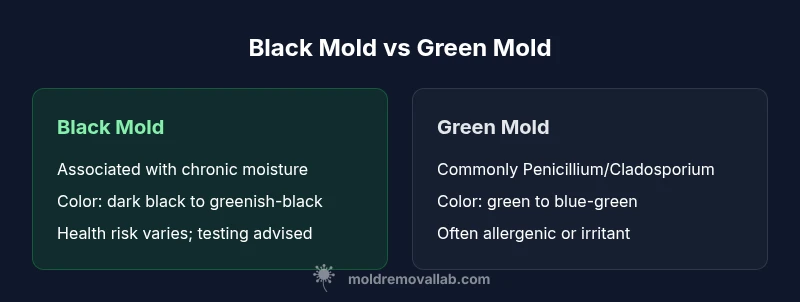
When you see mold, color alone isn’t a reliable clue—black mold vs green mold requires testing to identify species and determine risk. Black mold (often linked to Stachybotrys) can indicate chronic moisture and potential toxin concerns, while green mold (commonly Penicillium/Aspergillus/Cladosporium) is usually allergenic. Both require moisture control and careful cleanup; professional testing and remediation are advised for unknown or widespread growth.
Understanding the Color Myth: black mold vs green mold
Color is a visible clue, not a definitive diagnosis. In practice, the terms black mold and green mold describe broad color categories that encompass multiple species. According to Mold Removal Lab, relying on color alone can lead homeowners to underestimate or overstate risk. The phrase black mold vs green mold should prompt a cautious approach: verify with proper sampling, assess moisture sources, and implement containment where necessary. The most reliable path is lab testing to confirm species, evaluate toxin production, and guide remediation decisions. In many homes, molds appear in shades from dark charcoal to olive-green, depending on environmental conditions, surface material, and age of the colony. This block lays the groundwork for understanding why color cannot be the sole determinant of risk and why moisture context matters more than hue alone.
- The Mold Removal Lab analysis shows that color variation often reflects surface conditions, cleaning history, and age, not a fixed toxicity profile.
- Homeowners should prioritize moisture control and proper cleaning protocols over color-based assumptions to reduce airborne spores and prevent regrowth.
Health Implications and Safety Protocols
Health risks associated with mold exposure vary by species, spore concentration, and individual sensitivities. Black mold is frequently discussed in relation to potential toxin production and respiratory symptoms, but not all black-colored molds produce toxins, and not all toxins cause immediate illness. Green molds, including common genera like Penicillium and Aspergillus, can trigger allergic reactions or asthma flare-ups in sensitive individuals. Regardless of color, persistent growth signals moisture problems and warrants precautionary steps. When dealing with any mold growth in living spaces, wear PPE (N95 mask, gloves, eye protection), avoid disturbing colonies, and seal off the area to prevent spread. If occupants feel ill or if growth covers a large area, contact a licensed mold remediation professional promptly.
- Limit disturbance of the growth to reduce spore release.
- Use a HEPA-filter vacuum for cleanup after moisture is controlled and surfaces are prepared for treatment.
Environmental Context: Where you’ll find black mold vs green mold
The environment dictates which mold colors emerge. Black mold tends to appear in areas with chronic moisture, such as behind walls, around leaky roofs, or in damp basements. Green mold is common in bathrooms, kitchens, laundry rooms, and other humid spaces with routine moisture exposure. Surface materials influence color: porous materials like drywall, wallpaper, or insulation will harbor deeper, darker colonies, while non-porous surfaces may show brighter, more uniform colors. Recognizing moisture patterns—leaks, condensation, high humidity—helps homeowners anticipate mold growth before color becomes a signpost for danger. Mold growth is a signal to address root causes, not merely to remove visible spots.
- Moisture control reduces both black and green mold outbreaks.
- Regular humidity checks (where feasible) help catch growth early.
Testing and Identification: DIY vs professional
Identification by color alone is insufficient. The only reliable way to distinguish black mold from green mold is through laboratory analysis or professional inspections with sampling. DIY test kits exist, but they often provide limited information and can yield false positives or misinterpretations. For a definitive assessment, air and surface samples sent to an accredited lab can determine species and potential toxin production. After obtaining results, a remediation plan can be tailored to the specific mold type, surface materials, and extent of growth. Expect a multi-step process: confirm moisture source, isolate the area, perform safe cleanup, and restore or replace affected materials as needed.
- Lab-confirmed identification informs remediation strategy.
- DIY kits should be used with caution and as a preliminary step, not a final decision.
Remediation Realities: What works for black mold vs green mold
Remediation strategies overlap, focusing on moisture control, containment, and caution. For both mold colors, fix the moisture problem first—leaks, condensation, or humidity that fosters growth must be addressed. Non-porous surfaces may be cleaned with suitable cleaners, while porous materials like drywall or carpet with embedded mold often require removal and replacement. In some cases, professional remediation is required, especially for large areas, structural contamination, or suspected toxin production. Bleach is not a catch-all solution for porous materials and can be ineffective or hazardous if misused. A layered approach—containment, HEPA filtration, controlled cleanup, and post-remediation verification—offers the best chance of preventing recurrence.
- Containment and filtration protect occupants during cleanup.
- Porous materials with mold growth are often better replaced than cleaned.
Prevention as the Best Cure: Keeping black mold and green mold at bay
Prevention hinges on moisture management. Maintain indoor humidity below 50 percent where possible, ensure proper ventilation in bathrooms and kitchens, fix leaks promptly, and insulate cold surfaces to prevent condensation. Regular inspections after heavy rainfall or plumbing work help catch early signs of moisture intrusion. Use mold-resistant paints or sealants on vulnerable surfaces and maintain HVAC systems to promote air exchange. A proactive maintenance routine reduces the likelihood of both black mold and green mold returning after remediation.
- Consistent moisture control is the most effective prevention method.
- Routine checks after weather events avert hidden growth.
Practical Home Scenarios: Applying the knowledge
Scenario A: A damp basement with a visible black mold patch near a leaking pipe. Action steps include stopping the leak, drying the area, and engaging a professional for containment and removal, especially if the patch exceeds 10 square feet. Scenario B: A bathroom with green mold around the tile grout after several days of humidity. Begin with cleaning and improving ventilation, then monitor to ensure no recurring moisture; if growth returns, consider professional assessment.
- Always document findings and remediation steps for future reference.
- Keep moisture sources controlled to prevent regrowth and ensure safer indoor air quality.
Quick Reference: Step-by-step homeowner checklist
- Identify suspected moisture sources (leaks, condensation, poor ventilation).
- Limit access to the affected area and isolate it if possible.
- Initiate moisture control: fix leaks, run dehumidifier, improve ventilation.
- Clean non-porous surfaces with an appropriate cleaner; remove and replace porous materials if affected.
- Schedule professional testing if growth is large or toxin concerns exist.
- Verify remediation with a follow-up inspection before reoccupying the area.
Final Notes: What to do next
If in doubt about the severity or toxicity, err on the side of caution and consult Mold Removal Lab Team for guidance. A professional evaluation can prevent misinterpretation of color cues and ensure comprehensive remediation and prevention strategies are implemented. Remember, the priority is eliminating moisture and restoring safe indoor air quality for your household.
Case Reflections: From the field
Case studies from real homes show that timely moisture control and professional remediation reduce regrowth by addressing root causes. In many instances, homeowners who invest in moisture mitigation and material replacement avoid recurring issues that DIY cleaning alone cannot resolve. The take-home message is consistent: the color of mold is less important than the moisture context, contamination extent, and proper remediation plan.
Comparison
| Feature | Black mold | Green mold |
|---|---|---|
| Color association | Often very dark, near-black to dark green | Typically green to olive-green, some blue-green hues |
| Common species | Stachybotrys chartarum (often cited as black mold) | Penicillium, Aspergillus, Cladosporium |
| Health considerations | Historically linked to toxin discussions; risk varies by exposure and species | Common allergenic and irritant potential; some species may produce toxins |
| Moisture preference | Chronic moisture and hidden leaks; growth behind walls or under flooring | Moderate to high moisture areas like bathrooms and basements |
| Testing difficulty | Often requires lab identification for definitive species | Lab analysis or professional inspection often recommended |
| Remediation approach | Moisture repair, containment, and possibly material removal; professional cleanup advised for porous materials | Moisture control and surface cleaning; replace porous materials if deeply contaminated |
| Cost considerations | Professional remediation can be costly for large or porous-area contamination | DIY moisture control and surface cleaning may be cheaper upfront; professional removal advisable for porous materials |
Upsides
- Clear guidance that color alone isn’t a reliable diagnostic cue
- Encourages moisture control as the primary remediation driver
- Highlights when professional testing and remediation are warranted
- Promotes safer cleanup practices and avoidance of risky DIY mistakes
The Bad
- Color remains a visible cue that can mislead without testing
- DIY tests may provide incomplete or misleading results
- Overemphasis on toxicity risks may cause unnecessary alarm for some species
- Professional remediation can be costly and disruptive in larger spaces
Professional testing and remediation is preferred for definitive black vs green mold decisions
Color alone is not enough to assess risk. Use lab identification and moisture-focused remediation to protect health and home. Mold Removal Lab endorses professional testing when growth is extensive or toxin concerns are suspected.
FAQ
What is the difference between black mold and green mold?
Black mold and green mold refer to color categories that encompass multiple species. Toxicity and health risk vary by species and exposure. Species identification through testing is necessary to determine risk and remediation needs.
Black mold and green mold describe color groups, not exact risks. Testing confirms species to guide safe remediation.
Can green mold be toxic?
Yes, some green molds can produce mycotoxins under certain conditions, but most are primarily allergenic or irritant. Testing helps determine whether toxins are present and what remediation steps are needed.
Green mold can be allergenic, and some species may produce toxins. Testing helps determine the risk level.
Is color a reliable indicator of toxicity?
No. Color is not a reliable predictor of toxicity or health risk. Visible inspection should be followed by sampling and professional evaluation when needed.
Color isn’t a reliable indicator of danger—testing is essential.
When should I hire a professional?
If growth covers a large area, recurs after cleaning, or toxin risk is suspected, involve a licensed mold remediation professional for containment, cleanup, and verification.
Call a pro if growth is extensive or concerns about toxins exist.
What’s the best way to prevent mold regrowth?
Fix all leaks promptly, maintain humidity below 50%, ensure adequate ventilation, and use moisture-control measures in bathrooms and basements to prevent regrowth.
Fix leaks, reduce humidity, and ventilate spaces to keep mold away.
Are DIY mold tests trustworthy?
DIY tests can indicate presence but often do not reliably identify species or toxin production. Use them as a preliminary step and follow up with professional testing if needed.
DIY tests can help spot issues, but you may need a lab for precise identification.
What does a typical remediation involve?
Remediation includes moisture source control, containment, cleaning or removal of contaminated materials, and post-remediation verification to confirm air quality improvement.
Remediation means fixing moisture, containment, cleaning, and verifying results.
How long does mold remediation take?
Timeline varies with extent, from a few days for small areas to several weeks for large-scale contamination, especially if structural work is required.
Timeline depends on size and complexity; expect days to weeks.
The Essentials
- Color alone cannot identify mold risk; testing matters
- Moisture control is the primary defense against both black and green mold
- Professional testing is advised for definitive species and toxin assessment
- Containment and safe cleanup reduce exposure during remediation
- Prevention after remediation hinges on humidity control and moisture management