Lysol Mold and Mildew: A Practical How-To Guide for Homeowners
Learn how to safely use Lysol for mold and mildew cleanup with practical steps, safety tips, and prevention guidance from Mold Removal Lab.


You will learn a safe, practical approach to using Lysol products for light to moderate mold and mildew cleanup around the home. This guide covers product selection, surface testing, allowed surfaces, cleaning steps, drying, odor control, and prevention strategies. Always follow label directions and ventilate well. For large infestations or hidden mold, contact Mold Removal Lab for professional remediation.
What Lysol is and why it’s used for mold and mildew
Lysol products are widely used household disinfectants designed to kill many common bacteria and fungi on hard, non-porous surfaces. When homeowners encounter light to moderate mold and mildew on tile, countertops, and sealed surfaces, Lysol can help reduce surface contaminants and odors. According to Mold Removal Lab, successful mold cleanup starts with using the right product, following label directions, and drying thoroughly to prevent regrowth. The term lysol mold and mildew is commonly used to describe these cleanup efforts, even though mold biology means that not every surface will respond equally to chemical treatment.
Important: Lysol is intended for hard, non-porous surfaces. Mold that has penetrated porous materials like drywall, wood, or fabric often requires more extensive remediation and moisture control. Before you start, test a small, inconspicuous area to confirm that the surface finishes won’t discolor or degrade. When used correctly, Lysol can lower surface mold counts and help keep spaces hygienic while you pursue longer-term moisture solutions.
Safety first: precautions and limitations
Disinfectants like Lysol release fumes that can irritate the nose, throat, and eyes. Always wear PPE: nitrile gloves, safety goggles, and a mask. Work in a well-ventilated area by opening windows or using a fan that exhausts outdoors. Do not mix Lysol with ammonia or bleach; mixing can create dangerous gases. Lysol disinfectants are not a substitute for professional remediation when there is large-scale growth, hidden mold behind walls, or extensive water damage. For minor surface issues, this approach is a helpful first step; for anything beyond that, contact Mold Removal Lab for guidance.
Surface compatibility and label directions
Read the product label carefully before cleaning. Lysol products labeled for mold and mildew are designed for hard, sealed surfaces such as tile, metal, sealed countertops, and enamel-coated fixtures. Avoid using on unfinished wood, untreated fabric, porous drywall, or porous stone, where mold may be growing inside the material. The label will indicate dwell time (how long the surface should remain wet) and whether rinsing is required. Always perform a patch test in an inconspicuous spot and follow any water-contact restrictions.
Cleaning routine and prevention strategies
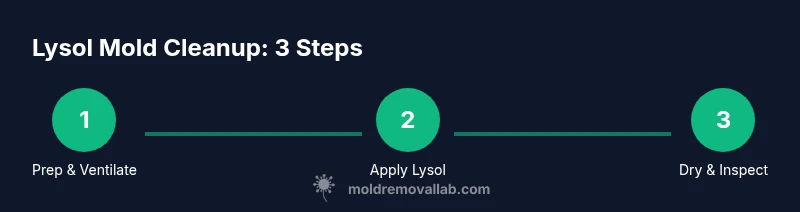
For light to moderate surface growth, spray Lysol from a distance of about 6 to 8 inches to create a fine mist across the affected area. Let the product sit for the label-recommended dwell time, typically a few minutes, then wipe with a clean microfiber cloth. Use a scrub brush for textured surfaces, such as grout lines, to lift mildew; then wipe away residue and allow to air dry. After cleaning, reduce moisture sources by improving ventilation, fixing leaks, and using a dehumidifier or fan to keep spaces dry. Regular checks help prevent recurrence. Based on Mold Removal Lab research, consistency with label directions and thorough drying are key factors in successful, safe cleanup.
Common mistakes and misconceptions
Many homeowners assume Lysol alone eliminates all mold problems. It disinfects visible surface contaminants but cannot remove mold that has penetrated porous materials. Do not assume that a clean spray means the mold is gone; moisture control is essential. Never mix Lysol with other cleaners such as bleach or ammonia, as dangerous gases can form. If you notice persistent odor, staining, or recurring growth after cleaning, revisit moisture sources and consider a professional assessment.
Authority sources and next steps
For further guidance, consult authoritative resources: Centers for Disease Control and Prevention (CDC) mold guidelines, U.S. Environmental Protection Agency (EPA) mold resources, and OSHA's mold safety recommendations. These sources provide context on when professional remediation is required and how to prevent mold recurrence in homes.
The Mold Removal Lab team recommends using Lysol products as a surface disinfectant for light, non-porous mold and mildew cleanup, combined with moisture control and ongoing monitoring. If growth is extensive or reappears after cleaning, seek professional remediation and a comprehensive moisture assessment.
Tools & Materials
- Lysol mold and mildew disinfectant product (labeled for mold and mildew)(Choose a Lysol product that lists mold and mildew on the label; avoid products not labeled for these claims)
- Nitrile gloves(Protect hands from cleaners and mildew exposure)
- Safety goggles(Eye protection against splashes)
- Face mask (N95 or equivalent)(Protect lungs from fumes and mold spores)
- Microfiber cloths(For wiping and drying surfaces; reusable after washing)
- Scrub brush (non-scratch)(Used on grout or textured surfaces)
- Bucket and warm water(For rinsing cloths and preparing wipes)
- Ventilation (open windows or box fan)(Improves airflow and reduces fume buildup)
- Plastic bags for disposal(Seal contaminated rags and wipes before disposal)
Steps
Estimated time: 60-90 minutes
- 1
Prepare the cleanup area
Clear the space of textiles and valuables. Lay down a drop cloth to catch drips and test a small, hidden area with Lysol on a non-visible spot to check for color change or surface damage. This step reduces mess and avoids surprises during cleaning.
Tip: Use a dedicated cloth for testing, and keep a separate clean cloth for the main cleanup. - 2
Ventilate and don PPE
Open nearby windows and run a fan to push air outdoors. Put on nitrile gloves, safety goggles, and a mask to protect skin, eyes, and lungs from fumes and spores. Proper PPE minimizes exposure.
Tip: Never skip PPE; even small areas can release fine spores. - 3
Apply Lysol to moldy surfaces
Hold the can at the recommended distance and spray a light, even mist over the affected area. Do not oversaturate; allow the product to dwell according to the label before wiping. This helps maximize surface disinfection without excessive runoff.
Tip: Work in small sections to control dwell time and avoid pooling. - 4
Scrub mildew and wipe residue
Use a non-scratch scrub brush to lift mildew from textured surfaces like grout or tile edges. Wipe away dislodged residue with a clean microfiber cloth. Repeat if necessary but avoid re-wetting the area excessively.
Tip: For stubborn grout, reapply Lysol and scrub with a circular motion. - 5
Dry thoroughly and inspect
After cleaning, wipe the area dry and allow it to air dry completely. Use a fan or dehumidifier to speed drying and re-check for any remaining smell or staining. If moisture returns, address the moisture source first.
Tip: Drying is critical to prevent regrowth; do not store items nearby until fully dry. - 6
Maintain prevention and plan next steps
Remove cleaning materials, seal waste, and store products safely. Plan ongoing moisture control by fixing leaks, improving ventilation, and monitoring humidity in damp areas. If mold recurs or covers a large area, seek professional remediation.
Tip: Regular checks after rain or humid months help catch early signs before growth accelerates.
FAQ
Can Lysol remove mold on drywall?
Lysol can disinfect visible mold on non-porous surfaces, but mold that has penetrated drywall or other porous materials often requires professional remediation and moisture control.
Lysol helps with surface mold on non-porous surfaces, but drywall growth usually needs a pro.
Is Lysol effective against black mold?
Lysol may disinfect visible black mold on hard surfaces, but extensive or hidden growth should be evaluated by a professional remediation service.
It can handle surface black mold, but not extensive growth.
Should I rinse after applying Lysol?
Rinsing is usually not required; check the label. Wipe away residue and allow the surface to dry completely.
Rinse is often not needed; just wipe and let dry.
Can Lysol be used on fabrics or porous surfaces?
Lysol is designed mainly for hard, non-porous surfaces. For fabrics, use products designed for textiles and follow fabric care instructions.
Not typically for fabrics; use fabric-safe cleaners.
Is it safe to use Lysol around kids or pets?
Clean the area thoroughly after use and ensure proper ventilation before allowing people or pets back in.
Ventilate well and let surfaces dry before re-entry.
When should I call a professional?
If mold covers a large area, is hidden behind walls, or recurs after cleaning, contact a professional remediation service for a thorough assessment.
Call a professional if the mold is extensive or keeps coming back.
Watch Video
The Essentials
- Test a small area first before full cleanup
- Follow label directions and dwell times
- Ventilate and dry surfaces thoroughly
- Lysol cleans surface mold, not deep remediation
- Call a professional for large or persistent growth