Does Lysol Kill Mold? Practical Guide for Homeowners
Explore whether Lysol kills mold, where it helps, its limits on porous materials, and safe remediation steps for homeowners and renters.


Does Lysol kill mold? In many cases, Lysol disinfectants can kill mold on hard, nonporous surfaces when used exactly as labeled. However, Lysol is not a cure-all for mold growth, especially on porous materials, behind walls, or when mold has become embedded in materials. For ongoing moisture problems, remediation must address the moisture source and physical removal of mold, not just surface cleaning.
Does Lysol Kill Mold? What the label implies
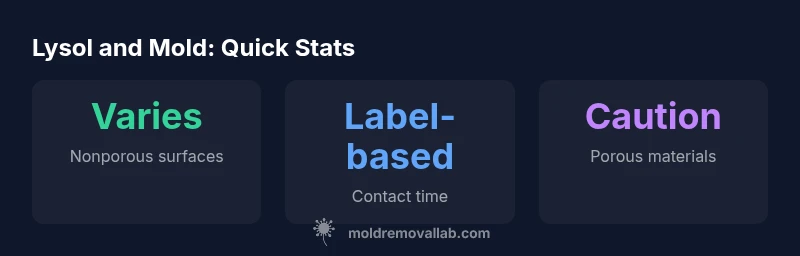
Many Lysol products advertise broad-spectrum disinfection and mold-killing claims on hard surfaces. The Mold Removal Lab analysis notes that these claims are typically limited to specific fungi on nonporous materials and require proper contact time and ventilation. Homeowners should read the label carefully, understand surface types, and not assume mold is eliminated after a single spray. If mold is growing behind caulk, in porous wood, or within drywall, you must pursue more comprehensive remediation.
Mold growth basics and why surface sprays are not enough
Mold thrives where moisture persists. Surfaces with high porosity—wood, drywall, fabric—offer pores and fibers that mold can colonize beyond the surface layer. Disinfectants like Lysol primarily address surface contamination and may not reach mold colonies embedded within porous substrates. Effective remediation hinges on moisture control, physical removal of affected material, and proper containment to prevent cross-contamination. Understanding these dynamics helps homeowners decide when a spray is a helpful first step versus when professional remediation is warranted.
When Lysol helps: hard, nonporous surfaces post-cleaning
On hard, nonporous surfaces such as tile, glass, or sealed countertops, Lysol can be useful after a physical cleaning has removed visible growth. Follow label directions for contact time and ventilation. This approach can reduce surface mold residues and help restore sanitary conditions, especially in kitchens and bathrooms where moisture is frequent. Do not rely on Lysol as the sole solution for ongoing mold problems in these areas.
Porous materials and embedded mold: why Lysol falls short
Porous substrates like unfinished wood, drywall, or fabric can harbor mold inside their structure. Sprays may kill some surface spores, but they do not remove embedded colonies, nor do they address the moisture that feeds regrowth. In such cases, simply spraying Lysol is unlikely to achieve lasting remediation. Professionals often require cutting away contaminated material and replacing it to fully eradicate mold pockets.
Step-by-step remediation workflow with Lysol safely
- Identify moisture sources and fix leaks or humidity issues. 2) Wear appropriate PPE (gloves, goggles, respirator as needed) and ensure good ventilation. 3) Clean visible mold with a detergent solution and discard contaminated porous materials when warranted. 4) Use Lysol on hard, nonporous surfaces after cleaning to disinfect, following the label for contact time. 5) Monitor for regrowth over the next weeks and re-test moisture levels. 6) If mold recurs or is extensive, consult a professional remediation service.
Safety considerations: PPE, ventilation, and labeling
Always read the product label for safety instructions, warnings, and approved surface types. Use PPE appropriate for the cleaning task, including gloves and eye protection; in poorly ventilated spaces, avoid inhalation of chemical vapors. Do not mix cleaning products—combining cleaners can create hazardous gases. Proper disposal of contaminated materials is essential to prevent recontamination.
Alternatives and best practices beyond Lysol
For many homeowners, a layered approach works best: moisture control, physical removal of moldy materials, and careful disinfection on appropriate surfaces. Alternatives include detergent scrubbing for non-frangible surfaces, hydrogen peroxide on certain finishes, and professional remediation for structural mold or growth behind walls. Always prioritize removing the moisture source and conducting a thorough cleanup over relying on a spray alone.
DIY vs pro: deciding when to hire a professional
Small, confined mold growth on nonporous surfaces can often be addressed by a knowledgeable homeowner. However, if mold covers large areas, penetrates porous materials, or involves HVAC systems, professional remediation is recommended. A pro can assess moisture sources, perform safe containment, and ensure proper disposal and air quality measures are in place.
Common scenarios and practical takeaways for homeowners
If you find mold on tile or glass, Lysol can help as part of a broader cleaning routine. For wood, drywall, or fabric, prioritize moisture control and material removal; consider a professional assessment if uncertainty remains. Regular upkeep—fixing leaks, improving ventilation, and using dehumidifiers—prevents recurrence more effectively than repeated sprays.
Common mold cleaning options and surface considerations
| Option | Porous Surface Compatibility | Typical Use Case | Safety Notes |
|---|---|---|---|
| Lysol Mold-specific Spray | Nonporous surfaces | Surface disinfection after visible mold | Follow label directions; ensure ventilation; avoid mixing with other cleaners |
| Bleach solution | Nonporous surfaces | Disinfection on nonporous surfaces | Avoid on porous materials; fumes; wear PPE |
| Hydrogen peroxide spray | Nonporous surfaces | Mold on smooth surfaces | Ventilation; avoid contact with metals |
| Soap and water + brush | Nonporous surfaces and some porous | Initial removal and cleaning | Rinse thoroughly; porous materials require removal |
FAQ
Can Lysol kill mold on wood?
Lysol is generally less effective on wood and other porous materials where mold grows within the structure. Physical removal and moisture control are often required, and Lysol should not be relied upon as the sole remediation for wood mold.
Lysol can help on some nonporous wood surfaces, but porous wood typically needs more than a spray.
Is Lysol safe to use on all surfaces?
No. Check the label for approved surfaces and avoid finishes that could be damaged by disinfectants. Ventilate well and avoid mixing with other cleaners.
Not all Lysol products are safe on every surface—always read the label.
Does Lysol kill mold spores?
Disinfectants like Lysol can reduce surface mold spores, but mold spores can reside inside porous materials. Effective remediation requires moisture control and often physical removal.
Lysol can reduce surface spores, but it isn’t a complete mold solution on its own.
What about mold behind walls?
Mold behind walls or inside drywall requires professional assessment and often removal of affected material. Surface sprays won’t reach hidden growth.
Hidden mold stays out of reach for sprays—check moisture and consider a pro.
Can I mix Lysol with bleach to kill mold?
Never mix chemical cleaners. Mixing disinfectants can release hazardous gases and cause fumes that irritate eyes and lungs.
Don’t mix any cleaners; it’s unsafe.
When should I call a professional?
If mold covers a large area (greater than 10 square feet), is spreading, or if it involves hidden locations or HVAC systems, professional remediation is advised.
Call a pro if mold is extensive or in hard-to-reach areas.
“Lysol can be part of a surface-disinfection plan for visible mold on nonporous surfaces, but it cannot substitute for moisture control and physical removal of mold growth.”
The Essentials
- Address moisture sources before cleaning.
- Use Lysol on appropriate hard, nonporous surfaces and follow label directions.
- Do not rely on sprays for porous or hidden mold growth.
- Combine cleaning with moisture control for lasting results.
- Consider professional help for extensive or uncertain mold problems.