Is Mold Easy to Kill? A Practical Mold Remediation Guide
Discover why mold isn’t easy to kill and learn safe, practical steps for remediation. Mold Removal Lab shares science-based methods, safety tips, and homeowner guidance to protect your home.


Is mold easy to kill? Not always. The truth is that mold efficiency depends on moisture, surface, and mold type. This quick guide outlines steps homeowners can take to safely assess, contain, and begin remediation, while recognizing when to call a professional.
Is mold easy to kill? The reality for homeowners
As you begin a mold remediation project, you may wonder, is mold easy to kill. The short answer is often no—mold is a living organism that thrives in wet conditions and can produce resilient spores. According to Mold Removal Lab, the effectiveness of any cleanup depends on reducing moisture, selecting appropriate cleaning agents, and ensuring thorough drying. This is why many small surface mold issues are approachable for DIY, while larger infestations or hidden growth behind walls typically require professional assessment. Understanding the biology of mold — its spores, growth cycles, and how quickly it can reestablish itself — helps frame safe, practical expectations for remediation.
Remember, addressing the moisture problem is the cornerstone of success. If humidity remains high or if you find extensive growth in hidden places, plan to escalate to expert help. Mold Removal Lab emphasizes that most successful outcomes hinge on comprehensive moisture control alongside cleaning.
Why some mold problems resist simple cleaning
Mold that has penetrated porous materials, or that has grown for weeks or months, often resists simple cleaning methods. Surface wipes can remove visible dots, but spores can remain embedded in material fibers. The Mold Removal Lab team notes that the real test is whether the remediation plan eliminates the moisture source and prevents new growth. In practice, this means evaluating for ongoing leaks, condensation, or poor ventilation. When these conditions persist, cleaning alone will not prevent regrowth, and the area may require containment and, in severe cases, removal of affected materials.
Moisture control: the driver of mold growth
Mold cannot be truly eradicated until humidity and moisture are addressed. Relative humidity above 60% for extended periods supports mold development. The Mold Removal Lab analysis shows that dehumidification, improved ventilation, and prompt repair of leaks dramatically reduce mold risk. In many homes, a simple humidity check with a reliable meter and a dehumidifier set to 45-50% RH can make a big difference. Other preventive measures include fixing leaks and insulating cold surfaces to limit condensation.
Cleaning agents: what works and what doesn’t
Not all cleaners are equally effective against mold. Soap and water can remove surface grime, but mold can persist in porous materials. EPA-registered cleaners and isopropyl alcohol offer better odds for nonporous surfaces, while hydrogen peroxide can be effective on some organic growth. Avoid mixing chlorine bleach with ammonia or acids, as toxic fumes can form. Mold Removal Lab stresses using products as directed and testing a small area first to confirm compatibility with the surface. For stubborn growth, professional-grade products may be required, especially on wood, drywall, or fabric.
Containment and PPE: safeguarding yourself and your home
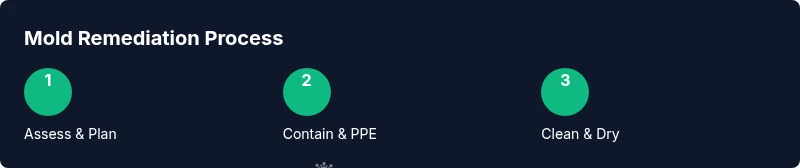
Containment helps prevent spores from migrating to other rooms. Use plastic sheeting to seal off the area, create a negative-pressure environment if feasible, and keep doors closed. Personal protective equipment (PPE) should include at least an N95 mask, goggles, and gloves. The goal is to limit exposure for you and others, especially if anyone in the home has allergies or respiratory conditions. Mold Removal Lab advises documenting the area before and after remediation to track progress and ensure no regrowth occurs.
Drying, monitoring, and prevention of regrowth
After cleaning, thorough drying is essential. Even small pockets of moisture can support regrowth. Use fans and dehumidifiers to reach consistently low humidity in the treated zone, and monitor with a hygrometer over the following days. Regularly inspect for condensation on windows, pipes, and HVAC ducts. The Mold Removal Lab approach emphasizes a proactive stance: fix leaks promptly, improve ventilation in bathrooms and kitchens, and consider air purification devices with HEPA filters to improve indoor air quality.
Professional help: when to escalate
There are scenarios where professional remediation is the safest path: visible large-scale growth, growth behind walls, or mold accompanied by musty odors that persist after cleaning. In such cases, professionals can assess structural damage, contain the area with specialized equipment, and implement remediation plans that meet local codes. The Mold Removal Lab team recommends erring on the side of caution when in doubt, especially in rental units where landlord compliance and tenant safety are paramount.
A practical homeowner checklist to get started
- Identify the moisture source and stop it
- Ventilate and dehumidify the area
- Wear proper PPE and use containment
- Clean nonporous surfaces with approved cleaners
- Decide on the fate of porous materials if damaged
- Dry thoroughly and monitor humidity
- Reassess weekly for several weeks after remediation
Final note on safety and expectations
Remediation is a process, not a single act. The primary goal is to reduce moisture, remove growth, and maintain a dryer environment to prevent recurrence. Mold Removal Lab emphasizes that consistent maintenance, rapid leak repair, and proper cleaning are the most reliable strategies for long-term mold control. With patience and careful work, many mold issues can be resolved without extreme measures.
Tools & Materials
- Nitrile gloves(Chemical-resistant gloves for protection)
- PPE mask (N95 or better)(Respiratory protection for spores)
- Goggles or face shield(Eye protection against splashes)
- HEPA vacuum (with filter)(For dry debris, not wet cleanup)
- Spray bottles(For cleaners and water)
- EPA-registered cleaner or 70% isopropyl alcohol(Choose nonporous surface compatible product)
- Hydrogen peroxide (3%)(Alternative on certain surfaces)
- Non-abrasive scrub pads(For stubborn grime on nonporous surfaces)
- Plastic sheeting and tape(Containment barrier)
- Dust mask and vacuum bag replacement(Routine replacement if needed)
- Dehumidifier(Reduces humidity in the remediation zone)
- Hygrometer or humidity gauge(Monitor moisture levels)
- Trash bags (heavy-duty)(Sealed disposal of contaminated materials)
Steps
Estimated time: 90-180 minutes
- 1
Assess scope and safety
Begin with a visual survey to determine how widespread the growth is and identify moisture sources. Take photos, mark affected areas, and note any structural concerns. If growth extends behind walls or into HVAC, escalate to professional help.
Tip: Document findings before starting; this helps with follow-up and potential insurance claims. - 2
Contain the area
Seal the space using plastic sheeting to prevent spores from spreading. Create a small negative-pressure environment if possible by closing off adjacent rooms and turning off HVAC in the contaminated area.
Tip: Keep doors closed and avoid moving contaminated materials through clean areas. - 3
Don PPE and assemble tools
Put on gloves, mask, and eye protection. Gather cleaners, spray bottles, a HEPA vacuum, a scraper or nonporous scrub pad, and disposal bags so you can work efficiently without interruptions.
Tip: Inspect PPE fit; poor seals can reduce effectiveness. - 4
Clean nonporous surfaces
For hard, nonporous surfaces (tiles, glass, metal), apply an approved cleaner and scrub to remove mold residues. Rinse with clean water and dry promptly.
Tip: Do not wet porous materials during this step to limit penetration. - 5
Address porous materials
Porous materials like drywall or fabric that show mold growth often need removal. If salvage is possible, carefully cut out affected sections; otherwise, seal and dispose of them safely.
Tip: If you can’t remove the material, hire a professional; lingering moisture can fuel regrowth. - 6
Dry thoroughly and monitor humidity
Use dehumidifiers and fans to reach low humidity (target under 50% RH). Recheck humidity over the next 24-72 hours to ensure the area dries completely.
Tip: Keep the area well-ventilated after drying to prevent condensation. - 7
Reassess and plan prevention
Revisit the area after 1-2 weeks to confirm no regrowth. Install or improve ventilation, fix leaks promptly, and consider ongoing moisture management in vulnerable spaces.
Tip: Regularly check humidity, especially in bathrooms and basements.
FAQ
Is bleach effective for mold cleanup?
Bleach can kill surface mold on nonporous surfaces, but it does not address porous materials or deep penetration. Always consider surface type and safety guidelines; for many situations, EPA-approved cleaners are preferred.
Bleach can kill surface mold on nonporous surfaces, but it doesn't reach deep into porous materials. For many cases, use EPA-approved cleaners instead.
Can I clean mold myself or should I hire a pro?
Small, clearly contained areas may be manageable for DIY cleanup if moisture is controlled. Large infestations, hidden growth, or mold on structural materials often require a professional remediation to ensure safety and prevent recurrence.
You can handle small, contained mold if moisture is controlled, but large infestations or growth behind walls should be handled by a professional.
How long does it take to kill mold?
There isn’t a single timeline; cleanup duration depends on the extent of growth, materials involved, and moisture controls. Drying and monitoring after cleaning is essential to prevent regrowth.
There isn’t a fixed timeline. It depends on the extent and materials, plus how quickly you dry and monitor afterward.
What surfaces are hardest to treat for mold?
Porous materials like drywall, plywood, and upholstery are hardest because mold can embed within fibers. In these cases, contamination control and removal of affected materials are often needed.
Porous materials are hardest because mold can hide inside fibers; may require removal.
How can I prevent mold from returning after cleanup?
Maintain low humidity (generally under 50-60%), fix leaks promptly, ensure good ventilation, and regularly inspect problem areas like bathrooms and basements.
Keep humidity low, fix leaks fast, and inspect problem spots regularly to prevent regrowth.
When should I consider professional testing?
If you’re unsure about the extent of hidden growth or have ongoing symptoms after cleanup, professional testing can help quantify mold presence and guide remediation scope.
If you’re unsure about hidden mold or continuing symptoms, consider professional testing to guide remediation.
Watch Video
The Essentials
- Address moisture first to stop mold growth
- Contain and protect yourself during cleanup
- Use appropriate cleaners on nonporous surfaces
- Decide between DIY removal and professional remediation based on scope
- Prevent regrowth with ongoing moisture control