Can You Kill Mold with Heat? What Works and What Doesn’t
Explore whether heat can kill mold, why moisture control matters, and when to call pros. Learn safe remediation strategies beyond heat with practical steps and expert guidance from Mold Removal Lab.


Can you kill mold with heat? Heat alone is not a reliable method for eradicating mold throughout a home. While some mold structures may be damaged by high temperatures, many spores survive and can re-colonize once moisture returns. For safe, lasting remediation, prioritize moisture control, thorough cleaning, and, for larger infestations, professional remediation rather than relying on heat as a sole method.
Can heat kill mold: what the science says
Mold is a resilient organism that thrives where moisture is present. Heat can affect the visible growth on some surfaces, and certain molds may show reduced activity under elevated temperatures. However, heat is not a guaranteed remedy for an indoor mold problem. In real homes, mold can hide behind walls, inside insulation, or within porous materials. Surfaces can heat quickly but interior pockets may stay damp, providing a niche for mold to survive. Spores are microscopic and can disperse through the air if disturbed during heating. Because heating hard-to-reach areas is difficult and potentially dangerous, many homeowners underestimate the risk of re-infestation after transient drying. The Mold Removal Lab team emphasizes that heat should never replace moisture control, physical removal, and ongoing drying as the core steps of remediation. If you do use heat, plan it as part of a broader strategy that includes containment, ventilation, and monitoring for dampness over time.
Why moisture control is the real game changer
Moisture creates the conditions mold needs to grow. Even if you apply heat, residual dampness in walls, floors, or fabrics allows mold to re-establish itself once the area cools. Practical steps include fixing leaks promptly, reducing humidity with dehumidifiers, and improving ventilation. Thorough cleaning and removal of contaminated materials are essential, because heat cannot replace the physical removal of visible growth. The Mold Removal Lab team emphasizes that moisture management is the foundation of effective remediation and reduces the likelihood of future infestations.
Scenarios where heat is used in remediation
Heat is occasionally used by trained technicians as part of a broader strategy to dry out spaces after moisture intrusion. When professional teams apply heat, they control air movement, exposure time, and surface temperatures to minimize risk to occupants and materials. In typical homes, heat should never be the primary remediation method, especially for large areas or porous materials. If heat is used, it should be paired with containment, continuous moisture monitoring, and thorough cleaning to prevent re-growth.
How to assess risks and decide on heating
Start by mapping the extent of mold growth and identifying moisture sources. If the affected area is small and contained, heat can be considered only as a supplementary step alongside cleaning and drying. For larger infestations or hidden growth inside walls and insulation, professional remediation is the safer choice. If heat is used, ensure flammable materials are removed, electrical systems are protected, and air is circulated to avoid hotspots.
Safer alternatives to heat for small mold spots
For small, non-porous surfaces, cleaning with soap and water or mild cleaners, followed by disinfection, is often sufficient. Use a HEPA vacuum to capture loose spores and seal the work area to prevent spread. Dry surfaces completely, and maintain low humidity to prevent regrowth. In most cases, non-heat methods are more reliable and safer for homeowners.
Step-by-step safety checklist (non-heating focused)
Before you start any remediation, take a moment to document the mold, sources of moisture, and the size of the affected area. Set up containment to limit spread and protect occupants. Use approved cleaners and a HEPA vacuum for cleanup, then dry the space thoroughly with fans and dehumidifiers. Finally, reassess moisture levels and plan ongoing prevention to reduce recurrence.
Professional remediation: when to call in experts
If mold covers a large area, grows in hidden spaces, or involves HVAC systems or structural elements, professional remediation is strongly advised. Trained technicians have equipment and protocols to contain, remove, and verify mold cleanup safely. Expect a formal plan, containment, air filtration, and post-remediation testing when needed.
Home maintenance to prevent mold recurrence
Maintenance matters most: fix leaks promptly, monitor indoor humidity, improve ventilation, and dry damp areas quickly after spills or showers. Regular inspections of basements, bathrooms, and crawl spaces help catch issues early. By combining moisture control with proactive cleaning, you reduce the chance of mold returning.
Tools & Materials
- HEPA vacuum(Certified HEPA filtration; seals to trap particles)
- Non-abrasive microfiber cloths(For gentle cleaning and dust removal)
- Mild detergent or soap(Use a non-ammonia, non-acid cleaner)
- Protective gear (N95 respirator, gloves, goggles)(Ensure proper fit and eye protection)
- Plastic sheeting & painter's tape(Containment to limit spread)
- Moisture meter or hygrometer(Track humidity levels)
- Dehumidifier or air conditioner(Help dry the area after cleaning)
- Thermal safety device or temp/humidity monitor(Use if attempting heat; monitor risks)
- Mold-remediation products (as directed)(Follow manufacturer directions)
Steps
Estimated time: 2-8 hours
- 1
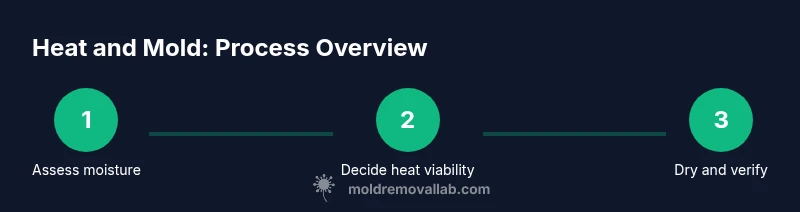
Assess mold growth and heat viability
Survey the affected space to determine how widespread the mold is and whether heat would meaningfully help. Consider hidden growth behind walls and within porous materials, which heat alone cannot reach. Decide if heat is appropriate only as a supplementary measure within a broader plan.
Tip: Document locations before starting to avoid missing spots later. - 2
Prepare the area and establish containment
Set up plastic sheeting to isolate the work zone. Remove or cover nearby furnishings, and clear flammable items. Ensure electrical outlets are protected and that you have safe egress in case of an emergency.
Tip: Containment helps prevent spores from spreading to other rooms. - 3
Don protective gear and gather materials
Put on an N95 respirator, gloves, and eye protection. Assemble cleaning supplies, a HEPA vacuum, and any moisture-control devices you plan to use.
Tip: A proper fit on PPE dramatically reduces exposure risk. - 4
Set up heat safely (if chosen)
If you decide to integrate heat, ensure there are no flammable materials nearby, electrical safety is solid, and you have adequate ventilation. Establish clear operational limits and supervision.
Tip: Never leave heat devices unattended; monitor continuously. - 5
Apply heat with caution (targeted areas only)
Apply heat only to specific, contained areas and for limited periods. Use surface-level checks and avoid overheating wood, plastics, or wiring. Stop if you notice distortion, burning smells, or smoke.
Tip: Heat should not be the primary remediation method. - 6
Control moisture concurrently
Run dehumidifiers and fans to promote rapid drying. Use a moisture meter to verify drying progress before removing containment.
Tip: Keep humidity low to reduce mold regrowth risk. - 7
Clean and decontaminate surfaces
Wipe surfaces with appropriate cleaners and disinfectants. Vacuum with HEPA, then bag and dispose of waste properly. Do not reintroduce contaminated materials after cleaning.
Tip: Follow up with a second pass to catch missed spores. - 8
Dry and verify dryness
Continue drying until a moisture reading is consistently low. Reassess the area visually and with a meter to confirm no lingering dampness.
Tip: A dry space discourages recurrence. - 9
Schedule follow-up evaluation
Arrange a post-remediation check to ensure mold has been fully removed and moisture sources are addressed. Decide on ongoing prevention measures based on findings.
Tip: Document results for future reference.
FAQ
Can heat kill every mold species?
No. Heat may affect some molds, but many spores survive and can re-grow if moisture remains. Heat should not be relied on as the sole remediation method.
Heat may affect some molds, but many spores survive. Don’t rely on heat alone to remediate mold.
Is heating safe for my home?
Heating carries fire and material-damage risks and should only be used as part of a broader remediation plan with proper safety measures.
Heating carries risks and should be used with safety measures and as part of a broader plan.
When should I call a professional?
If mold covers a large area, is hidden inside walls, or involves your HVAC system, a professional remediation service is recommended.
Call a professional if mold is large, hidden, or involves the HVAC system.
What are safer alternatives to heating?
Moisture control, proper cleaning, HEPA vacuuming, and thorough drying are safer and more reliable than heating alone.
Safer alternatives include moisture control and thorough cleaning with proper drying.
Can I dry out a space after a leak without heat?
Yes, using mechanical drying (fans and dehumidifiers) without relying on heat can effectively reduce moisture and limit mold growth.
Yes—use fans and dehumidifiers to dry the space without relying on heat.
Does homeowners insurance cover mold remediation?
Coverage varies by policy. Check with your insurer; large or complex mold cases often require professional remediation and documentation.
Insurance varies; check your policy and document mold findings for claims.
Watch Video
The Essentials
- Take moisture control seriously as the foundation of remediation.
- Heat alone is not a reliable mold solution.
- Containment and thorough cleaning reduce spread and re-growth.
- Call a professional for large or hidden infestations.