Mold vs Mildew Smell: Identification, Health Risks, and Remediation
Learn to distinguish mold vs mildew smell, identify moisture sources, assess health risks, and follow practical remediation steps to restore a safe home.


Mold vs mildew smell usually signals moisture problems, but they have different implications. A mold odor often suggests hidden growth behind walls or panels, while mildew odor typically comes from surface growth on damp materials. This comparison helps homeowners identify sources, gauge health risks, and prioritize practical fixes like moisture control, cleaning, and when to call a pro.
What is the difference between mold and mildew smell?
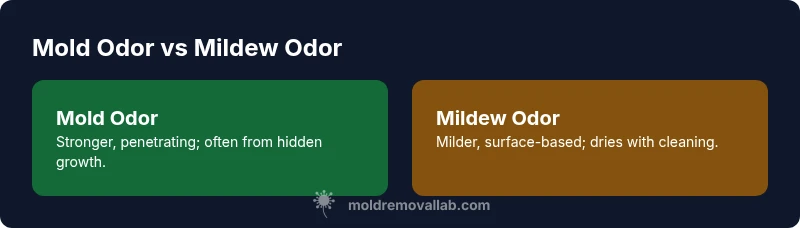
Mold and mildew odors share a musty undertone, but they arise from different organisms and indicate distinct moisture and structural issues. For homeowners evaluating a potential mold problem, the phrase mold vs mildew smell is a helpful shorthand that points toward underlying processes rather than a single diagnostic test. Mold odors are frequently stronger, more penetrating, and persistent, often emanating from hidden colonies behind drywall, under insulation, or inside wall cavities. Mildew odors tend to be milder and more surface-oriented, commonly detected on damp fabrics, tile grout, shower curtains, or the seams of bathroom caulking. Because both fungi thrive on moisture, addressing the root cause—excess humidity, leaks, or condensation—is essential rather than chasing the scent alone. In practice, odor presence should trigger a moisture assessment and visual inspection for staining, texture changes, or suspicious growth patterns. According to Mold Removal Lab, the smell is a critical early signal, but a full remediation plan requires confirming moisture sources and the extent of contamination. This guide outlines how to differentiate, investigate, and respond safely.
How odors form in moisture-damaged spaces
Odors do not form in a vacuum. They arise when moisture, warmth, and a nutrient-rich surface create a micro-ecosystem that favors fungal growth. In indoor environments, high humidity and frequent water exposure—such as from leaks, condensation on windows, or improper ventilation—provide the conditions mold and mildew need to release volatile organic compounds (VOCs) that we perceive as odor. The term mold vs mildew smell captures both the intensity and the geographic pattern of odor emission: surface mildew may produce a clean, damp laundry scent, while hidden mold often yields a penetrating, musty aroma that seems to originate from behind walls. The chemistry behind odors is complex, but the practical takeaway is straightforward: odor strength correlates with moisture duration and colony size. Mold Removal Lab’s analysis, 2026, shows that prolonged moisture is a stronger predictor of hidden growth than a single damp day, underscoring the need for moisture control in remediation planning.
Common sources of mold and mildew odors
Odors originate from damp spaces and porous materials that hold onto moisture. Common culprits include bathrooms with poor venting, basements with high humidity, kitchens near leaks or drainage, laundry rooms, and crawl spaces. HVAC ducts can carry musty air from one room to another, spreading the smell. Surfaces like drywall, wood, fabric, and grout that stay wet for extended periods are especially prone to mildew and mold growth. Identifying moisture hotspots—leaky roofs, plumbing fixtures, or chromeed surfaces near windows—helps target remediation. In many homes, the strongest odors come from hidden growth behind walls or under flooring, where visible signs are minimal. This is precisely why a careful moisture audit, not just odor cleaning, is required when the topic is mold vs mildew smell.
How to tell them apart by scent and indicators
While both odors are musty, most homeowners notice subtle differences: mildew smell is typically milder, more powdery, and tends to resurface after cleaning damp fabrics or grout. Mold odor is more pungent, persistent, and often accompanied by visible staining, uneven surfaces, or water damage patterns. Indicators beyond scent include: dampness on walls, blistering paint, soft spots in wood, or a persistent damp feeling in a room. If you detect a strong, chemical-like odor that lingers even after drying, suspect active growth behind surfaces. Remember, odors are clues, not diagnoses; combine smell with moisture levels, visible growth, and leaks to decide on remediation priorities. Mold Removal Lab emphasizes that action on moisture sources is essential, even if you cannot immediately locate the physical colony.
Health implications of mold vs mildew smell
Both odors signal moisture-driven microbial activity that can affect indoor air quality. Prolonged exposure to mold spores or fragment aerosols can trigger allergic reactions, coughing, wheezing, eye irritation, and in some cases asthma symptoms. Mildew, while often less hazardous than mold, can still irritate sensitive individuals and contribute to a damp, unhealthy environment if ignored. People with compromised immune systems, children, and the elderly are more vulnerable. Regardless of the specific organism behind the smell, addressing the moisture problem and cleaning affected surfaces reduces the risk of ongoing exposure and secondary mold growth. Mold Removal Lab’s position is that a safe indoor environment depends on controlling humidity, repairing leaks, and thorough cleaning, not merely masking odors with air fresheners.
Practical remediation steps when you smell mold or mildew
Start with a practical plan: locate the moisture source, dry the area, and clean visible surfaces with appropriate cleaners. For nonporous surfaces (glass, metal, tile), use detergent and water, followed by a thorough dry. Porous materials (drywall, carpet, porous wood) containing visible growth typically require removal and replacement rather than cleaning, to prevent regrowth. Always wear protective gear—gloves, mask/respirator, and eye protection—when cleaning mold or mildew odors. Ventilate well during cleanup and monitor humidity levels to keep them below 60–65%. After cleaning, re-check for lingering odors and moisture; if odor persists, consider professional assessment to determine hidden growth behind walls or within insulation. Mold Removal Lab recommends documenting moisture sources and remediation steps to prevent recurrence.
Testing and verification options
Verification is about confirming moisture control and actual absence of growth, not just odor elimination. Simple steps include checking humidity with a reliable home hygrometer and inspecting for visible signs of growth after drying. If you observe persistent odors, or if moisture recurs after cleanup, you may need more advanced verification such as professional moisture mapping or air quality testing. Home test kits are available, but results should be interpreted cautiously; false positives and negatives are possible. When in doubt, a professional assessment can distinguish between surface mildew and hidden mold and guide the remediation plan accordingly.
Preventing future odors: maintenance and moisture control
Prevention centers on moisture management. Keep indoor humidity below 60% (lower in damp climates), fix leaks promptly, and improve ventilation in moisture-prone areas. Use exhaust fans in bathrooms and kitchens, and consider a dehumidifier in basements or crawl spaces. Regularly inspect windows, roofs, pipes, and HVAC systems for condensation and staining. Use mold-resistant paints and materials where feasible, and establish a routine of cleaning damp areas with a detergent solution. By maintaining a dry, well-ventilated environment, you reduce the risk of recurring mold vs mildew smell and protect occupants’ health.
Quick-start action plan
- Confirm moisture source: check for leaks, condensation, and airflow issues. 2) Dry the area completely and fix any structural issues. 3) Clean nonporous surfaces with detergent; remove porous materials if contaminated. 4) Reassess humidity and ensure it remains below 60%. 5) Monitor for signs of new growth and odors. 6) If odors persist, schedule a professional assessment.
When to call a professional
If you cannot locate the moisture source, if visible growth is extensive, or if occupants experience persistent symptoms, a professional remediation team is advised. Hidden mold behind walls or under insulation requires specialized equipment and containment to prevent cross-contamination. Prompt professional advice helps identify whether testing is appropriate and ensures remediation is thorough and safe.
DIY vs professional remediation: a decision guide
DIY remediation is reasonable for small, contained mildew on nonporous surfaces and when moisture sources are clearly controlled. For suspected hidden mold, extensive growth, or porous material contamination, professional remediation is recommended to ensure complete removal, proper containment, and safety. Consider the extent of exposure, room size, and potential health risks when choosing between DIY and pro solutions. Mold Removal Lab advises erring on the side of caution when odors persist or moisture remains unresolved.
Comparison
| Feature | Mold odor | Mildew odor |
|---|---|---|
| Odor Source | Often hidden behind walls or within structural voids | Typically surface-level on damp materials |
| Indication of Growth | Strong indicator of active, possibly extensive growth | Usually indicates surface colonization on moisture-damaged materials |
| Remediation Priority | High priority: locate moisture and address internal growth | Moderate priority: clean and dry affected surfaces |
| Common Surfaces | Drywall, insulation, behind baseboards | Tile grout, shower curtains, fabrics, caulk |
| Health Considerations | Potentially higher irritant exposure; stronger allergic triggers | Can irritate sinuses and lungs, especially in sensitive individuals |
| Verification | Professional assessment often needed to confirm hidden growth | Surface cleaning often suffices if cleaning is thorough and moisture is controlled |
Upsides
- Helps prioritize moisture control and remediation
- Improves indoor air quality and occupant health
- Guides practical, milestone-based remediation steps
- Supports informed decision-making about DIY vs pro help
The Bad
- Odors can be misleading without testing or inspection
- DIY remediation may miss hidden growth or recontamination
- Professional assessments add cost and scheduling time
- Testing results can be inconclusive without expert interpretation
Prioritize moisture control; address hidden growth for mold odor, and surface cleaning for mildew odor.
Odor cues guide initial action, but definitive remediation depends on moisture source identification and, if needed, professional assessment to confirm growth and containment.
FAQ
What is the difference between mold odor and mildew odor?
Mold odor is usually stronger, penetrating, and may come from hidden growth behind walls, while mildew odor is typically milder and surface-based. Both arise from moisture, so addressing humidity is key.
Mold odor tends to be stronger and hidden, while mildew odor is usually milder and on surfaces. Fix moisture first to resolve both.
Can you smell mold even if you can't see it?
Yes. Mold can grow behind walls or inside insulation, producing a musty odor without visible signs. If you smell persistent mustiness, investigate moisture sources and consider a professional inspection.
You can smell mold even when you can't see it; moisture check is essential.
Is mildew odor dangerous?
Mildew can irritate sensitive individuals and contribute to a damp environment, but it is generally less harmful than widespread mold. Address it promptly by cleaning and reducing moisture.
Mildew can irritate some people; fix moisture and clean surfaces to reduce exposure.
Should I test for mold if I smell something moldy?
If odors persist after cleaning or moisture remains, testing can help confirm growth and guide remediation. Start with moisture control and visual checks before testing.
Persistent odor? Testing can help, but first fix moisture and clean visible areas.
What are immediate steps if I notice a mold odor?
Identify and stop the moisture source, ventilate, dry the area completely, and clean nonporous surfaces with detergent. Avoid disturbing mold in porous materials; seek professional help if contamination is suspected.
Find moisture, dry the area, clean surfaces, and call a pro if you suspect hidden growth.
When is professional remediation required?
Call a professional if growth is extensive, moisture remains ongoing, or you detect hidden mold behind walls. Professionals use containment and proper removal methods to prevent cross-contamination.
Call a pro when growth is hidden or extensive or moisture is ongoing.
The Essentials
- Identify moisture sources before cleaning
- Differentiate mold odor from mildew odor to set remediation priority
- Protect yourself with proper gear during cleanup
- Do not ignore persistent odors or recurring moisture
- Consult a professional when growth is hidden or extensive