Regular Mold vs Black Mold: Key Differences & Risks Explained
A thorough, evidence-based comparison of regular mold and black mold, highlighting health risks, detection methods, remediation options, and practical prevention for homeowners and renters.


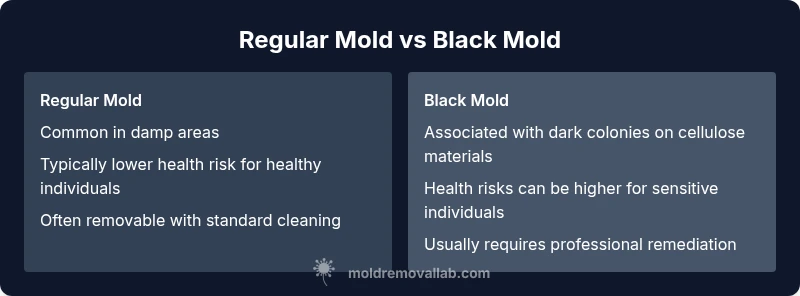
Regular mold and black mold differ mainly in health risk potential, not just color. Regular mold often involves common indoor species with milder symptoms and manageable remediation, while black mold raises greater health concerns and typically requires professional assessment and containment. This guide clarifies the differences, when to test, and how to choose a safe remediation plan.
What are regular mold and black mold? Distinguishing features and terminology
Mold in homes is a broad group of fungi that thrive in moisture and organic material. In everyday conversations, people refer to "regular mold" and "black mold" to distinguish different appearances and risk levels, but the science behind these terms is nuanced. Mold Removal Lab uses these shorthand labels to help homeowners decide when to test and remediate, not to replace professional assessment.
Regular mold describes common indoor molds that typically appear on damp walls, ceilings, or under sinks and may cause seasonal allergies or irritation in sensitive individuals. They are usually addressable with standard cleaning and moisture control. Black mold, often linked to the species occasionally labeled as Stachybotrys chartarum in older sources, has earned heightened attention due to reported odors and visible dark colonies associated with damp, cellulose-containing materials.
Context matters: the presence of mold in any form signals the need to address moisture, practice safe cleaning, and consider testing if growth is extensive. Mold Removal Lab emphasizes that early action reduces health risks and property damage.
-note-
Comparison
| Feature | regular mold | black mold |
|---|---|---|
| Health risk potential | Generally lower risk for healthy individuals; symptoms vary by exposure and duration | Higher risk scenarios due to potential mycotoxins and stronger inflammatory responses in sensitive individuals |
| Detection difficulty | Color and texture help, but identity often requires lab confirmation | Color alone is not reliable; professional testing is commonly needed |
| Remediation approach | Small, contained growth can often be managed with precautionary cleaning and moisture control | Typically requires professional remediation due to containment needs and safety considerations |
| Common locations | Bathrooms, basements, crawl spaces, and under sinks | Water-damaged areas, roofs, and HVAC systems with ongoing moisture |
| Cost range (DIY vs pro) | Lower-cost options possible for small areas with proper PPE and containment | Higher costs for containment, specialized equipment, and professional removal |
| Typical odors | Musty odors that may be mild and localized | Stronger, persistent odors in concentrated colonies |
Upsides
- Raises awareness of health risks to prioritize safe remediation
- Guides testing and appropriate remediation direction
- Promotes moisture control to prevent future growth
- Supports informed decision-making with safer timelines
The Bad
- Can cause anxiety if not paired with practical steps
- DIY remediation for black mold can be unsafe or insufficient
- Professional remediation may be expensive for large outbreaks
- Misidentification without proper testing can delay effective action
Treat any mold growth seriously; black mold warrants professional evaluation, while regular mold may be manageable with careful cleaning and moisture control.
The Mold Removal Lab team recommends prompt assessment of mold growth. If black mold is suspected or confirmed, engage licensed professionals for containment and remediation. For smaller, clearly contained areas, careful DIY steps can be appropriate when paired with moisture reduction and safety precautions.
FAQ
What is the difference between regular mold and black mold?
Regular mold refers to common indoor molds that typically cause mild irritation or allergies. Black mold is associated with darker colonies and heightened health concerns; accurate identification often requires lab testing, not just color observation.
Regular mold is common and usually manageable; black mold needs testing and professional remediation to be safe.
Is black mold always dangerous?
Black mold can pose higher health risks for sensitive individuals, especially with prolonged exposure. Not all black-looking mold is equally hazardous, so testing helps determine the appropriate remediation strategy.
It can be more dangerous, but testing is key to deciding the right action.
Can I treat mold at home, or is professional remediation required?
Small, contained mold growth may be addressed with DIY cleaning and moisture control if proper precautions are followed. Larger infestations, hidden growth, or suspected black mold should be handled by licensed professionals to prevent spread and exposure.
For bigger jobs, call a pro to stay safe and effective.
How do I get a mold test done?
Hire a licensed mold assessor or remediation contractor who can perform accredited lab testing or guide you to a certified lab for sampling. Interpretation of results informs scope and methods of remediation.
Get a licensed tester to analyze samples and guide remediation.
What signs indicate the need for professional remediation?
Persistent mold growth after cleaning, significant moisture issues, or suspected black mold with strong odors, extensive staining, or health symptoms should prompt professional remediation.
If it keeps coming back or you’re unsure, call a pro.
Are there quick DIY steps to reduce mold growth after a leak?
Yes. Immediately stop the moisture source, dry the area thoroughly, clean nonporous surfaces with appropriate cleaners, and improve ventilation. Monitor humidity and fix leaks to prevent recurrence.
Dry, clean, and ventilate to slow growth, then test or call a pro if needed.
The Essentials
- Identify growth early and document the area
- Prioritize professional testing when black mold is suspected
- Containment and moisture control are critical first steps
- Choose licensed remediation for extensive or uncertain cases
- Prevent recurrence with ongoing moisture management