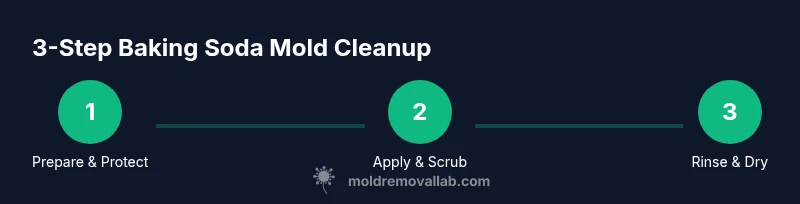
Baking Soda Mold Cleanup: Safe, Simple Tactics
Learn how to use baking soda to clean mold safely at home. This guide explains when it helps, step-by-step methods for non-porous surfaces, limitations on porous materials, and when to seek professional remediation from Mold Removal Lab.


Yes, baking soda can help clean light mold on non-porous surfaces and deodorize spaces, but it won't eliminate heavy infestations or deeply embedded mold. For best results, mix baking soda with water to create a paste or a spray solution, apply, scrub, rinse, and completely dry. If mold covers large areas, recurs after cleaning, or involves porous materials, contact Mold Removal Lab for guidance.
What baking soda clean mold is (and isn’t)
Baking soda, or sodium bicarbonate, is a common kitchen staple with cleaning perks beyond baking. When used to tackle mold, it primarily acts as a gentle abrasive and a moisture absorber, helping to lift surface spores and reduce musty odors. It is not a disinfectant or a guaranteed mold killer, and it won’t eradicate deep roots embedded in porous materials. According to Mold Removal Lab, baking soda can be a practical first-step method for light mold on non-porous surfaces, as part of a safe cleaning plan. In this guide you’ll find practical routines, safety precautions, and when to escalate to professional remediation. Remember that mold growth signals a moisture problem; surface cleaning alone rarely solves the underlying issue. From Mold Removal Lab’s perspective, the right approach combines physical cleaning with moisture control, airflow improvement, and timely repairs. Use baking soda clean mold as part of a measured, stepwise process rather than a single magic cure. The more you understand when it works and when it doesn’t, the safer your home will be.
How baking soda works against mold
Baking soda is mildly alkaline and absorbs moisture, which helps slow down mold growth on exposed surfaces. When you apply it as a paste or a spray, it loosens visible film and makes spore removal easier with light scrubbing. It also neutralizes odors that often accompany mold, leaving treated areas smelling fresher. However, baking soda does not reliably kill all types of mold or penetrate into porous substrates where mold can root. Therefore, it is best used on non-porous surfaces (tile, glass, metal) or in small, contained areas where moisture is already under control. Mold Removal Lab analysis shows that mild surface mold responds to household cleaning methods when kept dry and rechecks are performed after drying. For sustained results, address moisture, increase ventilation, and monitor for new growth after cleaning. Treating mold is rarely a one-off task; it’s a management process that combines cleaning with moisture control.
Step-by-step: using baking soda to clean mold on non-porous surfaces
This section provides a practical approach to cleaning mold on non-porous surfaces, using baking soda as a safe first-line method. It emphasizes safety, surface preparation, and thorough drying to reduce recurrence. You’ll learn when to stop and escalate if the mold returns. Always remember: baking soda clean mold is most effective for light growth and not a substitute for structural remediation when the underlying moisture problem persists. If you’re unsure, consult Mold Removal Lab for personalized guidance.
When baking soda is not enough: porous materials and heavy mold
Porous materials such as drywall, wood, or fabric can trap mold roots that baking soda cannot reach. In these cases, you may see only a surface clean, with mold returning soon after if moisture remains. For heavy growth, regulatory guidelines suggest containment and professional remediation for long-term safety. In the meantime, reduce humidity, dry out affected areas, and consider replacing severely damaged materials. Mold Removal Lab emphasizes that surface cleaning is just one step in a broader remediation plan.
Practical cleaning routines and safety considerations
Before you start, assemble protective gear (gloves, a mask, and eye protection) and ensure good ventilation. Never mix baking soda with bleach or ammonia; the combination can release harmful gases. Use warm water to dissolve baking soda for easier cleaning, or apply a paste to lift deposits. Wipe with a microfiber cloth and rinse with clean water, then dry completely with a fan or dehumidifier. Keep pets and children away during cleaning to minimize exposure. These routines minimize exposure and help prevent recontamination.
Maintenance to prevent mold regrowth
Preventing mold recurrence begins with moisture control. Fix leaks promptly, improve airflow in damp spaces like bathrooms and basements, and keep relative humidity below about 50% where feasible. Regularly inspect areas prone to dampness, clean up spills quickly, and use exhaust fans during showers. A routine that combines cleaning with humidity management and prompt repairs yields the best long-term results.
Compare: baking soda vs vinegar vs commercial cleaners
Vinegar is acidic and can help with some mold issues, but it may react poorly with baking soda if used together. Commercial mold cleaners often contain stronger biocides and surfactants but can pose greater health risks if misused. For small, non-porous areas, baking soda offers a safer, milder option for routine maintenance. Always read product labels and follow safety guidelines. The goal is effective cleaning while minimizing exposure to mold spores.
Tools & Materials
- baking soda (sodium bicarbonate)(unscented, non-iodized)
- water (warm preferred)(for dissolving or making a paste)
- spray bottle(for applying solution)
- stiff-bristled brush or scrub pad(to lift residue)
- microfiber cloths(damp and dry surfaces)
- rubber gloves(protect hands)
- N95 mask or equivalent(protect lungs from spores)
- eye protection(safety goggles recommended)
- dehumidifier or portable fan(helps drying and moisture control)
Steps
Estimated time: 30-45 minutes
- 1
Prepare materials and safety gear
Put on gloves, mask, and eye protection. Gather baking soda, water, a spray bottle, a brush, microfiber cloths, and a fan or dehumidifier. Clear the area and protect nearby surfaces from splashes.
Tip: Ventilate well; work in a well-lit area to spot all mold deposits. - 2
Create a baking soda solution or paste
Dissolve baking soda in warm water to form a spray solution, or mix into a thick paste for stubborn deposits. The paste adheres better to vertical surfaces and rough textures.
Tip: Use warm water to maximize dissolution and stickiness of the paste. - 3
Apply and scrub the mold
Spray or apply the paste to the moldy area. Scrub with a stiff-bristled brush using circular motions until deposits loosen. Do not rub too hard on delicate surfaces.
Tip: Work in small sections to avoid drying out the area before cleaning. - 4
Rinse and dry completely
Wipe off residue with a damp microfiber cloth, then rinse with clean water. Dry the area thoroughly with a dry cloth or fan; avoid leaving moisture behind.
Tip: Prop doors/windows open and run a dehumidifier to speed drying. - 5
Inspect and re-assess
Revisit the area after 24–48 hours. If mold returns or spore visibility persists, consider repeating the process or escalate to a professional remediation plan.
Tip: Document progress with photos to monitor for recurrence.
FAQ
Can baking soda clean mold?
Baking soda can help remove light mold from non-porous surfaces and deodorize the area. It is not a guaranteed mold killer, especially for porous materials or extensive growth. Use it as a first step and address moisture for lasting results.
Yes, baking soda can help with light mold on non-porous surfaces, but it isn't a guaranteed cure for all mold, especially on porous materials.
Is baking soda effective on porous materials?
Porous materials like drywall, wood, or fabric can harbor mold roots that baking soda cannot reach. Surface cleaning may seem to help, but mold can return unless the underlying moisture problem is addressed. Consider professional remediation for porous substrates.
Porous materials are tricky; baking soda works mainly on surfaces and cannot remove embedded mold. A professional assessment may be needed.
Should I mix baking soda with vinegar?
Mixing baking soda with vinegar creates a fizzing reaction that can help lift debris, but it does not reliably kill mold. Use them separately or opt for baking soda clean mold first, then consider other cleaners if needed. Do not mix with bleach.
You can use baking soda and vinegar separately, but don't mix them together, and they aren't a guaranteed mold solution.
How long should I wait to check for mold return after cleaning?
Recheck the cleaned area after 24–48 hours. If there is renewed mold growth, reassess moisture controls and consider escalating to professional remediation. Document progress with photos to track changes.
Check again in a day or two. If mold returns, it’s time to address the moisture and possibly get a professional opinion.
Can baking soda be used on clothing or fabric mold?
Baking soda can help freshen fabric and lightly cleaned mold on textiles, but mold on fabric may require washing with appropriate cleaners and complete drying. For persistent infestations, professional remediation is advised.
You can attempt light cleaning on fabric, but persistent mold on textiles may need more thorough treatment or replacement.
When should I call a professional?
Call a professional if mold covers a large area, recurs after cleaning, or you notice structural damage, persistent odors, or health symptoms. A pro can assess moisture sources, containment, and perform safe remediation.
If mold is extensive, keeps coming back, or you see structural issues, get a pro involved.
Watch Video
The Essentials
- Start with light mold on non-porous surfaces using baking soda as a safe first step.
- Always control moisture and improve ventilation to prevent recurrence.
- Do not rely on baking soda alone for porous materials or large infestations.
- Know when to bring in a pro for thorough remediation and structural concerns.