Mold and Bleach Cleanup: A Practical DIY Guide for Homeowners
Explore when to use bleach for mold cleanup, compare bleach-based methods with non-bleach alternatives, and learn safe, effective remediation steps for homes.


Bleach can kill some surface mold on non-porous surfaces, but it is not a universal fix for mold problems and it often fails on porous materials. A safer, more effective strategy combines moisture control, thorough cleaning with appropriate cleaners, and professional remediation when there is extensive growth. For DIY guidance, this article provides a detailed comparison of bleach-based cleanup versus non-bleach approaches.
What 'mold and bleach' means in home remediation
Mold growth in homes is usually a response to excess moisture, hidden leaks, or high humidity. When homeowners describe their approach as a combination of mold and bleach, they are typically referencing a surface-cleaning tactic rather than a full remediation plan. The Mold Removal Lab Team emphasizes that successful remediation goes beyond cleaning visible patches. It requires addressing the moisture source, drying affected materials, and ensuring that any cleaning agents—bleach included—are used safely and in the right context. In this guide, we compare bleach-based cleanup with non-bleach alternatives, explaining when each approach is appropriate and how to avoid common pitfalls. For readers, the key is to distinguish between surface disinfection and true mold removal, especially on porous materials. According to Mold Removal Lab, moisture control remains the foundational step in preventing recurrence; cleaning alone is rarely enough.
How bleach works and its limitations
Bleach, or sodium hypochlorite solutions, is commonly used to sanitize surfaces and in some cases to remove visible mold stains. On nonporous surfaces—like ceramic, glass, or sealed metal—bleach can reduce surface mold and reduce staining when used correctly. However, bleach has notable limitations. It often cannot penetrate porous materials (such as drywall, wood, or fabric) where mold may be embedded deeper, and it does not address the moisture condition that allowed growth in the first place. Additionally, improper use can release irritating fumes or create chemical reactions if mixed with cleaners like ammonia or acids. The overall effectiveness of bleach for mold and bleach scenarios depends on surface type, exposure, and thoroughness of cleaning. The Mold Removal Lab Team underscores that safer, longer-lasting results usually require moisture control and appropriate cleaning strategies beyond surface disinfection.
Surface type matters: porous vs non-porous
Surface porosity is a decisive factor in mold remediation outcomes. Non-porous surfaces (tile, glass, metal) respond well to surface disinfection with careful bleach use, given proper ventilation and contact time. Porous materials (drywall, wood, fabric) often harbor mold growing within tiny pores and voids; in these cases, bleach may only remove surface color and not the embedded growth. For porous substrates, replacement of damaged material or professional assessment is frequently necessary. The right approach combines moisture reduction, removal of contaminated material when needed, and targeted cleaning with agents suited to the substrate. Across the mold and bleach spectrum, a material-first mindset reduces relapse and protects indoor air quality.
Real-world effectiveness and variability
In real homes, mold and bleach effectiveness varies with the species of mold, the extent of growth, and the materials involved. For small, surface-level outbreaks on nonporous surfaces, bleach can provide a quick, visible improvement when used with proper safety measures. When growth is more extensive or embedded in porous substrates, alternatives or professional remediation are typically more reliable. The effectiveness of any bleach-based step also hinges on moisture control: if moisture remains, mold can return even after cleaning. Mold Removal Lab analyses show that remediation is most successful when cleaning is coupled with moisture management, drying, and monitoring for regrowth over time.
Safety, PPE, and storage when using bleach
Bleach use requires careful safety planning. Ensure adequate ventilation, never mix bleach with ammonia or acids, and wear eye protection, gloves, and a mask appropriate for chemical cleaners. Keep bleach out of reach of children and pets, store away from heat sources, and follow label directions for dilution and contact time. After application, rinse surfaces if recommended and dry thoroughly to minimize residual moisture. Safe handling reduces the risk of chemical exposure and secondary hazards, while also helping to prevent overuse that can degrade materials or produce odors.
When bleach is appropriate: best-case scenarios
Bleach-based cleanup is reasonable in limited scenarios: small, well-contained mold on nonporous surfaces where there is no evidence of moisture intrusion, and the underlying substrate is intact. It is often used as a surface disinfectant rather than a remediation strategy for widespread or porous growth. If the area is dry, easy to seal, and the goal is disinfection rather than removal of contaminated material, a cautious bleach treatment with adequate ventilation can be part of a broader plan. Remember, mold and bleach outcomes improve when paired with moisture control and follow-up monitoring.
Common myths about bleach and mold debunked
Many myths persist about bleach and mold. Myth: bleach can eliminate mold completely from porous materials. Reality: embedded mold often persists, and bleaching can mask growth without addressing the root cause. Myth: any odor means mold remains. Reality: lingering scents may indicate moisture or chemical residues, not necessarily active colonies. Myth: bleach prevents mold from returning forever. Reality: without moisture control and ongoing maintenance, mold can reappear. Myth: bleach is always the simplest solution. Reality: safer and more effective results frequently come from a moisture-management plan plus non-bleach cleaning methods.
Non-bleach alternatives for mold cleanup
There are several non-bleach options worth considering, especially for porous materials or sensitive indoor environments. White vinegar, hydrogen peroxide, baking soda, and enzyme cleaners may offer surface cleaning and deodorizing effects. For porous materials or larger outbreaks, professional-grade cleaners or building science-informed approaches may be warranted. Regardless of the method, always address moisture problems, ensure proper ventilation, and follow product instructions. The goal is to remove growth, dry the area, and prevent recurrence.
Step-by-step cleanup workflow (bleach-inclusive guidelines)
- Assess the area and verify there is no active water intrusion; identify whether surfaces are porous or non-porous. 2) Put on PPE: gloves, eye protection, and a respirator if fumes are a concern. 3) Isolate the space to prevent spore spread and ventilate the area. 4) If using bleach on nonporous surfaces, prepare a well-ventilated solution according to product instructions. 5) Apply a thin layer and allow contact time; avoid over-wetting. 6) Scrub with a non-abrasive brush and rinse or wipe away residues. 7) Dry thoroughly using fans or dehumidifiers. 8) Inspect for hidden growth and monitor moisture. 9) Dispose of contaminated materials in sealed bags. 10) Document and monitor humidity to prevent recurrence.
Post-cleanup drying and prevention
Even after a successful cleaning, moisture control is essential to prevent mold from returning. Use dehumidifiers, fans, and exhaust to maintain indoor humidity below recommended levels. Fix leaks promptly, improve ventilation in moisture-prone rooms, and consider moisture barriers where appropriate. Regular inspections, especially after heavy rain or humidity spikes, help catch issues early. A proactive approach reduces the risk of regrowth and protects indoor air quality over time.
When to call a professional and what to expect
If mold covers a large area, has penetrated porous building materials, or there is ongoing moisture intrusion, a professional remediation service is advised. Professionals evaluate moisture sources, remove contaminated materials, implement containment, and perform thorough cleaning and drying. They may use specialized equipment to test for hidden growth and ensure that the remediation plan meets local codes and best practices. Early consultation with a pro can prevent costly damage and health concerns.
Key decision factors for choosing a method
Choosing between bleach-based cleanup and non-bleach alternatives depends on surface type, extent of growth, moisture conditions, and safety concerns. Start with moisture control and surface assessment; use bleach only for appropriate, nonporous surfaces and small areas, and consider non-bleach methods or professional help for porous materials or extensive growth. This decision framework helps homeowners balance safety, effectiveness, and cost while protecting indoor air quality.
Comparison
| Feature | Bleach-based cleanup | Non-bleach alternatives |
|---|---|---|
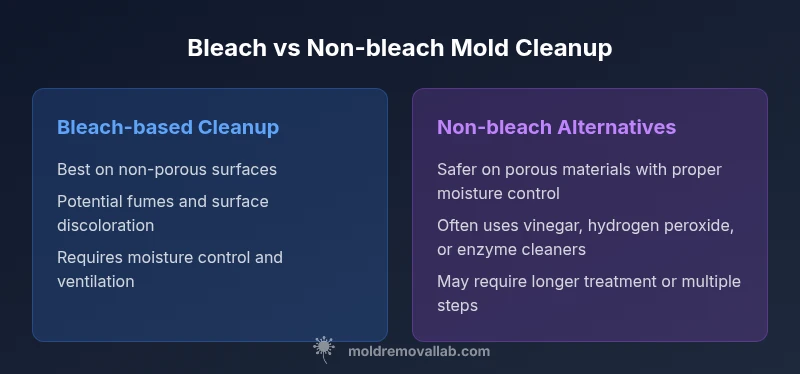
| Surface compatibility | Best on non-porous surfaces (tile, glass, metal) | Safer on porous surfaces when used with appropriate cleaners |
| Mold kill effectiveness | Surface-level disinfection on non-porous substrates | Varies by product; often targets surface mold and odors |
| Porosity handling | Limited penetration into porous materials | Better penetration with some non-bleach cleaners or professional methods |
| Safety considerations | Chemical fumes, requires ventilation; avoid mixing with ammonia or acids | Fewer hazardous fumes with certain non-bleach cleaners; still require precautions |
| Odor and fumes | Strong chlorine odor possible | Typically milder or neutral odors depending on product |
| Residual cleaning | Residue can be sticky and may discolor surfaces | Some cleaners leave minimal residue if rinsed properly |
| Cost/availability | Widely available and inexpensive per use | Cost varies by product; some options are inexpensive, others premium |
Upsides
- Widely available pantry option for non-porous surfaces
- Can disinfect and retard mold growth on surface
- Low cost per use
- Familiar, easy-to-use formula
The Bad
- Often ineffective on porous materials
- Potential health risks with fumes if misused
- Does not address embedded mold or moisture sources
- Can discolor or damage certain finishes
Bleach is situational and largely surface-focused; non-bleach methods plus moisture control are usually safer and more effective for most indoor mold issues
Bleach works best on small, nonporous areas. For porous materials or extensive growth, combine moisture management with non-bleach cleaners or professional remediation. A comprehensive plan yields lasting results.
FAQ
Can bleach kill mold on porous materials like drywall?
Bleach is often ineffective at eliminating mold embedded in porous materials. It may remove surface staining but not the underlying growth, and moisture control remains essential.
Bleach often doesn't reach mold hidden inside porous materials, so you should consider other methods or professional help for those areas.
Is it safe to mix bleach with other cleaners?
Never mix bleach with ammonia or acids; doing so can release dangerous chlorine or chloramine gases. Always follow label directions and use cleaners separately when needed.
Don’t mix bleach with other cleaners like ammonia or acids—dangerous gases can form.
What surfaces are best for bleach cleaning?
Bleach is most effective on nonporous surfaces such as ceramic, glass, or sealed metal. Porous materials often require alternative methods or removal of contaminated material.
Bleach works best on nonporous surfaces and is less reliable on porous materials.
What are non-bleach alternatives for mold cleanup?
Vinegar, hydrogen peroxide, baking soda, and certain EPA-approved cleaners are common non-bleach options. They may be gentler on substrates but still require moisture control and proper safety.
There are several safer non-bleach options with careful use.
When should I call a professional for mold?
If mold covers a large area, penetrates porous materials, or moisture intrusion persists, contact professional remediation services for assessment and safe, thorough cleanup.
Call a professional if the growth is large or ongoing.
Does bleach prevent mold from returning?
Bleach alone does not prevent mold from returning. Effective prevention requires moisture control, drying, and ongoing maintenance.
Bleach alone won’t prevent regrowth; moisture management is key.
The Essentials
- Assess surface porosity before choosing a cleaner
- Prefer non-bleach methods for porous materials when possible
- Always address moisture and drying to prevent recurrence
- Follow safety guidelines and ventilation for any chemical use
- Call a professional for large, hidden, or persistent mold growth