How to Get Mold Out of a Rug: Practical Guide
Learn practical, step-by-step methods to remove mold from area rugs safely and effectively. Includes prep, cleaning solutions, drying tips, and when to call a pro to protect health and preserve rug life.


This guide teaches homeowners and renters how to remove mold from area rugs safely and effectively. You will learn when cleaning is appropriate, how to inspect material and extent, step-by-step methods using common household products, how to dry thoroughly to prevent regrowth, and when replacement is advisable to protect health. Follow these practical steps to minimize health risks and preserve rug life.
Why rug mold happens and health considerations
Mold on a rug usually starts when moisture stays trapped in fibers and padding. Spills, pet accidents, high humidity, or damp basements all create the conditions mold loves. According to Mold Removal Lab, rug mold often begins in hidden pockets under the rug where fibers stay moist for days. The health risk is not limited to visible growth; mold spores can become airborne and irritate noses, eyes, and lungs, particularly for kids, older adults, or individuals with allergies. Because rugs cover large surface areas, even small patches can release spores into living spaces. Quick, careful remediation helps protect indoor air quality and may prevent permanent staining or fiber damage. Before you lift the rug, check for moisture on the backing and under the pad, if possible, and plan to dry thoroughly after treatment. Recognize the signs: musty odors, visible discoloration, or fuzzy growth on fibers. If any area feels damp to the touch after cleaning, extend drying time and consider professional help for mold that has penetrated padding or the rug backing.
Assessing rug material and mold extent
Rugs come in many materials—wool, cotton, synthetic blends, and jute—each reacting differently to moisture and cleaning. A quick spot test on a hidden area helps you determine colorfastness and fiber resilience. If the rug uses a delicate backing or is a high-value antique, professional cleaning might be preferable because improper methods can cause more harm than good. The extent of mold matters too: surface, surface-plus-backed mold, or mold that penetrates the rug pad and floor underneath. Mold Removal Lab analysis emphasizes that moisture control is the most important factor in stopping mold growth; knowing how wet the rug is guides your cleaning plan. If the backing is separating or the rug feels soft in places, plan for replacement rather than aggressive cleaning to avoid releasing spores or creating health risks. Finally, consider whether the rug is washable; many machine-washable pieces can be cleaned more thoroughly than non-washables, but always follow label instructions.
Safety gear and prep before cleaning
Before touching moldy rug fibers, assemble PPE: nitrile or disposable gloves, an N95 or P100 respirator, and eye protection. Work in a well-ventilated area with doors open and a fan to improve airflow, and keep kids and pets away. Remove nearby textiles that could trap moisture. Perform a small colorfast test on an inconspicuous corner to ensure the chosen cleaner won’t damage color. Place plastic sheets or a tarp under the rug to catch any runoff and protect floors. If cleaning a large area rug, consider moving to a garage or outdoor space for the cleaning stage to limit indoor moisture buildup. Finally, plan to dry the rug completely after treatment—mold needs sustained moisture to survive, so thorough drying is essential.
Cleaning plan: household options
There are two commonly effective, low-cost approaches for mold on rugs: a vinegar-based solution and a detergent-based wash. For most colored rugs, mix equal parts white vinegar and water in a spray bottle and apply to moldy patches, then blot with a clean cloth. Vinegar is mildly acidic and helps inhibit mold growth. For white or colorfast rugs, you can use a mild detergent with warm water and a scrub brush to lift residue without soaking the pile. If stain or odor persists, an enzyme cleaner formulated for pet stains can help break down organic matter that mold feeds on. After applying any cleaner, avoid saturating the fibers; use light, even pressure and work from the edges toward the center to prevent spreading. Rinse with a clean cloth or damp sponge and blot dry. Always test cleaners on a hidden area first, and stop if there is any color bleeding.
Vacuuming and pretreatment
Begin with a thorough vacuum using a HEPA-equipped vacuum to capture spores from the surface rather than kicking them back into the air. Vacuum both sides if possible and remove loose debris with a soft brush attachment. Pretreat stubborn spots with your chosen cleaner, letting it sit for a few minutes to penetrate fibers. Do not apply cleaners in a way that soaks the rug’s backing or pad; sponging or light misting is sufficient. After pretreatment, blot with clean towels to remove moisture and set the rug on a clean surface for the next drying stage. A brief check of the rug’s seams and edges can prevent hidden mold pockets from escaping during cleaning.
Drying and odor control
Drying is the most critical step to prevent regrowth. After cleaning, remove excess moisture with towels, then blow cool air over the rug with a fan or dehumidifier running at a moderate level. If you can, place the rug outside in indirect sun and air it for several hours, turning it occasionally. Ensure both sides dry completely; mold can re-emerge from damp areas beneath the pile. When indoors, keep relative humidity low and use ventilation to move air across the rug. Check the rug daily during the drying phase for any musty odor returning, which can indicate remaining moisture. Do not place a moldy rug on a carpet or underlay that is still damp.
When to discard the rug and signs of fiber damage
If the rug backing begins to peel, the fibers break easily, or you can feel a persistent musty odor despite multiple cleanings and extended drying, it is often more practical to replace the rug. Mold that has penetrated the padding or the floor beneath cannot be fully eliminated by surface cleaning. In addition, dye loss or fiber thinning can be a red flag that structural damage occurred. For high-value or sentimental pieces, consulting a professional remediator can be worthwhile to decide whether restoration is possible. In some cases, you can salvage part of the rug or repurpose fibers into rugs or mats.
Maintenance and prevention for the future
Keep humidity under control, fix leaks promptly, and clean spills as soon as they occur. Regularly vacuum rugs to remove dust and moisture that mold thrives on, and consider using a dehumidifier in damp areas such as basements or bathrooms. If you must store rugs, make sure they are completely dry and stored in a well-ventilated space. Place rugs in direct sunlight when possible to deter mold growth, or use mold-inhibiting sprays designed for fabrics. Mold prevention is ongoing work; develop a routine so you can act quickly when moisture returns. The Mold Removal Lab team recommends implementing these practices to protect health and prolong rug life.
Tools & Materials
- HEPA vacuum with sealed system(Prefer a model with a beater brush off option to minimize agitation)
- Soft-bristled brush(For gentle scrubbing without fiber damage)
- Microfiber cloths(For blotting and rinsing)
- Spray bottle(Label clean solutions clearly)
- White vinegar(Use in 1:1 spray solution)
- Mild detergent(Attach to warm water for gentle wash)
- Hydrogen peroxide (3%)(Use only on colorfast, light-colored rugs)
- Baking soda(Deodorizer optional after drying)
- Enzyme cleaner (pet-safe)(For stubborn organic residues)
- Bucket or basin(For mixing solutions)
- Gloves(Nitrile; protect skin)
- N95 respirator or equivalent(For mold spore protection)
- Goggles(Eye protection)
- Fan or dehumidifier(To speed drying)
- Drop cloth or plastic sheeting(Protect floor surfaces)
Steps
Estimated time: 2-6 hours active work; 24-48 hours total drying time
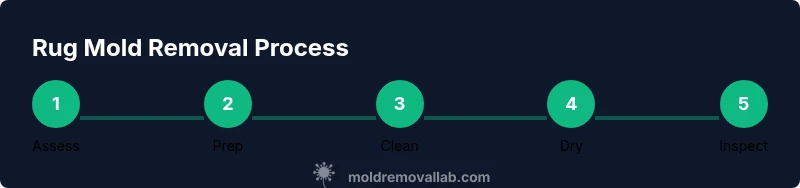
- 1
Assess and prep
Identify areas with visible mold and high moisture. Put on PPE, move rugs and furniture to allow air flow, and set up ventilation. Test a hidden area for colorfastness to avoid dye damage.
Tip: Work in a well-ventilated space and avoid spreading spores to other rooms. - 2
Vacuum surface and edges
Vacuum both sides if feasible, using a HEPA-equipped unit to capture spores. Treat fringe and edges carefully where dust accumulates.
Tip: Use slow, deliberate strokes and avoid aggressive brushing which can drive spores deeper. - 3
Apply first cleaning solution
Spray a vinegar-water mix on moldy patches; let sit for several minutes to loosen growth, then blot with a microfiber cloth.
Tip: Do not saturate; keep moisture to a minimum to prevent deeper penetration. - 4
Scrub stubborn spots
Gently scrub with a soft-bristled brush and mild detergent solution. Rinse with a damp cloth to remove residue.
Tip: For white or colorfast rugs, you may use a hydrogen peroxide dab after testing colorfastness. - 5
Rinse and blot dry
Wipe away cleaners with a clean, damp cloth and blot dry with towels. Remove as much moisture as possible from fibers.
Tip: Press, don’t rub; rubbing can fray fibers and spread mold spores. - 6
Prep for drying
Elevate the rug or place it on a clean surface with airflow beneath; set up a fan or dehumidifier in the room.
Tip: Move the rug periodically to dry all sides evenly. - 7
Dry thoroughly
Allow 24–48 hours of drying time in a warm, dry area. Check daily for remaining moisture and musty odor.
Tip: Do not reuse until completely dry to prevent regrowth. - 8
Inspect and decide next steps
If odors persist or mold recurs, re-clean or replace depending on rug value and fiber health.
Tip: Document the process for future prevention planning.
FAQ
Can mold be completely removed from a rug?
Surface mold on a rug can often be removed with proper cleaning and drying, but deeply ingrained mold or damage to the rug backing may require replacement. Always assess after cleaning and consider professional help for persistent cases.
Most surface mold can be removed with proper cleaning and drying, but deep mold or damaged backing may require replacement.
Should I use bleach to clean mold from a rug?
Bleach can bleach colors and degrade fibers; it is not suitable for most rug materials. Use color-safe cleaners or vinegar solutions first, and reserve bleach for unmixed, bleach-safe textiles only.
Bleach is not usually recommended for rugs; try gentler cleaners first.
How long does a rug take to dry after cleaning?
Drying typically takes 24 to 48 hours in a well-ventilated space. Faster drying is possible with fans and dehumidifiers, but avoid heat sources that could warp fibers.
Most rugs dry in one to two days with good airflow.
Is mold on wool rugs more dangerous?
Wool fibers can harbor mold just like synthetic fibers; the danger lies in moisture and spore exposure rather than fiber type. Treat promptly and monitor for odors and staining.
Mold risks come from moisture and spores, not just the rug fiber.
When should I call a professional?
If mold covers large areas, the rug backing is compromised, or there is visible mold growth under padding, professional remediation may be recommended. A pro can assess structural damage and safety.
Call a pro if the mold is widespread or behind the backing.
Can I store a moldy rug after cleaning?
Do not store a moldy rug until it is completely dry and odor-free. Moisture in storage can encourage regrowth. If odor persists, repeat cleaning or replace.
Don’t store a moldy rug until fully dry and odor-free.
Watch Video
The Essentials
- Act quickly to limit mold spread and health risk
- Match cleaning method to rug material and colorfastness
- Dry thoroughly to prevent regrowth
- Replace if backing is damaged or mold penetrates padding
- Prevent future mold with humidity control and prompt spill cleanup