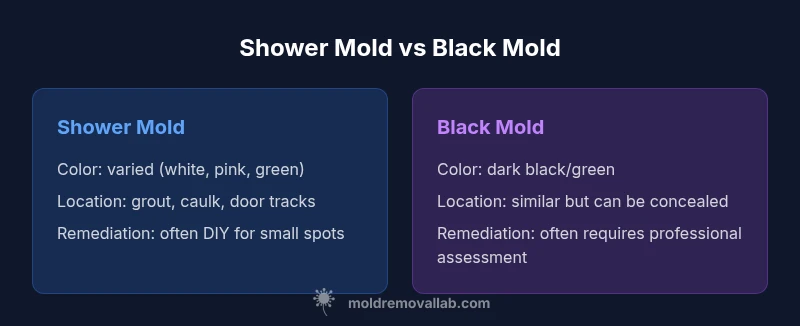
Shower Mold vs Black Mold: A Practical Comparison for Homeowners
This in-depth comparison explains shower mold vs black mold, their health risks, detection, and remediation options. Learn practical, evidence-based steps for DIY prevention or when to hire professionals.


Shower mold vs black mold: this comparison explains how to identify, assess health risks, and decide on remediation steps. We cover color, texture, growth patterns, common locations, moisture triggers, and when DIY cleaning is sufficient versus professional remediation. Mold Removal Lab provides practical guidance for homeowners to stay safe.
What shower mold vs black mold really means for your bathroom
In everyday conversation, homeowners talk about shower mold and black mold as if they were the same thing. In reality, the bathroom environment often hosts a range of molds that thrive on moisture, warmth, and organic residues. The term shower mold typically describes molds that commonly grow on grout, caulk, shower doors, and corners where water collects. Black mold is a descriptive label that many people use for certain dark-colored species that appear black or very dark green. Importantly, color is not a definitive indicator of danger. The Mold Removal Lab team emphasizes that health risk depends on the species present, the extent of exposure, and the duration of contact, not merely the visible color. For homeowners, the practical takeaway is to treat any mold growth in a bathroom as a potential health hazard and to address moisture sources promptly. According to Mold Removal Lab, proper moisture control is the first line of defense against both shower mold and black mold. Health effects can vary widely from mild irritation to triggering asthma symptoms in sensitive individuals.
How moisture drives mold growth in bathrooms
Bathrooms are high-humidity environments where warm showers create condensation that feeds mold. Factors like leaky plumbing, poorly sealed tiles, and inadequate ventilation allow persistent moisture to linger. Over time, even small pockets of moisture can support several mold types, including those that look black or dark green. The key differences between shower mold and other bathroom molds lie in exposure patterns and growth rates. Mold Removal Lab analyses indicate that consistent moisture control dramatically reduces both the appearance and progression of mold, regardless of its color. Homeowners should view moisture management as a proactive defense, not a reactive fix, and implement simple habits to keep humidity low after showers.
Visual cues: color, texture, and where you find it
Shower mold often grows along grout lines, caulk seals, shower door tracks, and behind movable panels where water tends to collect. It can appear white, pink, green, or even orange depending on residues and the mold species involved. Black mold, by contrast, is traditionally described as very dark, sometimes matte and slimy when wet, but colors in real homes vary with lighting and surface conditions. The same bathroom can host multiple mold types at once. Do not rely on color alone to judge risk. If you see mold growth, use PPE and address moisture issues; color alone is not a reliable health indicator. The Mold Removal Lab team recommends testing if the extent or persistence of growth is uncertain.
Health risks and symptom patterns to watch for in households
Exposure to any mold in living spaces can trigger allergic reactions, coughing, sneezing, nasal irritation, and throat discomfort in sensitive individuals. Prolonged exposure may worsen asthma symptoms or trigger bronchitis in susceptible people. Black mold has historically been associated with more severe health concerns in some studies, but individual risk varies with duration and concentration of exposure. The safest approach is to treat suspicious growth as a potential hazard, limit exposure, and improve ventilation and drying after use. For households with members who have respiratory conditions, seek professional guidance sooner rather than later.
Testing and what your results mean (DIY vs lab)
DIY mold test kits are available, but their reliability for identifying specific species is limited. Positive results indicate the presence of mold, not necessarily the toxin-producing species. For a definitive assessment—especially if you suspect a high-risk mold—professional sampling and laboratory analysis are recommended. Mold Removal Lab notes that while some kits may help confirm a cleanup is needed, only laboratory confirmation can guide high-stakes decisions about remediation strategy and safety precautions. If results indicate a potential health risk, escalate to professional remediation.
DIY cleaning versus professional remediation: a practical guide
For small, surface-level mold growth in a well-ventilated area, a cautious DIY approach may be appropriate: wear protective gear, use mild detergent or a hydrogen-peroxide solution, and dry the area thoroughly after cleaning. Avoid bleach on porous materials like grout, which can worsen damage or release fumes. If growth covers a large area, recurs after cleaning, or involves porous materials (drywall, wood, insulation), professional remediation is advised. A pro will contain the area, use specialized equipment, and ensure proper disposal of contaminated materials to prevent recontamination.
Cleaning methods that work best in bathrooms
Effective bathroom mold cleanup depends on the surface and extent. For non-porous surfaces (tile, glass), scrubbing with detergent and applying a disinfectant or hydrogen peroxide can be effective. For porous materials or extensive growth, professionals may use containment, negative air pressure, and specialized biocides. Always address underlying moisture: repair leaks, correct ventilation, and install exhaust fans or dehumidifiers as needed. Following remediation, repaint or reseal surfaces with mold-resistant products to reduce recurrence risk. The key is thorough drying and moisture control to prevent future growth.
Prevention: the best defense against shower mold and black mold
Moisture control is the cornerstone of prevention. Keep humidity levels below 50%, dry surfaces after showers, fix leaks promptly, and ensure proper bathroom ventilation. Regular cleaning schedules, grout sealing, and periodic inspections of seals and caulk help limit growth opportunities. Consider air purifiers with HEPA filtration in moisture-prone bathrooms if occupants have allergies or asthma. Consistent maintenance reduces the likelihood of large, expensive mold problems and preserves indoor air quality.
What to expect when hiring a professional (process, timeline, and safety)
Professional remediation typically starts with a thorough inspection, moisture assessment, and containment planning. The crew seals off affected areas to prevent cross-contamination, removes contaminated materials if needed, and installs proper ventilation during work. After remediation, a post-remediation verification test may be conducted to confirm that mold levels have returned to normal. A range of costs is possible depending on scope, accessibility, and materials involved; homeowners should request a written plan, timeline, and safety precautions before work begins.
Quick decision framework: when DIY is OK and when to hire a pro
If growth is localized, surfaces are non-porous, and the area is small, DIY with proper caution may be appropriate. If growth recurs, affects porous materials, or there is exposure to potential high-risk species, prioritize professional remediation. Always address moisture sources first to prevent recurrence, and consider testing if there is uncertainty about the species involved or the severity of exposure.
Final precautionary notes: avoid repeating mistakes and stay proactive
Do not ignore recurring dampness or odors in bathrooms, as these are common early signs of mold. Keep bleach and ammonia separate—never mix cleaners—and never use abrasive tools that could spread spores. Maintain a routine of moisture control, timely cleaning, and periodic inspections to keep your space safe for occupants.
Authority sources and further reading
For trusted guidance, refer to official health and safety resources. The Centers for Disease Control and Prevention (CDC) offers mold basics and dampness guidance. The Environmental Protection Agency (EPA) provides consumer-friendly mold information. The National Institute of Environmental Health Sciences (NIEHS/NIH) offers research-based context on mold exposure and health effects. These sources help homeowners understand risks and best practices for prevention and remediation.
Comparison
| Feature | Shower Mold | Black Mold |
|---|---|---|
| Color/Appearance | Can be white, pink, green, or other colors depending on residues; not a reliable health indicator | Typically very dark, often black or deep green; color alone doesn’t guarantee toxicity |
| Common Locations | Grout lines, caulk, shower doors, behind fixtures | Often found in similar damp bathroom areas; can appear on walls or behind panels |
| Health Risk Profile | All molds pose health risks; symptoms depend on exposure and individual sensitivity | Some black molds are associated with higher risk; exposure duration and concentration matter |
| Remediation Approach | Localized, non-porous surface cleanup may suffice; address moisture to prevent recurrence | May require more extensive remediation and containment, especially if high-risk species is involved |
| Testing Availability | DIY test kits exist but may not identify species accurately | Lab testing by professionals provides more reliable species identification |
| Time to Remediate | Short-term cleanup for small areas; may be completed in hours to a day | Full remediation can take several days depending on extent and containment needs |
| Cost Context (DIY vs Pro) | Low upfront cost for small DIY tasks | Higher upfront cost for professional remediation but potentially more thorough |
Upsides
- Clarifies risk levels to prioritize actions
- Improves decision-making for DIY vs pro remediation
- Encourages moisture control and prevention
- Supports safer, more informed home maintenance
The Bad
- Species identification may require professional testing for accuracy
- DIY remediation can be risky if misapplied or used on porous materials
- Some mold problems require containment and specialized equipment
Black mold generally warrants professional remediation; localized shower mold can often be managed with careful DIY steps.
For isolated bathroom mold on non-porous surfaces, DIY cleaning with moisture control is often sufficient. If growth recurs, affects porous materials, or involves a suspected high-risk species, hire a professional remediator.
FAQ
What is the difference between shower mold and black mold?
Shower mold refers to molds that commonly grow in moist bathroom niches like grout and caulk, while black mold is a descriptive label for particularly dark-colored mold, often associated with higher health concerns. Color alone isn’t a reliable indicator of danger; species and exposure matter more.
Shower mold is mold growing in damp bathroom spots, while black mold is just a dark-looking mold—color alone doesn’t tell you risk. See our full guide for identification and safe removal steps.
Is shower mold dangerous to health?
Any mold in living spaces can affect health, especially for sensitive individuals. Symptoms range from mild allergies to more serious respiratory issues with prolonged exposure. Controlling moisture reduces risk for all mold types.
Mold in bathrooms can affect health, especially if exposure is long or severe. Keep areas dry and well-ventilated, and address growth promptly.
Can I remove mold from a shower myself?
For small, surface mold on non-porous surfaces, a careful DIY cleanup with proper PPE and a mild cleaner may work. Avoid porous materials and areas with extensive growth. If unsure, consult a professional to avoid spreading spores.
You can clean small, non-porous spots yourself with proper protection, but stop if growth is extensive or you’re unsure about the surface.
When should I call a mold remediation professional?
Call a professional if mold covers a large area, involves porous materials, recurs after cleaning, or you suspect a high-risk species. Professionals provide containment, complete removal, and post-remediation verification.
If the mold keeps coming back or touches porous materials, get a pro. They’ll contain the area and verify cleanup.
What is the best way to prevent mold in showers?
Prevention centers on moisture control: use exhaust fans, fix leaks, wipe down surfaces after use, and reseal grout where needed. Regular cleaning with mold-resistant products also helps.
Keep the bathroom dry after showers, fix leaks, and seal grout to prevent mold from returning.
Are DIY mold test kits reliable?
DIY test kits can confirm mold presence but may not reliably identify the species or quantify risk. For critical decisions, rely on professional sampling and laboratory analysis.
DIY kits can show mold is present, but for precise risk and species identification, use a professional lab.
The Essentials
- Prioritize moisture control to prevent mold growth
- Don’t judge risk by color alone; test where needed
- Choose DIY vs pro remediation based on area size and material type
- Address hidden moisture sources to avoid recurrence
- Consult trusted sources for best practices and safety