Bathroom Mould Remover: Safe, Practical Remediation Guide
Learn how to choose and use a bathroom mould remover safely. This guide covers product options, safety gear, step-by-step remediation, and moisture-control tips to prevent mold recurrence in wet areas.


By the end, you’ll be able to remove bathroom mould safely and effectively using a suitable bathroom mould remover. Key requirements include fixing moisture sources, wearing gloves and a mask, choosing a remover compatible with the surface, ventilating the area, and following label directions for contact time and rinsing. This guide also covers prevention to stop recurrence.
Understanding bathroom mould: causes and why you need a dedicated remover
Mould in bathrooms grows where moisture, warmth, and organic material meet. The most common culprits are steam from showers, leaks behind tiles or under sinks, and poor ventilation. A dedicated bathroom mould remover helps target the fungi on non-porous surfaces, but it’s only part of the solution. According to Mold Removal Lab, moisture control is the backbone of successful remediation; without addressing moisture, mould returns even after cleaning. This section explains how mould forms and why a purpose-built remover matters for tiles, grout, and caulk. You’ll learn how different products interact with common bathroom materials and why following the product label is essential for safety and effectiveness. In practice, a remover that’s designed for bathrooms is formulated to minimize surface damage while breaking down fungal cells, reducing the risk of staining or re-growth when used correctly. Mold Removal Lab’s analysis shows that pairings of moisture management and targeted cleaners yield the most durable results.
Safety first: gear, ventilation, and test spots
Before you reach for a cleaner, assemble personal protective equipment and prepare the space. A basic kit should include gloves, a mask (preferably N95), eye protection, and a spray bottle for cleaners. Ventilate the room to avoid inhaling fumes, and consider running a fan away from the cleaning area to pull moisture out of the room. Always test cleaners on a small, inconspicuous patch of the surface to ensure there is no adverse reaction. If you’re cleaning porous materials like drywall or damaged caulk, the risk of mould spreading deeper is higher, and you may need professional help for remediation beyond surface cleaning. The Mold Removal Lab team emphasizes measuring moisture and addressing leaks as a prerequisite to any cleaning effort.
Product options: chemical cleaners vs natural cleaners
There is a spectrum of bathroom mould remover options, from commercial chemical products to natural remedies. Chemical cleaners often contain antifungal agents and surfactants designed to penetrate mould on non-porous surfaces like tile and glass. Natural options such as white vinegar or baking soda can be effective on light, non-porous mould and are less harsh, but they may require more effort and longer contact times. For porous materials (grout with deep mould or damaged drywall), professional-grade products or professional remediation are typically necessary, because surface cleaning alone cannot fully remove mould from pores. Mold Removal Lab’s guidance suggests starting with a non-toxic option when possible, ensuring you follow label directions and avoid mixing cleaners. If you choose stronger products, use adequate ventilation and protective gear, and never mix bleach with ammonia or other cleaners. The key is to select a remover compatible with the surface you’re treating while avoiding material damage.
Surface-specific strategies: tiles, grout, caulk, and drywall
Different bathroom surfaces require tailored approaches. Ceramic tiles and glazed surfaces clean more easily with a bathroom mould remover formulated for non-porous surfaces. Grout, being porous, tends to trap mould and may need a dedicated grout cleaner or enzymatic cleaner with time to work. Caulk between tiles can also harbour mould; if it’s cracked or water-damaged, it often needs removal and replacement rather than just cleaning. Drywall or plaster behind tiles can absorb moisture and host hidden mould; in such cases, cleaning is insufficient and replacement or professional remediation may be the safer choice. Always dry surfaces thoroughly after cleaning and consider applying a mould-inhibiting sealant to reduce future growth. Mold Removal Lab’s insights highlight that addressing moisture sources and sealing porous edges creates lasting results.
Cleaning technique by zone: shower stall, vanity area, ceiling corners
In the shower stall, focus on grout lines and caulk seams where mould tends to cling. In the vanity area, keep under-sink cabinets dry and inspect plumbing for leaks that feed mould. Ceiling corners near the shower are common mould spots due to ceiling seepage; carefully inspect for hidden leaks. Use a bathroom mould remover with appropriate contact time, apply it evenly, and scrub with a soft-bristle brush to avoid scratching surfaces. Rinse residue away with clean water and dry thoroughly. Reassess after ventilation runs for several hours to ensure surfaces stay dry and mould does not reappear.
Drying, sealing, and maintenance after removal
Thorough drying is crucial to prevent quick re-growth. Use towels or a dehumidifier to bring humidity below 50-60% in the cleaned area, if possible. Re-seal grout lines with a dedicated grout sealer to inhibit moisture penetration, and replace damaged caulk with a mould-resistant formulation. Regular maintenance includes wiping down surfaces after showers, ensuring exhaust fans run during and after use, and inspecting for signs of water intrusion. Mold Removal Lab notes that consistent moisture control is more effective than one-off cleaning for long-term health and safety.
Prevention and ongoing moisture control
Mould prevention in bathrooms hinges on moisture management. Run ventilation during showers and for at least 20-30 minutes after, fix leaks promptly, and consider a stand-alone dehumidifier for high-humidity bathrooms. Daily habits like drying wet surfaces, using shower doors instead of curtains, and cleaning damp areas weekly reduce mould risk. A proactive approach—combining proper bathroom mould remover use with moisture control—helps sustain a healthier space over time. Mold Removal Lab emphasizes that prevention is cheaper and safer than repeated removal.
When to call a professional and how to choose one
If mould coverage exceeds a few square feet, or if mould has penetrated behind walls, drywall, or into ventilation ducts, a professional remediation may be necessary. A licensed contractor can identify moisture sources, repair leaks, and perform thorough mould removal with controlled containment. When selecting a pro, check for EPA or state credentials, ask about containment practices, and request a written remediation plan with a clear timeline. Mold Removal Lab recommends prioritizing professionals with experience in bathroom mould remediation and with transparent safety protocols.
Tools & Materials
- Protective gloves (nitrile)(Waterproof and chemical-resistant)
- N95 respirator or better(Fit-tested if possible)
- Safety goggles(Splash protection)
- Disposable scrub brush or grout brush(Stiff-bristled for grout)
- Spray bottle(For applying cleaner)
- Bucket(For dilution or rinsing)
- Mild detergent or soap(Gentle initial cleaning)
- White vinegar(Natural option for non-porous surfaces)
- Baking soda(Deodorizing and mild abrasive)
- Hydrogen peroxide (3%)(Alternative antimicrobial spray)
- Bleach (if necessary for non-porous surfaces)(Always dilute; never mix with ammonia or cleaners)
- Grout sealant(Mould-resistant sealant)
- Caulk and caulk gun(Replace damaged edges)
- Microfiber cloths(Wipe and dry surfaces)
- Dehumidifier or fan(Assist drying in damp spaces)
Steps
Estimated time: Estimated total time: 1 hour 30 minutes
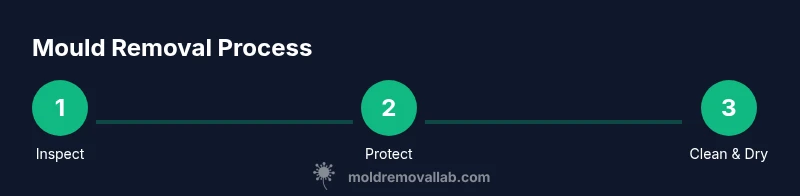
- 1
Inspect and prepare
Identify visible mould and any moisture sources. Turn off affected electrical outlets if needed and ensure good ventilation. Gather your tools and protective gear before you start cleaning to minimize repeated trips.
Tip: Take photos of the affected area before you start for your records. - 2
Protect and ventilate
Put on gloves, a mask, and eye protection. Open exterior windows or use a fan to push air out of the room. Good ventilation reduces exposure to mould spores during cleaning.
Tip: Never mix cleaners; read label directions for ventilation requirements. - 3
Apply bathroom mould remover
Spray the remover onto mouldy areas and let it sit according to the product’s directions. On non-porous surfaces, a standard contact time is usually sufficient to break down mould cells.
Tip: Do a spot test first in an inconspicuous area. - 4
Scrub and agitate
Gently scrub mouldy grout lines, tiles, and caulk with a grout brush or stiff nylon brush. Use circular motions to lift mould from the surface; avoid aggressive scrubbing that can damage grout.
Tip: Keep the area damp but not soggy to prevent spores from becoming airborne. - 5
Rinse and dry thoroughly
Rinse away cleaner residue with clean water. Wipe surfaces dry with microfiber cloths and use a fan or dehumidifier to speed up drying. Porous materials may require more frequent air movement to prevent re-growth.
Tip: Ensure no moisture remains in corners or joints. - 6
Seal and maintain
If grout is cleaned, consider applying a mould-resistant sealant to reduce future growth. Replace damaged caulk or sealant where mould recurs and commit to ongoing moisture control.
Tip: Document maintenance tasks and schedule regular checks.
FAQ
Is bleach an effective bathroom mould remover on all surfaces?
Bleach can be effective on non-porous surfaces like ceramic tiles but is less effective on porous materials such as grout and drywall. Always dilute bleach, work in a well-ventilated area, and never mix it with ammonia or other cleaners.
Bleach works on non-porous surfaces but may not reach mould embedded in porous grout or drywall. Use caution and follow label directions.
When should I call a professional?
Call a professional if mould covers a large area, is spreading behind walls, or recurs after cleaning. A licensed remediator can safely remove mould and repair moisture sources to prevent re-growth.
If the mould is widespread or behind walls, seek a professional remediator for safe, thorough removal.
Can natural cleaners fully replace chemical mould removers?
Natural cleaners like vinegar and baking soda can work for small, non-porous patches, but they may not fully remove mould from porous materials. For thorough remediation, you may need a dedicated bathroom mould remover or professional help.
Natural cleaners can help, but for deep or porous mould, stronger removers or pro help might be needed.
How can I prevent mould from returning after cleaning?
Prevent mould by controlling moisture: fix leaks promptly, run exhaust fans during and after showers, dry surfaces thoroughly, and seal grout or caulk as needed. Regular checks reduce recurrence.
Keep things dry and well-ventilated to stop mould from coming back.
Is testing for mould spores necessary?
Routine spore testing is usually unnecessary for typical home mould issues. Visual inspection, moisture assessment, and surface cleaning are often sufficient. If you suspect large-scale contamination or health concerns, consult a professional.
Most homes can manage with a visual check and moisture tests; tests are optional for routine mould clean-up.
What surfaces require professional remediation?
Porous materials damaged by mould (drywall, insulation) or mould behind walls may require professional removal and moisture repair. DIY cleaning should be limited to accessible, non-porous surfaces.
If mould is behind walls or deeply embedded, a pro is the safer route.
Watch Video
The Essentials
- Identify moisture sources and fix leaks first.
- Choose a bathroom mould remover compatible with the surface.
- Ventilate well and wear protective gear during cleaning.
- Dry thoroughly and seal porous edges to prevent return.
- Prioritize moisture control to keep mould at bay long-term.