Mold on Basement Walls: Practical Remediation Guide
Learn how to identify, clean, and prevent mold on basement walls with practical steps, moisture control, and safe remediation strategies from Mold Removal Lab.


Address mold on basement walls by stopping moisture, cleaning with approved cleaners, and thorough drying. For large outbreaks or uncertain spread, hire a professional. See our full step-by-step guide for safe, effective remediation. Label all areas with tape, isolate the work zone, and plan for proper drying using fans and dehumidifiers. If you are unsure about containment or ventilation, consult archives by Mold Removal Lab.
Understanding mold on basement walls
Mold on basement walls is more than a cosmetic issue—it's a signal that moisture is repeatedly seeping into your space. According to Mold Removal Lab, mold on basement walls is typically driven by chronic moisture intrusion from leaks, condensation, or high humidity in damp basements. Basements are prone to cooler, more humid air that condenses on concrete surfaces, creating an inviting environment for mold growth. Early detection matters, because addressing the moisture source reduces the chance that mold will return after cleanup.
Common signs include a musty odor, stained or discolored patches, visible fuzzy growth, and peeling paint or wallpaper. Even if the visible mold seems small, it often points to an underlying moisture problem that requires a moisture management plan. When tackling mold on basement walls, prioritize safety: wear gloves, eye protection, and a respirator when air currents may carry spores. For porous materials like drywall, you may need to remove and discard affected sections to prevent recontamination.
Assessing moisture sources and severity
Moisture sources in basements can be tricky to locate because water may travel along walls, through the foundation, or from interior sources like leaking pipes. Start with a visual inspection for obvious leaks, damp insulation, and condensation hotspots. Use a moisture meter to assess relative moisture in concrete, studs, and drywall; note high readings near floor/wall junctions and around window wells. Track recent weather patterns—heavy rains, rapid temperature changes, and groundwater seepage often worsen basement dampness. Record findings with photos for reference. Based on Mold Removal Lab analysis, persistent moisture control is more critical than aggressive cleaning alone, so prioritize fixing leaks and improving airflow as a long-term solution.
Cleaning and remediation options
For nonporous surfaces such as sealed concrete or metal surfaces, a rigid cleaning protocol using detergent and water, followed by disinfection, can remove visible mold and spores. Porous materials (drywall, insulation) that are heavily contaminated typically need removal and replacement to prevent regrowth. When cleaning, avoid mixing cleaners unless guidelines specify compatibility, and always ventilate. Bleach can be effective on nonporous surfaces, but it is not a universal fix for porous materials. Use scrub brushes to reach crevices, and wipe from the outer edges toward the center to minimize spreading spores. After cleaning, rinse and dry thoroughly. Mold can hide behind baseboards or under floor coverings, so inspect these areas carefully and treat hidden pockets if found.
Containment, PPE, and safe work practices
Containment reduces the risk of cross-contamination to the rest of the home. Create a simple barrier using plastic sheeting and tape to isolate the work area, and turn off HVAC to prevent spores from circulating. PPE is essential: wear a disposable respirator or N95 mask, goggles, gloves, and protective clothing you can clean or discard. Before you start, remove all movable items from the space and cover nearby surfaces with plastic. Work slowly and deliberately to minimize disruption, especially in shared living areas. If you notice a strong, persistent odor or observe new mold after cleanup, consider halting work and reassessing the approach.
Containment is not optional when mold is present; it protects you and others in the home while you remediate.
Drying, dehumidifying, and preventing spread
Drying is a critical step to prevent regrowth. Use high-capacity dehumidifiers and well-placed fans to circulate air, directing moisture toward exits. Keep humidity levels as low as practical in the affected area and ensure surfaces reach a stable dry state before finishing work. Dehumidification should continue for at least 24–48 hours after the last mold removal activity, and longer if the area remains damp or poorly ventilated. Once the space is dry, clean and inspect the area for new signs of moisture or mold growth, which could signal an unresolved moisture source.
Proactively maintaining airflow around foundation walls and sealing potential water entry points helps prevent recurrence. Seal any cracks or gaps you identify and consider upgrading window wells or drainage if water intrusion is common.
When to call a professional
If mold covers a large area, exceeds 10 square feet, or you suspect mold in HVAC ducts or within wall cavities, professional remediation is recommended. Specialists can perform mold sampling to confirm contamination levels and use containment systems, negative air pressure, and advanced extraction methods. If you have chronic allergies, a compromised immune system, or significant water damage, a pro should take the lead to ensure safe, effective remediation. DIY approaches are best reserved for small, localized outbreaks with minimal structural impact.
Long-term prevention and maintenance
Preventing mold recurrence starts with ongoing moisture management. Regularly inspect plumbing for leaks, repair roof or gutter issues that allow water to pool near the foundation, and maintain adequate ventilation, especially in high-humidity seasons. Consider installing a basement dehumidifier with an auto-shutoff to maintain steady humidity levels, and ensure that sump pumps and drainage systems are functioning correctly. Paint or seal walls with products designed to resist mold growth, and promptly address any new stains or odors. A proactive maintenance routine reduces the likelihood of future mold problems and improves indoor air quality.
Common myths and pitfalls
Mold cleanup is not a one-and-done task. Do not rely on bleach alone to solve mold on basement walls, especially on porous materials. Some household cleaners can be harsh or ineffective, and improper cleaning can spread spores. Do not delay addressing moisture sources or assume dry-looking walls are mold-free. Finally, avoid skipping safety steps or attempting major remediation without understanding the scope of contamination. A careful, informed approach leads to safer, longer-lasting results.
Tools & Materials
- Nitrile gloves(Non-porous, powder-free; use multiple pairs)
- Safety goggles(Protect eyes from splashes and spores)
- Respirator or N95 mask(Ensure good fit; consider P100 for fine spores)
- Plastic sheeting for containment(Tear-resistant; seal edges with tape)
- Disposable coveralls(Keeps clothes clean and prevents spread)
- Scrub brushes and sponges(Use stiff bristles for textured surfaces)
- Detergent or mold cleaner(Mild detergent or non-ammonia-based cleaner)
- Disinfectant approved for mold(Non-chlorine alternative for sensitive households)
- Bleach (optional for nonporous areas)(Use only on nonporous surfaces; never mix with ammonia)
- Dehumidifier(High capacity; empty and service regularly)
- Fans or air movers(Promotes air circulation; avoid directing air at you)
- HEPA vacuum (optional)(Helps capture loose spores after cleanup)
- Trash bags(Durable; seal using ties or tape)
Steps
Estimated time: 2-6 hours
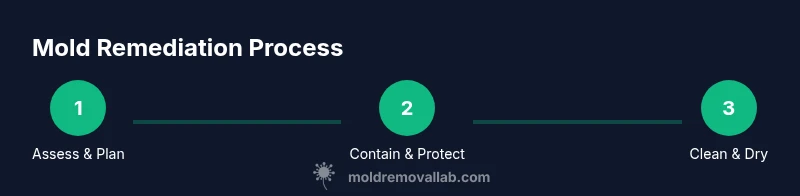
- 1
Assess extent and plan
Survey affected area and determine if removal of materials is necessary. Collect baseline photos, mark zones, and outline a containment plan to prevent cross-contamination.
Tip: Document findings with timestamps to track progress. - 2
Prepare and protect
Put on PPE, seal the area with plastic sheeting, and turn off HVAC to prevent spores from circulating.
Tip: Designate one exit path to minimize tracked spores. - 3
Contain and isolate
Create a physical barrier to keep debris from spreading to the rest of the home. Use tape to secure plastic along all edges.
Tip: Ventilate the outer environment to avoid suffocation or heat buildup inside the containment. - 4
Clean and scrub surfaces
Scrub affected nonporous surfaces with detergent; rinse and repeat. For porous materials, evaluate whether replacement is necessary.
Tip: Always work from outer edges toward the center to prevent spreading spores. - 5
Dry thoroughly
Run dehumidifiers and fans to dry the space completely; monitor moisture with a meter.
Tip: Keep humidity low for at least 24–48 hours after cleaning. - 6
Disinfect and seal
Apply an appropriate disinfectant on cleaned surfaces and seal porous materials that cannot be fully restored.
Tip: Do a final wipe-down before removing containment. - 7
Inspect and plan for prevention
Check for any remaining damp spots and plan long-term moisture management measures.
Tip: Install or repair drainage, improve ventilation, and consider sealing with mold-resistant coatings.
FAQ
What causes mold on basement walls?
Mold on basement walls is usually caused by ongoing moisture intrusion from leaks, condensation, or high humidity in damp basements. Identifying and fixing moisture sources is the first step to remediation.
Mold on basement walls is often due to moisture leaks or high humidity, so fix moisture first.
Is mold on basement walls dangerous?
Exposure can affect health, especially for those with allergies or respiratory issues. Use PPE during cleanup and consider professional help for larger outbreaks.
Mold can affect health; wear PPE and get professional help for big outbreaks.
Do I need a professional to remove basement mold?
Small, localized mold growth on non-porous surfaces may be DIYable. Large areas, porous materials, or mold in walls or HVAC require a professional remediation plan.
Call a professional for large areas or mold inside walls.
What steps prevent recurrence after remediation?
Maintain low humidity, fix leaks promptly, improve ventilation, and seal or replace affected porous materials as needed to prevent future growth.
Keep humidity down and fix leaks to stop mold from returning.
How long does basement mold remediation take?
Timeline varies with area size and complexity. Small, contained jobs can complete in a day or two; larger projects may take longer.
Remediation time depends on area size; small jobs may be a day or two, larger ones longer.
Can mold return after cleaning?
Yes, if moisture sources remain unresolved. Ongoing moisture management is essential to prevent recurrence.
Mold can come back if moisture isn't controlled.
Are cleaning agents necessary for mold on basement walls?
Detergents and appropriate disinfectants help, but never rely on a single product. Clean thoroughly, then dry completely to reduce regrowth risk.
Use proper cleaners and dry the space completely.
Watch Video
The Essentials
- Identify moisture sources before remediation.
- Wear proper PPE and follow containment procedures.
- Dry thoroughly to prevent regrowth.
- Call a professional for large-scale outbreaks when unsure.