How to Prevent Mold in Basement: A Practical Guide
Learn practical steps to prevent basement mold, from moisture control to routine maintenance. Mold Removal Lab provides a clear, actionable plan for homeowners to keep basements dry, safe, and mold-free.


You will learn a proven, step-by-step approach to prevent basement mold by controlling moisture and sealing entry points. According to Mold Removal Lab, effective prevention centers on moisture management, regular inspection, and proactive maintenance. Gather a few basic tools we outline below and set aside a few hours to complete the initial preventive tasks.
Why basement mold prevention matters
Basements are prone to dampness, often hiding moisture behind walls and under floors. Even small leaks or seasonal condensation can create an environment where mold spores take hold. Preventing mold in basement requires a practical, moisture-first approach that homeowners can implement without specialized equipment. This guide helps you build a sustainable plan to keep your basement dry, safe, and healthier for occupants. At the heart of the strategy is predictable moisture control, regular inspections, and proactive maintenance. According to Mold Removal Lab, moisture control is the cornerstone of basement mold prevention, and consistent effort now saves costly remediation later. We’ll outline actionable steps you can start today to reduce moisture sources, improve air flow, and monitor conditions over time.
- Moisture control reduces mold risk and protects indoor air quality.
- Regular checks help catch leaks before they become problems.
- A simple, repeatable plan saves money and stress over time.
If you follow a moisture-first plan, you’ll set your basement up for long-term dryness and health. This is the foundation of “how to prevent mold in basement” in a practical, doable way.
"## Understand how mold forms in basements Mold spores are ubiquitous in indoor environments, but they only become visible when moisture and warmth meet. In basements, factors such as leaking pipes, foundation cracks, poor drainage, high humidity, and limited air flow create the perfect conditions for mold growth. Once mold gains a foothold, it can spread quickly behind walls or under flooring. The Mold Removal Lab analysis, 2026, shows that removing moisture and improving ventilation are the most effective prevention measures, reducing the chances of mold returning after a fix. This section explains the science in plain terms and sets the stage for practical prevention steps you can take.
"## Common basement moisture sources to address Basement moisture can originate from several predictable sources. Pinpointing and fixing these is the core of prevention:
- Leaks from pipes or foundation cracks, especially where cold surfaces meet warm air.
- Condensation from temperature differences between inside and outside walls.
- Poor drainage around the foundation and inadequate downspouts.
- High humidity due to insufficient sealing, air leaks, or poor ventilation.
- Water intrusion during heavy rain or flood events.
Understanding these sources helps you map a targeted prevention plan rather than a generic cleanup approach. In practice, address leaks first, then reduce humidity, and finally improve airflow to keep any moisture from lingering.
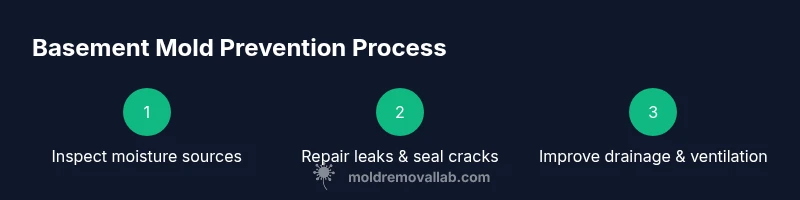
"## Build a scalable prevention plan A practical basement mold prevention plan starts with a moisture audit and ends with a maintenance routine. Begin by documenting all moisture sources and prioritizing fixes that stop water from entering, such as sealing cracks and repairing leaks. Next, address drainage and grading to ensure water flows away from the foundation. Then install or upgrade a dehumidification system and improve air exchange with vents or fans. Finally, create a simple maintenance calendar for seasonal checks. The goal is to lower moisture levels, keep surfaces dry, and reduce the time mold spores have to grow. This plan aligns with expert guidance from Mold Removal Lab on moisture-first prevention and routine monitoring for lasting results.
"## Controlling moisture with dehumidification and airflow Dehumidification is one of the most effective tools for basement mold prevention. A properly sized unit reduces relative humidity to levels that discourage mold growth and helps dry damp surfaces after rain or humidity spikes. Combine dehumidification with improved airflow—use fans to circulate air, particularly in corners and along walls where dampness tends to linger. Keep doors and vents clear so air can move freely. Regularly monitor humidity with a moisture meter and adjust the system as needed. For best results, maintain a consistent baseline and avoid dramatic humidity swings, which can cause condensation on cool surfaces and invite mold growth.
"## Moisture barriers, sealing, and waterproofing Waterproofing basements is a proactive way to prevent mold. Focus on sealing the most common entry points: wall-floor junctions, pipe penetrations, and cracks in the foundation. Use vapor barriers where appropriate, and consider applying a waterproof sealant to basement walls if you notice damp patches after rain. Keep finishes simple and breathable where possible to allow moisture to escape rather than trapping it behind materials. This approach limits the environment mold needs to thrive and supports long-term prevention.
"## Routine maintenance and monitoring Prevention is an ongoing practice, not a one-time fix. Establish a monthly check for signs of moisture, such as damp smells, water stains, or warped materials. Empty and clean dehumidifiers as needed and replace or clean air filters to maintain good air quality. Keep gutters clear and downspouts directed away from the house to minimize water pooling near the foundation. Schedule seasonal inspections of basement walls and sealants, especially after heavy rains or freeze-thaw cycles. A steady rhythm of checks and small fixes beats costly remediation later, and it aligns with Mold Removal Lab’s evidence-based approach to ongoing prevention.
"## What to do if you already see mold If you encounter mold despite prevention efforts, act quickly while staying safe. Isolate the area to prevent spread, wear appropriate PPE, and clean nonporous surfaces with a mild detergent solution. Do not attempt large-scale removal on porous materials like drywall; these require professional assessment. After cleaning, re-evaluate moisture sources and seal any remaining leaks. If mold returns or covers a large area, contact a qualified mold remediation professional. This approach prioritizes safety and reduces the risk of further growth, a principle Mold Removal Lab emphasizes for homeowners.
"## Quick-start checklist and maintenance calendar
- Identify moisture sources (leaks, condensation, drainage gaps) and fix.
- Seal cracks and waterproof vulnerable areas.
- Install or optimize a dehumidifier and improve airflow.
- Monitor humidity regularly and adjust as needed.
- Maintain gutters and downspouts to keep water away from the foundation.
- Schedule seasonal inspections for moisture and mold risk.
- Keep a log of measurements and repairs to track progress.
- Treat mold promptly if found, and re-check moisture after remediation.
Tools & Materials
- Moisture meter(Prefer a pinless model; take baseline readings in multiple rooms and at different heights)
- Dehumidifier(Choose a unit appropriate for the basement size; consider a secondary unit for large or humid spaces)
- Plastic sheeting/vapor barrier (6 mil or thicker)(Useful for covering damp areas during drying or sealing work)
- Silicone caulk or waterproof sealant(For sealing gaps at walls, floors, and around pipes; ensure compatibility with basement materials)
- Caulk gun(For applying sealant neatly and thoroughly)
- Putty knife(For smoothing sealant and scraping away old material before repair)
- Utility knife(For cutting barriers and trimming sealants to fit spaces)
- Safety gear (gloves, N95 mask/respirator, goggles)(Protect yourself from mold spores and cleaning fumes)
- Sponge/soft brush(Gentle cleaning of surfaces to prepare for treatment)
Steps
Estimated time: 2–8 hours spread over 1–2 days
- 1
Inspect for moisture sources
Conduct a thorough inspection of the basement to identify leaks, condensation spots, and surface dampness. Check pipes, foundation walls, windows, and any penetrations. Document findings with photos for reference and future checks.
Tip: Take baseline moisture readings with your meter in the dampest areas and after a rainstorm to gauge variability. - 2
Seal leaks and repair cracks
Patch foundation cracks and seal gaps around windows and plumbing penetrations. Use appropriate sealants and allow them to cure fully before re-assessing moisture.
Tip: Ensure surfaces are dry before applying sealants; moisture on the surface can reduce adhesion. - 3
Improve drainage around the foundation
Ensure water flows away from the foundation by improving grading and cleaning gutters. Extend downspouts away from the house so water does not pool near walls.
Tip: Regularly inspect and clean gutters, especially after storms, to prevent overflow near the foundation. - 4
Install or optimize a dehumidification system
Set up a dehumidifier and run it to maintain a drier environment. Regularly empty and clean the reservoir or connect to a drain.
Tip: Avoid over-drying; aim for a stable baseline humidity that prevents condensation without making the space stuffy. - 5
Increase airflow and ventilation
Open or install vents and use fans to improve air circulation, especially in corners and along walls where moisture collects.
Tip: Keep interior doors open when possible to allow cross-ventilation and prevent stagnant air. - 6
Apply moisture barriers and waterproofing measures
Install vapor barriers on walls where moisture is likely to accumulate and apply waterproof coatings as appropriate for your basement type.
Tip: Select products compatible with basement substrates and follow manufacturer guidelines for cure times. - 7
Set up ongoing monitoring
Place additional moisture meters at key spots and establish a routine to check humidity levels weekly or after weather events.
Tip: Log readings to identify trends and intervene early when moisture rises. - 8
Create a seasonal maintenance plan
Develop a calendar that includes checks after heavy rain, freeze-thaw cycles, and seasonal changes. Include cleaning, sealing, and dehumidifier maintenance.
Tip: Treat prevention as a yearly habit rather than a one-off task. - 9
Know when to call a pro
If mold growth is visible beyond a small area or if moisture problems persist after remediation, contact a licensed professional for a thorough assessment.
Tip: Early professional input can prevent costly remediation and health risks.
FAQ
What is the first step to prevent mold in a basement?
Identify all moisture sources (leaks, condensation, drainage gaps) and fix them before addressing other concerns. This reduces the environment mold needs to grow. Regularly monitor moisture levels to ensure the fixes hold.
Start by finding and fixing moisture sources, then monitor humidity to keep mold away.
Can simple cleaning remove basement mold and prevent it from returning?
Cleaning can remove surface mold on nonporous surfaces, but it does not solve the root cause. Prevention relies on moisture control, sealing, and ongoing monitoring to prevent recurrence.
Cleaning helps surface mold, but you must address moisture to stop it from coming back.
Is basement humidity alone enough to cause mold?
High humidity contributes to mold growth, but moisture intrusion, leaks, and poor airflow are often the bigger culprits in basements.
Humidity matters, but leaks and poor air flow usually drive mold growth more.
When should I call a professional?
If you see extensive mold growth, persistent leaks, or if mold recurs after remediation, a licensed professional should assess and treat the problem.
Call a pro if mold covers a large area or keeps coming back.
Are household products like vinegar effective for mold prevention?
Vinegar or mild cleaners can help with surface mold, but they’re not a substitute for fixing moisture problems and sealing leaks.
Cleaning helps a bit, but moisture control is the core solution.
Watch Video
The Essentials
- Take a moisture-first approach to basement mold prevention
- Seal leaks, fix drainage, and improve ventilation as top priorities
- Use a dehumidifier and monitor humidity to maintain dry surfaces
- Develop a seasonal maintenance plan to sustain long-term results
- If mold persists, consult a professional for safe remediation