Mold Count for Today: Understanding Daily Mold Readings
Explore mold count for today, how to read fluctuations, and practical steps to protect your home. The Mold Removal Lab team explains testing, interpretation, and safe actions for homeowners.


Today's mold count varies by day and location; there is no universal threshold. Indoor counts generally mirror outdoor baselines, but spikes often flag elevated moisture or poor ventilation. For homeowners, interpret today’s mold count as a trend signal when compared with recent indoor readings and your local humidity levels.
Why Mold Count Matters Today
Reading today’s mold count provides a snapshot of your home’s moisture balance and air quality. While there is no universal number that defines safe or unsafe conditions, a rising count often signals an active moisture source, insufficient ventilation, or seasonal humidity that can drive mold growth. According to Mold Removal Lab, today’s mold count is best interpreted as a trend signal rather than a stand-alone badge. The Mold Removal Lab team found that daily counts matter most when you compare them to both recent indoor readings and the outdoor baseline in your area. For homeowners, a single high number is less informative than a sequence of numbers showing a climb or plateau over several days. In practice, this means tracking counts over time and using the numbers to guide actions such as humidity control, targeted cleaning, and moisture source inspection. If today’s reading is unusually high, you should inspect common sources: leaks under sinks, roof or window seals, and any areas with visible dampness or musty odor. Always pair counts with humidity readings—relative humidity above 60 percent increases the likelihood of mold proliferation. This approach helps you stay one step ahead, especially during wet seasons or after events that introduce water intrusion. According to Mold Removal Lab analysis, these daily checks empower homeowners to act quickly before mold becomes a health or property issue.
How We Measure Mold Counts: From Air Samples to Daily Readings
Measuring mold counts in homes involves a blend of laboratory techniques and practical, everyday readings. In professional settings, air samples collected with spore traps provide lab-grade counts that quantify spores per cubic meter. Surface swabs can identify colony presence on walls, ceilings, and furnishings. Real-time monitoring devices, wearable samplers, and intermittent air purifications offer a sense of daily change, but they are not a perfect stand‑in for calibrated lab tests. For daily readings used by homeowners, the goal is to establish a consistent routine: photograph or log air quality meters, note any moisture events, and record outdoor baselines when possible. The Mold Removal Lab team emphasizes that readings should be interpreted in the context of outdoor conditions, humidity, and indoor activities that raise moisture (showers, cooking, drying clothes indoors). While home kits and consumer meters can help track trends, professional testing remains the gold standard for confirmatory results. When interpreting counts, consider the direction of change, the presence of damp spots, and whether remediation steps have been taken. Consistency in timing and method improves the usefulness of daily data for decision-making.
Interpreting Today's Readings: Not All High Counts Are Alarming
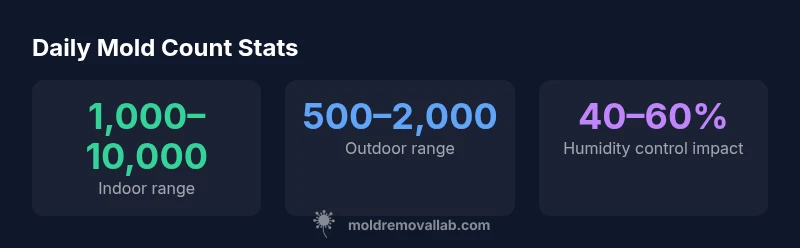
A high count today does not automatically mean a dangerous scenario, and a low count today does not guarantee a mold-free environment. Counts must be understood in relation to recent baselines and outdoor conditions. If outdoor air is heavily spore-laden, indoor numbers may reflect that external input without indicating an indoor problem. Conversely, a high indoor count during a period of low outdoor counts strongly suggests an indoor moisture source or a localized mold reservoir. Practically, homeowners should watch for persistent trends: a sustained rise over several days, repeated spikes after rainfall, or new damp areas appearing in the home. Remember that humidity and ventilation condition indoor air quality, so addressing sources of moisture can reverse rising counts faster than cleaning alone. The Mold Removal Lab team advises keeping humidity below 50–60% where feasible and ensuring adequate air exchange in kitchens, bathrooms, and laundry areas to prevent false alarms. Regularly re-checking the count after implementing moisture controls helps confirm that interventions are working.
Daily Factors That Drive Mold Counts Today
Several daily factors influence today’s mold count: ambient humidity, recent weather patterns, and how well a space is ventilated. A home with poor air exchange tends to accumulate moisture more quickly, creating a hospitable environment for mold spores to settle and grow. Rainy days or heat waves that drive humidity indoors can also spike counts, particularly in basements, crawl spaces, and poorly sealed rooms. Occupancy matters too: more people means more moisture from breathing and cooking, especially in small or poorly ventilated rooms. Seasonal changes are another driver; spring and late summer often bring fluctuating moisture levels that can raise counts temporarily. Finally, the cleanliness of surfaces and the presence of visible mold influence indoor readings. While counts are a useful signal, they should be paired with visual inspections and humidity data to form a complete picture. The Mold Removal Lab team notes that maintaining consistent humidity, rapid moisture remediation, and well‑designed ventilation systems are the most reliable levers for stabilizing daily counts over time.
Practical Steps to Lower Today's Mold Count
If today’s reading is elevated, take a structured, step-by-step approach. First, locate and fix any active moisture sources: leaks, roof issues, plumbing faults, or condensation build-up on windows. Second, reduce indoor humidity with dehumidifiers set to keep RH below 50–60% in living spaces and below 40% in moisture-prone areas like basements and laundry rooms. Third, increase ventilation by using exhaust fans during showers and cooking, and consider keeping interior doors open to promote air exchange. Fourth, clean visible mold with appropriate products and protective gear; always follow label directions and avoid mixing cleaners that can release hazardous gases. Fifth, employ HEPA air purifiers in problem rooms to capture airborne spores, particularly during remediation work. Finally, monitor progress with consistent, weekly checks of humidity and a log of mold readings to ensure the trend is moving downward. If you notice persistent high counts despite remediation, seek professional help to perform a thorough inspection and targeted remediation. The Mold Removal Lab team emphasizes documenting changes over time to support evidence-based decisions and to prevent unnecessary or incomplete remediation.
Monitoring and Keeping Data Honest: What Homeowners Can Do
Tracking today’s mold count is only useful if you maintain accurate records and a clear strategy. Start by choosing a consistent time each day for a quick reading or log entry. Pair indoor readings with daily outdoor baselines, if available, to contextualize fluctuations. Use simple charts or a notebook to visualize trends—color-coding increases in red can help you recognize when support is needed. Maintain a dampness log: note any water intrusion, leaks, or condensation events and how you mitigated them. Combine humidity data from a reliable meter with your mold counts to determine if environmental control remains sufficient. Finally, share your data with a qualified professional if counts do not improve after implementing recommended steps or if you observe new moisture intrusion signs like persistent odors or visible staining. By building a data habit, homeowners gain a powerful tool to protect health and property over time.
Comparison of indoor vs outdoor counts under different conditions
| Environment | Indoor Count (spores/m³) | Outdoor Count (spores/m³) |
|---|---|---|
| Typical home day | 1000–5000 | 500–2000 |
| Damp weather day | 3000–15000 | 700–2500 |
| After dehumidification | 200–1000 | Not applicable |
FAQ
What is considered a high mold count for today?
There isn’t a universal ‘high’ threshold. Interpret today’s count relative to outdoor baselines and recent indoor readings, and watch for a sustained rise over several days.
There’s no universal high—compare today with outdoors and yesterday’s indoor reading.
Can home test kits reliably measure daily mold counts?
Home kits can indicate the presence of mold, but they are not a substitute for professional spore counts. Use them to track trends alongside humidity data and visual checks.
Kits help track trends, but for precise daily counts, rely on professional testing when needed.
How often should I log mold counts?
Aim for a daily or every-other-day log during moisture-heavy periods, then switch to weekly reviews once readings stabilize.
Log daily when it’s humid or after rain, then check weekly once things settle.
What should I do if counts remain high after remediation?
Reassess the moisture sources, inspect hidden damp areas, and consider a professional remediation plan to address hidden reservoirs.
If counts stay high after fixes, call in pros to reassess moisture and concealed mold sources.
Are low mold counts always safe for health?
Low counts reduce risk but aren’t a blanket guarantee of safety. For sensitive individuals, health considerations may still apply, and ongoing moisture control remains important.
Low counts help, but ongoing moisture control matters for health.
“Understanding today’s mold count is about recognizing trends and moisture drivers, not chasing a single number. Regular monitoring helps you detect problems before they become health or property issues.”
The Essentials
- Track today’s mold count as a trend, not a single value
- Compare indoor readings with outdoor baselines for context
- Control humidity to stabilize counts over time
- Increase ventilation during moisture-heavy activities
- Log readings consistently and seek professional testing when needed