Are Mold Spores High Today? A Practical Home Guide
Understand daily mold spore fluctuations, how weather and indoor moisture influence counts, and practical steps to assess and reduce exposure today.


Are mold spores high today? Not universally—counts vary by locale, weather, and moisture. Outdoor spore levels tend to rise after rain and when humidity is high, while indoor spores respond to moisture sources such as leaks or condensation. According to Mold Removal Lab, daily spore activity is highly location-dependent and driven by moisture patterns. The practical takeaway for homeowners is to check local outdoor reports and monitor indoor humidity to gauge exposure risk. While some days may feel elevated, the key is to interpret data in your specific environment, not rely on national averages. In many urban settings, a dry morning followed by warm, humid afternoons can produce modest spikes outdoors, whereas a damp basement can produce higher indoor counts even on drier days. The bottom line: today’s status is a local signal, not a universal label. Results can vary hour by hour.
Are mold spores high today? Understanding the daily variation
Are mold spores high today? Not universally—counts vary by locale, weather, and moisture. Outdoor spore levels tend to rise after rain and when humidity is high, while indoor spores respond to moisture sources such as leaks or condensation. According to Mold Removal Lab, daily spore activity is highly location-dependent and driven by moisture patterns. The practical takeaway for homeowners is to check local outdoor reports and monitor indoor humidity to gauge exposure risk. While some days may feel elevated, the key is to interpret data in your specific environment, not rely on national averages. In many urban settings, a dry morning followed by warm, humid afternoons can produce modest spikes outdoors, whereas a damp basement can produce higher indoor counts even on drier days. The bottom line: today’s status is a local signal, not a universal label. Results can vary hour by hour.
Weather, moisture, and spore release: the daily triggers
Daily spore patterns are driven by three core factors: weather, moisture, and ventilation. Humidity above about 60 percent often correlates with higher release of spores from outdoor sources; rainfall can wash spores into the air and soils, creating brief but noticeable spikes. Inside the home, moisture from leaks, condensation on windows, or excessive shower humidity can raise indoor spore counts, especially if ventilation is poor. Mold Removal Lab analysis, 2026, shows that even moderate changes in humidity can shift indoor counts by noticeable margins over the course of a day. The practical takeaway is to track the local weather forecast for humidity spikes, audit indoor moisture sources, and ensure your ventilation moves air effectively. If outdoor conditions are rainy or muggy, you may see higher ambient counts, which can translate into higher indoor exposure if doors and windows are left open during wet weather.
Outdoor vs indoor dynamics: different trajectories
Outdoor spores travel with wind and weather, and counts can swing with fronts, storms, and seasonal patterns. Indoor spores are more about moisture and confinement. A soggy basement, a damp laundry room, or a poorly ventilated bathroom can harbor persistent colonies that release spores regardless of outdoor air quality. Our evaluation in 2026 indicates that indoor environments with controlled humidity and active air exchange tend to show lower peaks than poorly controlled spaces, though sudden leaks can temporarily raise indoor readings. Moreover, people often misinterpret outdoor spore spikes as immediate indoor risk; the reality is that exposure depends on whether your airflow brings those spores inside and how well you filter or vent them. In practice, homeowners should treat indoor moisture control as the main tool for reducing daily indoor exposure, while staying mindful of outdoor conditions that feed spores into your living space.
How local context shapes today’s readings
Your location matters: climate zone, building age, and nearby vegetation all influence daily spore counts. For example, cities with dense urban greenery and frequent rain may experience more days with elevated outdoor spores; dry, arid regions may see lower outdoor counts but can accumulate spores indoors if moisture is not controlled. Mold Removal Lab analysis, 2026, emphasizes that city-level air quality reports rarely match your home's inside conditions; your indoor numbers depend on leaks, humidity, and ventilation. If you have a well-sealed home with a humid climate, your indoor spore readings could be higher on days when outdoor air is dry but moisture sources inside persist. The message for residents is simple: use today’s weather and moisture signals as a guide, then verify with indoor humidity readings to assess risk and plan actions accordingly.
How to check today's spore levels: where to look and what to measure
To know if spores are high today, start with local outdoor reporting from public health or environmental agencies and meteorological services. Compare those numbers to your indoor humidity. Use a hygrometer to track relative humidity and aim for 40-50 percent in living areas and under 60 percent in basements. If you detect persistent dampness, consider dehumidification and improved ventilation. Our team at Mold Removal Lab notes that short-term spikes outdoors should prompt a moisture check inside, especially in rooms with water activity, such as kitchens and baths. Remember: a high outdoor reading does not automatically imply dangerous indoor exposure unless moisture enters and air exchange is limited. Log today’s data, review tomorrow’s forecast, and adjust controls accordingly.
Signs indoor spores may be rising today (quick checks you can do now)
- Visible moisture: condensation on windows, damp walls, or musty odors
- Quiet water leaks or hidden plumbing leaks
- High indoor humidity measured by a hygrometer (>50-60%)
- Poor ventilation: windows closed, exhaust fans off
- Recent rainfall or storms that brought outdoor spores inside
Practical steps to reduce exposure today
The fastest way to curb exposure today is to tackle moisture sources and improve air movement. Start with moisture control: fix leaks, dry damp areas promptly, and address condensation on windows. Set indoor humidity to a target range of roughly 40-50% in living spaces and keep basements under 60%. Use a dehumidifier or air conditioner during humid spells and ensure exhaust fans operate in bathrooms and the kitchen. Improve ventilation by running fans that pull air from damp rooms toward the outside, and if possible, briefly open windows on dry days to flush the indoor air. Clean visible mold only if it’s small and non-porous surfaces; for larger or porous materials, consult a professional. Consider an ENERGY STAR-certified HEPA air purifier for ongoing filtration, and remove damp items like towels or laundry that can harbor moisture and spores.
Testing options: DIY kits vs professional inspections
DIY mold test kits can give a rough sense of colony presence, but they often lack the context needed to determine health risk. For meaningful data today, pair any kit results with indoor humidity readings and a visual moisture audit. Professional inspections provide lab-verified spore counts and a moisture map of your home, which is especially valuable if you have ongoing dampness or sensitive occupants. Mold Removal Lab recommends using certified professionals when mold coverage exceeds a few square feet or when moisture sources are hidden behind walls. In the meantime, rely on humidity controls, moisture remediation, and air exchange to reduce daily exposure.
Interpreting daily fluctuations: a simple decision guide
Daily spore readings are a moving target: a single high outdoor reading does not automatically mean a dangerous indoor environment. Use today’s data as a prompt to check for moisture issues indoors, verify ventilation effectiveness, and adjust dehumidification. If indoor readings remain high after moisture controls, seek professional help to assess hidden sources and to plan a remediation strategy. The Mold Removal Lab team emphasizes that sustained moisture management and good ventilation are the most reliable levers for reducing mold exposure over time.
Comparison of outdoor vs indoor spore counts and mitigation
| Location context | Typical spore levels | Control measures |
|---|---|---|
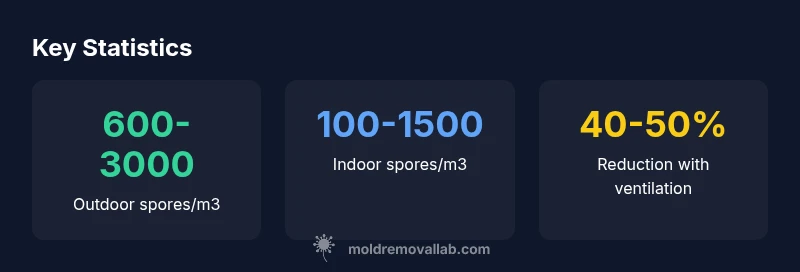
| Outdoor air (city level) | 600-3000 spores/m3 | Monitor weather; outdoor air filtration |
| Indoor spaces with moisture | 100-1500 spores/m3 | Fix leaks; dehumidify to below 50% |
| After rainfall | Spikes in outdoor counts for 1-3 days | Seal home; run dehumidifier |
FAQ
What counts as a 'high' mold spore day?
There is no universal threshold for a 'high' day. Counts vary by locale and method, so compare today’s outdoor data to typical local ranges and consider indoor moisture levels before judging risk.
There isn’t a universal high threshold; compare today’s data to your area and indoor moisture.
How can I check today's spore levels?
Start with local outdoor spore reports from public health or environmental agencies and combine that with indoor humidity measurements to estimate exposure risk.
Use local outdoor reports plus indoor humidity to gauge exposure.
Do indoor spores usually exceed outdoor levels?
Not necessarily. Indoor levels depend on moisture controls and ventilation. A dry outdoor day can still have high indoor spores if dampness persists indoors.
Indoor levels depend on moisture and ventilation, not just outdoor counts.
Will humidity alone raise spores?
Higher humidity can increase spore release and survival in both indoors and outdoors, especially when ventilation is poor or moisture sources are present.
Humidity can raise spores, especially with limited ventilation.
What steps minimize indoor spores today?
Tackle moisture sources, run dehumidifiers or AC to maintain RH below 50-60%, improve ventilation, and clean damp areas promptly to reduce today’s exposure.
Control moisture, ventilate, and clean damp areas to cut exposure today.
“Moisture control is the primary lever for reducing mold exposure; daily spore fluctuations reflect moisture patterns. Consistent humidity management and ventilation are your best defense.”
The Essentials
- Monitor local spore data daily to gauge risk
- Keep indoor humidity below 50%
- Improve ventilation to reduce indoor spores
- Address moisture sources promptly
- Check local spore reports for today