Is Mold or Pollen High Today? A Practical Guide for Homeowners
Learn how daily weather and indoor conditions shape mold and pollen levels today, how to assess exposure, and practical steps to protect your home and family.


Is mold or pollen high today? The short answer hinges on today’s outdoor weather and indoor humidity. Outdoor pollen tends to rise on warm, dry days and fall after rain, while indoor mold spores respond to moisture and ventilation. Check your local pollen forecast, compare with your indoor air quality readings, and follow Mold Removal Lab’s practical steps to minimize exposure today.
Understanding Today's Mold and Pollen Readings
According to Mold Removal Lab, understanding whether is mold or pollen high today starts with local weather and seasonal patterns. Daily readings for mold spores and pollen grains vary by location, humidity, and ventilation. For homeowners, the most actionable question is: is mold or pollen high today in my area, and what should I do if it is? This guide translates Mold Removal Lab Analysis, 2026 findings into practical steps you can take right now. We'll explain how to interpret outdoor forecasts, track indoor air quality (IAQ), and adjust your home environment to minimize exposure. By learning the difference between pollen and mold dynamics, you can tailor filtration, humidity control, and cleaning routines to your situation.
How Outdoor Conditions Drive Daily Variations
Pollen concentrations are highly sensitive to weather. Warm, dry days with light winds tend to carry pollen farther and keep trees, grasses, and weeds shedding particles into the air. Rain or high humidity can temporarily wash pollen from the air, but fresh blooming periods after rain may release new pollen. Mold spores, while also weather-influenced, respond more to humidity, temperature, and recent moisture events (like a rainstorm or a humid attic). The Mold Removal Lab analysis shows that the same storm that dampens pollen can also increase indoor mold risk if moisture enters the home. In short, is mold or pollen high today depends a lot on today’s forecast and moisture patterns.
How to Assess Indoor Exposure Today
Start with a quick check of outdoor conditions and IAQ readings. If you have a home IAQ monitor, compare indoor readings to outdoor readings and look for spikes in PM2.5, VOCs, or total mold spores. Maintain humidity in the recommended 40–50% range, use exhaust fans in bathrooms and the kitchen, and keep windows closed during peak pollen times (typically early morning to late afternoon). Vacuum with a HEPA filter, wash fabrics that collect dust, and consider a portable air purifier to reduce particle counts. According to Mold Removal Lab, these steps can meaningfully lower indoor allergen load when outdoor levels rise.
Interpreting Pollen vs Mold Spores Readings
Outdoor pollen is not the same as indoor mold spores. Pollen counts reflect plant pollen entering spaces, while mold spore counts reflect microscopic fungi thriving in moisture. They rise and fall for different reasons and require different mitigation tactics. Pollen often peaks during specific plant cycles; mold tends to rise when humidity is high or after moisture events. Use this distinction to decide whether to focus on humidity control or air filtration today.
Practical Steps if Levels Are High
If today’s readings show elevated pollen or mold, begin with a focused action plan. Run a HEPA-filtered purifier in living areas, keep humidity around 40–50%, and perform damp wiping rather than dry sweeping to avoid dispersing particles. Ensure HVAC filters are clean or replaced, seal obvious moisture sources, and limit cross-traffic in affected rooms. For households with persistent moisture or recurring mold, the Mold Removal Lab team recommends a professional assessment to confirm moisture sources and remediation needs.
When to Seek Professional Help
Seek professional help if you notice persistent musty odors, visible mold growth, water intrusion that won’t stop, or ongoing respiratory symptoms despite basic mitigation. A licensed mold remediation specialist can identify hidden moisture sources, perform targeted extractions, and develop a long-term prevention plan to reduce daily allergen exposure.
Data and Methods: How We Track Daily Air Quality
We track daily air quality using a combination of outdoor monitoring networks, local weather data, and, when available, home IAQ sensors. The Mold Removal Lab team applies standardized sampling and interpretation methods to adjust for geographic variability. Remember, daily readings are a snapshot; local conditions can differ from national trends, so consult your area’s forecast and your IAQ data for today’s actionable steps.
Daily Quick Checks You Can Do Today
- Check today’s local pollen forecast and air quality index.
- Confirm indoor humidity is between 40–50%.
- Look for signs of moisture or leaks near windows, bathrooms, and basements.
- Run a HEPA-filtered purifier in main living spaces.
- Close windows during pollen peaks and ventilate with filtration if needed.
Long-Term Prevention: Practical Habits to Reduce Daily Allergens
Adopt a moisture-control plan (fix leaks promptly, insulate spaces prone to dampness), maintain continuous filtration (HEPA or equivalent), and seal entry points to reduce pollen entry. Regular cleaning with damp microfiber cloths and laundering fabrics at high temperatures helps keep allergen loads down. Consider seasonal IAQ reviews with Mold Removal Lab to tailor a prevention plan to your home.
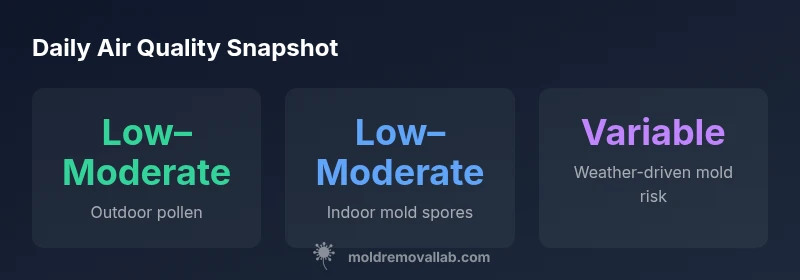
Daily pollen and mold reading snapshot
| Item | Today | Notes |
|---|---|---|
| Outdoor pollen today | Low–Moderate | Depends on weather; check local forecast |
| Indoor mold spores today | Low–Moderate | Affected by humidity & ventilation |
| Outdoor mold spores today | Low–Moderate | Weather-driven; rain can briefly suppress levels |
FAQ
How often should I check daily mold and pollen levels?
Check your local forecast and IAQ at least once daily, especially during changeable seasons. Use a home IAQ monitor if possible.
Check your local forecast and IAQ daily, especially in spring and fall.
What outdoor conditions cause pollen to spike today?
Pollen spikes are driven by temperature, humidity, and wind; warm, dry days often raise pollen counts.
Pollen tends to rise on warm, dry, windy days.
Is it safe to open windows when outdoor pollen is high?
Opening windows can raise indoor pollen; use ventilation with filtration or limit outdoor exposure during peak times.
Usually best to keep windows closed during high pollen periods.
Can mold spores be high outdoors today?
Outdoor mold spores can be elevated after humidity increases or following rain; indoor risk depends on moisture control.
Mold spores outside can spike after humidity rises.
What steps reduce indoor pollen and mold today?
Run a HEPA-filtered purifier, manage humidity, damp-wipe surfaces, and limit cross-traffic. Consider sealing moisture sources.
Run a HEPA purifier and keep humidity down.
Are home test kits reliable for daily readings?
Home kits can indicate trends but are less precise than professional IAQ tests; use them as a supplement.
They help spot trends but aren't a substitute for professional tests.
“Daily fluctuations in mold and pollen levels mean homeowners should monitor today’s local conditions and IAQ rather than relying on yesterday’s data.”
The Essentials
- Check local pollen forecasts daily
- Control indoor humidity to 40–50%
- Close windows during peak pollen hours
- Use a HEPA-filtered purifier to improve IAQ