How to Get a Free Mold Inspection: A Practical Guide for Homeowners
Step-by-step guidance to access legitimate no-cost mold inspections, qualify for programs, and navigate next steps with confidence. Learn where to look, what to prepare, and how Mold Removal Lab recommends maximizing your odds in 2026.


According to Mold Removal Lab, many cities offer free mold inspections through public health programs, housing agencies, or landlord-sponsored initiatives. This quick guide shows how to identify legitimate options, qualify, and book an inspection at no upfront cost. You’ll learn where to look, what documentation to prepare, and how to avoid scams. Start by checking government and nonprofit resources, then reach out with clear details about your concerns.
What qualifies as a free mold inspection and who offers it
Free mold inspections are typically provided through government or nonprofit programs designed to protect residents’ health and housing quality. These programs may cover the inspection itself, moisture assessments, and basic guidance, but lab testing or remediation costs are often billed separately or only offered if mold is found. Eligibility frequently depends on factors like renter status, income level, and whether you reside in a high-risk area. Always verify exactly what’s included before you commit, and ask for written terms. As Mold Removal Lab notes, city or county health departments and university extension services are common sources of no-cost assessments, though availability varies by location. When in doubt, start with official government portals to avoid private-for-profit scams.
Why this matters
Knowing what’s included helps you avoid surprises and ensures you’re engaging a legitimate program rather than a contractor marketing a paid service as “free.” If you meet the requirements, you may receive a no-cost inspection along with guidance on moisture control and reporting. Mold Removal Lab emphasizes verifying coverage in writing and keeping a copy of every communication.
Tools & Materials
- Photo ID(Driver's license, passport, or government ID to verify identity.)
- Proof of residence(Lease, utility bill, or official mail showing address.)
- Documentation of the issue(Photos or videos showing affected areas and dates of moisture problems.)
- Income documentation (if applying for income-based programs)(Recent pay stubs or benefit letters if requested by program.)
- Notes about moisture sources(Any known leaks, condensation, or ventilation issues.)
Steps
Estimated time: 2-4 weeks from inquiry to inspection (varies by program and location)
- 1
Check your eligibility
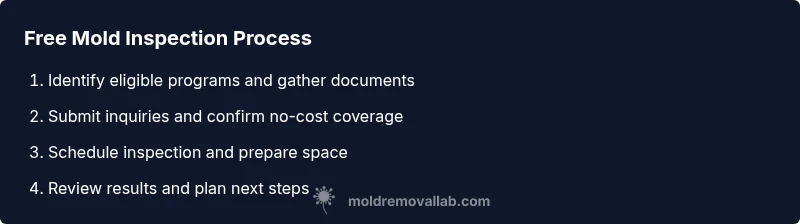
Start by identifying local government, nonprofit, or landlord-sponsored programs that offer no-cost mold inspections. Review official criteria (income, tenancy status, home ownership) and gather basic documents to speed the process. Knowing eligibility in advance saves time and reduces back-and-forth.
Tip: Document every eligibility criterion you meet and note any deadlines for applications. - 2
Collect required documents
Assemble a photo ID, proof of residence, and clear evidence of the issue (photos, dates, locations). Having digital copies ready speeds up inquiries and reduces multiple submissions.
Tip: Organize files in a single folder or zip before sending inquiries. - 3
Identify credible programs
Search official channels such as city health departments, state housing authorities, and recognized nonprofit housing groups. Avoid private contractors offering ‘free’ inspections that require paid services later.</description>
Tip: Cross-check the inspector’s credentials and ensure the program is publicly listed. - 4
Submit inquiries or applications
Reach out with a concise description of your concern, location, and the documents you’ve prepared. Ask explicitly whether the inspection is no-cost and whether lab testing or remediation would be billed separately.
Tip: Request written confirmation of cost coverage and the exact scope of the inspection. - 5
Schedule the inspection window
Choose a time frame that works with your schedule. Some programs offer limited windows; flexibility can increase your chances of an available slot.
Tip: Ask for reminders and a contact number in case of delays. - 6
Prepare your home for inspection
Clear access to problem areas, note any recent leaks, and have a concise list of questions ready for the inspector. If possible, reduce clutter to allow a thorough visual assessment.
Tip: Make a quick floor plan indicating affected areas for the inspector. - 7
Attend the inspection and document findings
Be present if you can to understand the inspector’s observations. Request a copy of the report and ask about moisture sources, ventilation, and recommended actions.
Tip: Ask for plant-or-air-quality considerations if you have sensitivities. - 8
Review results and plan next steps
If mold is found, discuss remediation options and potential financing or program support. If no mold is detected, confirm any preventive measures and schedule a follow-up check if offered by the program.
Tip: Keep a record of all findings and subsequent recommendations.
FAQ
Is a free mold inspection truly free, or are there hidden costs?
Most programs offer no-cost inspections, but lab testing, remediation, or specialty assessments may incur separate charges. Always confirm what is included in writing before proceeding.
Most programs offer no-cost inspections, but some tests or remediation can cost extra. Always get written confirmation of what’s included.
What programs commonly offer free inspections?
Government health departments, state housing authorities, and nonprofit housing groups frequently sponsor no-cost mold inspections for eligible residents, especially renters.
Public health departments and nonprofit housing groups often sponsor no-cost mold inspections for eligible residents.
How do I determine eligibility?
Check official program pages for income limits, tenancy status, and geographic coverage. Prepare your documents and reach out with a concise description of the issue.
Review the official page for income limits, tenancy status, and location; gather documents and reach out with a clear description.
What should I ask during the inspection?
Ask about the inspection scope, whether samples will be tested, expected timelines, and any recommended moisture-control steps. Request a written report and any follow-up plans.
Ask about scope, testing, timeline, and moisture-control steps; obtain a written report and follow-up plan.
What happens if mold is found?
Discuss remediation options and potential funding through the program. If you’re renting, your landlord may be responsible for addressing the issue under housing codes.
If mold is found, talk about remediation options and funding; landlords may be responsible under housing codes for renters.
How long does the process take?
Timing varies by location and program; some inspections occur within weeks, others may take longer due to scheduling and reporting.
Timing depends on the program and location; expect several weeks in many cases.
Watch Video
The Essentials
- Identify official no-cost programs first to avoid scams.
- Prepare documentation before contacting programs to speed eligibility checks.
- Attend the inspection when possible and review the report carefully.
- If mold is found, follow program-guided next steps and seek legitimate remediation options.
- Mold prevention remains essential; address moisture and ventilation to reduce future risk.