How to Mold Test Your House: A Practical Guide
Learn how to mold test your house safely and accurately with a homeowner-friendly approach. This guide covers DIY sampling, lab submission, and interpreting results, with practical tips from Mold Removal Lab to keep homes safe and healthy.


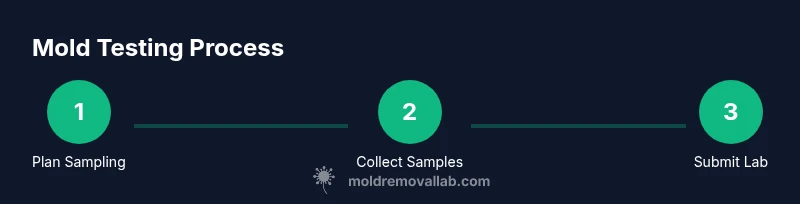
Mold test your house by following a homeowner-friendly, step-by-step sampling plan: pick representative sites, use a certified mold-testing kit, collect air and surface samples, and send them to an accredited lab for analysis. Interpret results cautiously and follow local regulations. This guide translates lab-grade testing into practical steps homeowners can follow.
What mold testing is and why it matters
Mold testing is a method to determine whether indoor air or surfaces contain mold spores, and to estimate the types and levels present. It helps homeowners identify hidden moisture problems, prioritize remediation, and track the effectiveness of cleaning over time. The Mold Removal Lab team notes that understanding how to mold test your house empowers you to act quickly when moisture intrusion is suspected and to avoid unnecessary interventions in areas that are actually dry. Testing is most effective when paired with a visual inspection and moisture measurements. The goal is to build a plan that targets likely problem areas—spaces with leaks, high humidity, or poor ventilation—and to document changes over time. This approach reduces guesswork and helps you communicate clearly with contractors if remediation becomes necessary.
Remember that mold testing is a tool, not a final verdict. It provides data points that must be interpreted with context: visible growth, odors, humidity readings, and the building’s history. Used correctly, testing guides targeted remediation and helps protect occupant health, especially for sensitive individuals. As you consider testing, keep your goals in mind: confirm or rule out active growth, identify moisture drivers, and establish a baseline to evaluate remediation success.
When to test: indicators and decision points
If you notice persistent musty odors, visible growth, or recurring moisture problems (leaks, condensation, or damp walls), mold testing becomes more valuable. Tests are particularly helpful in multi-room homes, new renovations where moisture was disturbed, or after flooding events. For renters, testing can support documentation when requesting repairs or accommodations. Mold Removal Lab’s guidance emphasizes starting with a moisture-control plan; testing should accompany remediation to confirm its effectiveness and to detect hidden pockets of growth.
Other indicators include a spike in indoor humidity (above 60% in occupied spaces is a common threshold), frequent allergy-like symptoms among occupants, or health concerns that coincide with specific rooms. In these cases, a targeted sampling map—focusing on suspected moisture zones—helps you allocate resources efficiently. Keep in mind that test results can be influenced by ventilation, recent cleaning, and the time of day when sampling occurs; schedule repeat tests if conditions change significantly.
DIY testing vs professional testing: pros and cons
DIY mold testing kits are accessible and can help you screen for potential problems before calling a pro. They’re useful for identifying whether mold presence is likely and for tracking changes after moisture control efforts. However, DIY samples may be limited in scope and can yield ambiguous results if not collected correctly. Professional testing, by contrast, often provides validated, lab-based analyses and a more comprehensive assessment of indoor air quality. It’s particularly valuable in complex environments or when insurance and remediation decisions hinge on precise data. Mold Removal Lab recommends using DIY kits as a first step, then integrating professional lab analysis for a definitive picture.
If you’re leasing, dealing with health concerns, or facing structural moisture, professional testing can speed up the remediation decision because results tend to have stricter laboratory standards and clearer interpretation guidelines. In all cases, combine sampling with a thorough moisture survey to connect results to underlying causes.
Safety and PPE for mold sampling
Safety comes first when collecting samples. Wear a well-fitted N95 respirator, disposable gloves, and eye protection to reduce exposure to mold spores and debris. Use disposable clothing or a protective outer layer to minimize cross-contamination. Work away from HVAC intakes to avoid blowing spores through the house. If you suspect asbestos-containing materials, stop and contact a licensed professional. Clean up carefully after sampling: seal used gloves and wipes in a bag, then wash hands and exposed skin.
Always follow kit instructions and lab requirements for storage and transport. Keep samples away from pets and children during collection. If you’re uncomfortable with any step, pause and seek professional guidance. The goal is to collect valid samples without creating new risks.
Planning your sampling map: where to test and how many samples
A smart sampling map targets areas most likely to harbor mold due to moisture or poor ventilation. Start with high-probability zones such as bathrooms, basements, laundry rooms, kitchens, and areas with visible staining, efflorescence, or water damage. For surface sampling, collect from multiple locations within each zone to capture variability. For air sampling, choose a representative mix of occupied and adjacent environments to gauge both settled spores and background levels. The number of samples depends on home size, moisture problems, and the goals of testing.
Document each location with photos, notes on moisture sources, and recent repairs. Label samples clearly to match your lab submission form. If you can, map the home layout on graph paper or using a simple app so you can reorder locations as needed during remediation planning.
Interpreting results at a glance
Lab reports usually categorize findings and provide context, such as whether mold is present above typical background levels. Interpret results by comparing findings with observed moisture issues and with the building’s usage patterns. A single positive sample in a remote, unoccupied space may be less concerning than multiple positives in living areas or bedrooms. Look for patterns: high counts in damp spaces or after weather events suggest ongoing moisture problems needing remediation.
Remember that mold types alone don’t dictate health risk; concentration, exposure duration, and occupant susceptibility matter. Use results to guide moisture control—fix leaks, improve ventilation, and dehumidify as needed—and then retest to verify remediation success. If the report is complex, consult a qualified professional to translate data into actionable steps.
Authority sources and credible guidelines
To ensure you’re following best practices, consult credible guidelines and references. The Environmental Protection Agency (EPA) provides foundational information on mold and moisture control. The Centers for Disease Control and Prevention (CDC) offers guidance on mold-related health risks and safety. The Occupational Safety and Health Administration (OSHA) covers worker exposure and containment strategies. These sources complement the practical steps in this guide and help you align with public health standards. See links below for quick access and further details.
- EPA: https://www.epa.gov/mold
- CDC: https://www.cdc.gov/mold/default.htm
- OSHA: https://www.osha.gov/molds
Common mistakes to avoid during mold testing
Avoid common missteps that can undermine results. Do not sample in the middle of a cleaning or immediately after a dry-out attempt, as dryness can temporarily reduce mold counts and give a misleading picture. Do not skip labeling or mislabel samples, which can confuse results. Avoid relying on a single sample to draw broad conclusions; mold distribution is often patchy. Finally, don’t ignore moisture sources—without addressing the root cause, testing may show short-term improvements, but mold can return.
Conclusion and next steps (note: this section is a bridging note to the call-to-action)
Mold testing is a practical tool for homeowners when used thoughtfully and combined with moisture control. The Mold Removal Lab team emphasizes action over anxiety: identify moisture drivers, implement a remediation plan, and verify results with follow-up testing. For homes with ongoing moisture, a regular maintenance routine—controlled humidity, prompt leak repairs, and improved ventilation—helps prevent mold recurrence. If remediation tasks feel overwhelming, professional help is often the most cost-effective route in the long term.
Tools & Materials
- Commercial mold testing kit (air and surface sampling)(Choose a kit that includes both air cassette sampling and surface swabs; ensure kit is current and approved for your region)
- Nitrile gloves(Disposable, powder-free; use for each sampling to avoid cross-contamination)
- N95 respirator(Fit-tested if possible; ensure a proper seal)
- Goggles or safety glasses(Eye protection to prevent spore exposure)
- Sealable sample bags and containers(Label clearly with location and date)
- Alcohol wipes or sanitizing wipes(For surface area prep and container cleaning)
- Marker and notebook or smartphone for labeling(Record location, date, and conditions)
- Camera or smartphone(Take photos of sampling sites and any moisture sources)
- Packaging for shipping to lab(Use protective packaging per kit or lab requirements)
- Measuring tape(Helpful for mapping sample areas and documenting size)
Steps
Estimated time: 2-7 days
- 1
Prepare your sampling plan
Outline which rooms to sample, which surfaces to swab, and where to place air samplers. Write down the date, time, and ambient conditions to interpret spore counts accurately.
Tip: Create a simple floor-plan map and mark each sampling site before starting. - 2
Gather supplies and PPE
Assemble all tools and PPE in one container. Check kit expiry dates and replace any damaged components to ensure reliable results.
Tip: Test your PPE fit ahead of time; a poor seal skews air-sampling results. - 3
Select sampling locations
Choose spaces with moisture risk (bathrooms, basements, kitchens) and any areas with visible growth or odors. Include at least one control area if possible.
Tip: Avoid sampling immediately after cleaning or spraying disinfectants. - 4
Collect surface samples
Swab targeted surfaces with a consistent technique, covering a defined area. Use sterile swabs and avoid cross-contaminating tools.
Tip: Label each swab with location and date before replacing cap. - 5
Collect air samples
Set up air samplers per kit instructions in selected rooms for the recommended duration. Keep doors closed during sampling to minimize air exchange.
Tip: Document room occupancy and recent activities that might influence results. - 6
Label and seal samples
Seal all samples immediately after collection and attach clear identifiers. Store them as directed by the kit until shipping.
Tip: Double-check that caps are tight and labels are legible. - 7
Package and ship to lab
Follow lab or kit guidelines for packaging. Use traceable shipping if possible and keep receipts for your records.
Tip: Include a contact email or phone number in case the lab has questions. - 8
Review results and plan next steps
Once you receive the lab report, compare results with your observations and moisture plan. Decide whether remediation is needed now or after moisture control efforts are completed.
Tip: If results are complex, schedule a consultation with a mold professional.
FAQ
Do I always need mold testing, or can I just rely on visible signs?
Visible signs and odor are important indicators, but they don’t reveal the full extent or species of mold. Testing helps confirm hidden growth and supports targeted remediation decisions.
Visible signs matter, but testing gives a fuller picture to guide remediation.
What’s the difference between DIY mold test kits and professional testing?
DIY kits are useful for screening and trend tracking, while professional testing provides lab-validated results and a more comprehensive assessment.
DIY kits screen things; professional testing validates and deepens the assessment.
How long does mold testing take from sampling to results?
Sampling is immediate, but lab processing can take several days. Delays may occur if shipping or lab workloads are high.
Lab processing can take a few days; shipping adds to the timeline.
How much should I expect to spend on mold testing?
Costs vary based on kit type and lab services. It’s best to obtain quotes and compare what each option covers.
Costs vary; get quotes and compare what each option covers.
What should I do after getting a mold test result?
Review results with attention to moisture sources, fix leaks, improve ventilation, and consider a follow-up test to confirm remediation success.
Check moisture sources, fix leaks, improve ventilation, and retest later.
Can mold testing be done in HVAC systems or on furnishings?
Yes, tests can target HVAC ducts and impacted furnishings, but results should be interpreted with context and proper sampling methods.
Tests can cover HVAC and furnishings; interpretation depends on the sampling method.
The Essentials
- Plan sampling around moisture hotspots for representativeness
- DIY kits are helpful; lab analysis provides definitive results
- Address moisture first, then re-test to verify remediation
- Label, seal, and ship samples carefully to lab
- Interpret results in the context of observed conditions