DIY Mold Kit: A Practical Home Testing Guide
Learn how to use a DIY mold kit safely, interpret results, and decide when to call a pro. Mold Removal Lab provides practical steps for homeowners to screen for mold without replacing professional remediation.


Using a DIY mold kit, you can screen for mold presence, collect samples correctly, and interpret basic results. This guide covers choosing a kit, proper sampling, recognizing false positives/negatives, and deciding when professional help is needed. According to Mold Removal Lab, kit reliability varies, so use results as a screening tool, not a diagnosis.
What a DIY Mold Kit Can and Cannot Do
DIY mold kits are designed to screen for the presence of mold and to provide a snapshot of whether mold spores or DNA are detected in specific areas of your home. They are most effective as screening tools, not definitive diagnoses. The Mold Removal Lab team emphasizes that kits vary in sensitivity, specificity, and the range of species they can detect. Many kits rely on color changes, simple assays, or DNA barcoding to indicate the possible presence of mold. Consumers should be aware that a positive result does not identify the exact species or quantify colony-forming units. A negative result also does not guarantee the absence of hidden mold in wall cavities or behind fixtures. Use DIY kit results to guide next steps, such as hiring a professional for confirmatory testing or targeted remediation.
Choosing the Right Kit: Features and Reliability
When choosing a DIY mold kit, consider: (1) the type of analysis (colorimetric vs DNA-based), (2) the number of samples allowed, (3) whether the kit includes a mail-in lab option or a home-readout, (4) the declared detection limits and the target molds listed, and (5) expiration dates and storage conditions. Kits with broader mold species panels and validated comparative studies tend to be more reliable, but they often cost more. Prices range widely depending on sophistication, from budget options to more comprehensive kits. The key is to match the kit’s capabilities to your goals (screening vs. definitive lab results) and to verify whether the kit provides clear interpretation guidelines or requires professional analysis for confirmation.
Safe Sampling and Handling
Safety and cleanliness are critical to avoid contaminating samples. Always wear gloves and a mask if recommended by the kit, and work on a clean, dry surface. Before sampling, prepare labeling materials, a clean collection container, and a sealed bag for each sample. Avoid cross-contamination by using new swabs or sterile collection tools for each area. Do not touch the sampling ends with bare hands, and wash hands after handling samples. If the kit includes air sampling or surface swabs, follow the provided protocol exactly, because deviations can lead to unreliable results.
Interpreting Kit Results: What It Means and What It Doesn’t
Interpretation depends on the kit’s design. Some kits provide a qualitative result (mold detected or not detected), while others provide semi-quantitative data. In all cases, compare results against the kit’s reference guide, which should specify what constitutes a positive finding for each target mold. Remember that a positive result indicates the presence of mold material at the sampling location, not necessarily the severity or health risk. False positives can occur due to sampling errors or environmental contaminants; false negatives can occur if the target mold is absent from the kit’s panel or if sampling was insufficient.
Environmental Factors That Affect Test Results
Mold testing is influenced by humidity, temperature, and airflow. Recent rain, high indoor humidity, or recent cleaning can skew results. Ventilation affects spore distribution, so sampling in stagnant areas may not reflect the overall mold burden. If you’re testing an area with ongoing moisture problems, results may change after you fix the moisture source. For accurate readings, allow surfaces to dry, avoid disturbing dust, and schedule sampling during normal room conditions rather than immediately after activities like showering or cooking.
Practical Remediation: When to Clean Yourself vs. Call a Pro
DIY mold kits can indicate when there is mold presence, but remediation decisions should consider health risks, exposure duration, and the extent of contamination. Small, non-porous surface mold might be addressed with standard cleaning agents and protective gear. However, mold on drywall, behind walls, or widespread growth, especially black mold, typically requires professional remediation to ensure complete removal and to prevent re-growth. Always consult local regulations and consider a professional inspection if you notice extensive growth, persistent moisture, or health symptoms.
Documentation and Record-Keeping
Keep a detailed log of every sampling event: date, time, room location, who performed sampling, and the kit’s lot number. Save photos of affected areas and the kit’s results page. If you mail samples to a lab, retain the mailing receipt and tracking number. Documentation helps track changes over time and provides context if you decide to pursue professional remediation or insurance claims.
Common Pitfalls and How to Avoid Them
Avoid sampling in dusty, high-traffic areas without cleaning first. Do not mix samples from different rooms into a single container, and never reuse collection tools across samples. Misinterpreting color-change indicators, neglecting labeling, and ignoring storage instructions can all lead to misleading results. If you’re unsure about a result, seek a professional opinion for confirmation rather than acting on a single kit readout.
What Next After Testing: Planning Your Next Steps
If a kit indicates mold, assess the moisture sources and overall home health. Address any leaks and reduce humidity levels with ventilation, dehumidifiers, or improved airflow. For suspected hidden mold, schedule a professional inspection and consider third-party air and surface testing. If results are negative but symptoms persist, consider alternative explanations and reassess environmental conditions. Keeping a proactive maintenance schedule helps prevent future mold issues.
How to Choose a Follow-Up Strategy
Decide on a follow-up strategy based on your results and risk tolerance: perform a second DIY test after moisture control is in place, engage a certified mold inspector for a formal assessment, or pursue remediation if you have visible growth, ongoing symptoms, or structural moisture problems. A clear plan reduces uncertainty and helps protect your home and health.
Tools & Materials
- DIY mold kit(Ensure the kit is within its expiration date and includes all components (swabs, collection containers, sealable bags, instructions).)
- Disposable gloves(Protect hands from contaminants and prevent sample contamination.)
- Face mask(A simple respirator or disposable mask improves comfort and safety during sampling.)
- Labeling supplies(Permanent marker and sample labels to identify each location.)
- Zip-top bags or sealable containers(Used to store and transport individual samples without leakage.)
- Notebook or app for documentation(Record locations, conditions, and observations for each sample.)
- Camera or smartphone(Capture area conditions and sample placement for reference.)
Steps
Estimated time: 60-90 minutes
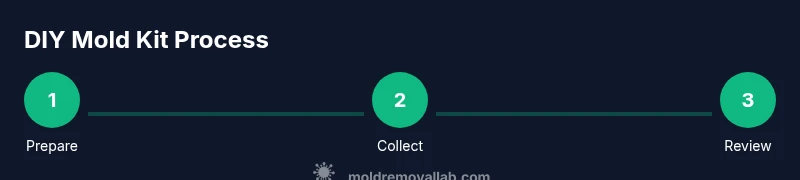
- 1
Prepare workspace
Clear a clean, well-lit area. Gather all kit components and labeling materials, and put on gloves and a mask. This minimizes contamination and keeps samples organized.
Tip: Lay out a protective sheet to catch spills and keep surfaces clean. - 2
Read instructions
Skim the kit manual to understand sampling locations and timelines. Check expiration dates and confirm the method (surface swab, wipe, or air sample) before proceeding.
Tip: Highlight key steps to prevent missing critical details. - 3
Label samples
Label each container with date, location, and sample type. Consistent labeling prevents mix-ups and eases result interpretation.
Tip: Use waterproof labels and write clearly. - 4
Collect samples
Follow the kit’s protocol for each location. If sampling surfaces, wipe or swab a predefined area; for air kits, run the device as instructed. Avoid cross-contamination.
Tip: Use a fresh swab for each location and don’t over-wet surfaces. - 5
Seal and store
Place each sample in its sealed container or bag. Store as directed by the kit (cool, dry place; or mail-in as instructed).
Tip: Ensure containers are sealed tightly to prevent leaks. - 6
Document details
Record where samples were taken, the environmental conditions, and any moisture issues observed. Take photos if allowed.
Tip: Include a short note about room humidity and airflow. - 7
Review results
Once results return, read the kit’s interpretation guide. Compare outcomes to the target molds listed and note any limitations.
Tip: If results are ambiguous, plan a professional follow-up. - 8
Plan next steps
Decide whether to remediate small areas yourself or contact a professional for larger or persistent mold growth.
Tip: Act promptly if moisture sources remain unaddressed.
FAQ
Are DIY mold kits reliable for detecting mold in a home?
DIY mold kits can provide a screening indication, but reliability varies by kit and target mold species. They should not replace professional lab testing for a definitive diagnosis.
DIY mold kits offer screening indications, but reliability varies. They should not replace lab testing for a definitive diagnosis.
Can DIY mold kits detect all mold types present in a home?
Most DIY kits test for a subset of common mold types. They may miss rarer species or molds in hard-to-reach areas. Use results to guide next steps and consider professional testing if symptoms persist.
Most DIY kits test for a subset of common molds and may miss rarer types. Use results to guide next steps and consider professional testing if symptoms persist.
How long does it take to get results from a DIY mold kit?
Result times vary by kit; some provide rapid readouts, while others require mail-in analysis that may take several days to weeks.
Results vary; some kits offer rapid readouts, others require mail-in analysis that can take days to weeks.
Should I retest after remediation or moisture control?
Yes. After addressing moisture issues, retesting helps confirm that mold risk has been reduced and no new contamination occurred.
Yes. Retesting after moisture control helps confirm that mold risk is reduced.
What should I do if the DIY kit shows mold?
If mold is detected, address moisture sources immediately and consult a professional for a formal inspection and remediation plan, especially for hidden or widespread growth.
If mold is detected, fix moisture sources first and contact a professional for a formal inspection and plan.
Are DIY kits dangerous to use or handle?
Generally safe when used as directed, but always follow kit instructions, wear PPE, and avoid disturbing moldy areas more than necessary.
DIY kits are generally safe if you follow instructions and wear PPE.
Watch Video
The Essentials
- Identify kit type and limits before testing
- Follow strict labeling and contamination controls
- Interpret results with kit guidelines, not as a final diagnosis
- Address moisture sources to reduce mold risk
- Consider professional testing for confirmation