Affordable Mold Testing: A Practical Guide for Homeowners
Discover affordable mold testing options, compare DIY kits vs. professional inspections, and learn how to interpret results for safe, cost-conscious mold remediation.


Affordable mold testing helps homeowners confirm mold presence and plan next steps without overspending. Options include affordable mail-in kits, local inspectors, and selective in-home tests. According to Mold Removal Lab, price ranges vary by method but remain accessible for most budgets, typically starting well under a thousand dollars when chosen wisely. A smart tester weighs accuracy, turnaround, and lab quality before buying.
Understanding affordable mold testing
Affordable mold testing is the process of identifying mold presence, species, and concentration using methods that balance cost with reliability. When budgets are tight, homeowners often worry about sacrificing accuracy. In practice, affordability comes from choosing validated testing options, understanding what is being tested, and selecting labs with transparent QA. The most common paths are mail-in test kits purchased from reputable sources, in-home rapid swabs where allowed, and in-person inspections conducted by trained professionals. The key to keeping costs reasonable is identifying the goals: confirm whether mold is present, determine potential moisture drivers, and decide whether a full remediation assessment is necessary. From a health safety standpoint, early detection matters; waiting can allow mold growth to escalate, increasing exposure and moisture-related damage. The Mold Removal Lab team emphasizes that cost should not be the sole determinant; accuracy, lab accreditation, and proper sampling technique drive value. For homeowners, this means prioritizing tests that include a clear lab report, specific sampling instructions, and a defined lab method. This section outlines practical options and how to assess trade-offs.
Testing options and how to compare costs
There are several pathways to affordable mold testing, each with pros and cons. Mail-in kits are typically the most economical and convenient, but accuracy depends on sample collection and lab processing. In-home tests can offer quicker feedback but may involve higher costs for prompt results. Professional inspections deliver expert interpretation and often include moisture assessments and containment recommendations, but price can vary widely by service area. When comparing costs, look beyond the sticker price: review what’s included (lab report, accredited lab, method used), the required number of samples, and any travel or sampling fees. According to Mold Removal Lab, you should expect variation by method, lab accreditation, and region, but there are affordable options that still provide meaningful guidance. Always verify whether the option includes a formal lab report with actionable findings and recommended next steps for remediation.
What affects price: sample type, lab, and turnaround
Price is driven by several interacting factors. The sample type (air, surface swab, bulk material) determines how many samples laboratories need, which in turn affects cost. Labs accredited for mold testing may charge more due to QA protocols and validated methods. Turnaround time also matters: rush processing or same-day results cost more. Additionally, the geographic region influences pricing due to labor and shipping. There is often a trade-off between speed and depth of analysis: comprehensive air quality panels or species-specific testing will cost more but may be necessary for medical or regulatory reasons. The Mold Removal Lab Team notes that mindful selection of sample types and a clear testing goal can maintain affordability while ensuring useful results. In most homes, a focused set of samples plus a transparent lab report yields good value.
How to save without sacrificing accuracy
To keep costs down without compromising on quality, follow these strategies: choose tests with clearly defined lab accreditation and QA procedures, favor laboratories that publish their methods, and request a full written report with actionable recommendations. Start with a screening kit if you’re unsure whether mold is present, then escalate to a targeted in-depth option if results are positive. Compare at least two providers and ask about hidden fees (shipping, handling, or retesting). Consider bundled services that include a remediation plan or moisture assessment, which can reduce total costs by preventing repeat testing. The goal is to obtain a credible result that informs remediation rather than a vague indication of “mold present.” The Mold Removal Lab analysis supports this approach, emphasizing that strategic sampling and transparent reporting deliver the best value.
Step-by-step: how to choose an affordable option
- Define your goal: confirm presence, identify contamination level, or guide remediation planning. 2) Check accreditation: ensure the lab follows ISO/IEC 17025 or equivalent. 3) Compare sample types: air vs surface vs bulk, and how many samples are recommended. 4) Review the report: ensure it includes actionable thresholds and next steps. 5) Verify turnaround: choose a timeline that matches your urgency. 6) Read the fine print: watch for extra fees and retesting policies. By following this sequence, homeowners can secure affordable testing that still offers reliable insights. The Mold Removal Lab Team recommends documenting the results and keeping all reports for future reference.
What to expect after testing: interpreting results and next steps
A lab report should clearly state whether mold was detected, the concentration or relative abundance, and any identified species. It should also interpret what these findings mean for your indoor environment, including potential health implications and moisture drivers. If results indicate active growth or high spore counts, plan remediation with a licensed professional. Even when results are inconclusive, use the report to guide moisture control, cleaning practices, and follow-up testing timelines. In many cases, the next steps involve addressing structural moisture, improving ventilation, and preparing for a targeted remediation plan. The Mold Removal Lab Team stresses using professional guidance for decision-making when health concerns are present or if you rent out the property.
Common myths about affordable mold testing
Myth 1: Any cheap test is good enough. Reality: cheap tests may miss hidden mold or provide limited actionable data. Myth 2: DIY testing replaces professional remediation. Reality: testing informs, but proper removal requires licensed pros. Myth 3: If there’s a musty smell, testing isn’t necessary. Reality: smells can persist after removal without validation. Myth 4: All labs are equally reliable. Reality: accreditation and QA matter. By debunking these myths, homeowners can avoid costly missteps and focus on credible testing practices.
Data reliability and regulatory considerations
Reliable mold testing depends on robust methods, transparent reporting, and laboratory accreditation. Look for ISO/IEC 17025 accreditation, CLIA where applicable, or state certifications that validate sampling and analysis. Be wary of marketing claims that promise perfect accuracy without detailing the testing method. A credible report should specify the sampling protocol, lab methodology (air, surface, or bulk analysis), detection limits, and QA measures. Regulatory considerations differ by jurisdiction, but reputable labs follow standardized procedures to ensure data integrity. For consumers, this means prioritizing testing options with clear methodology, independent QA, and accessible interpretation guidance. The Mold Removal Lab Team suggests using results to inform practical steps—improving moisture control, sealing leaks, and scheduling follow-up testing when needed.
Comparison of common mold testing options
| Option | Typical Cost | Turnaround | Notes |
|---|---|---|---|
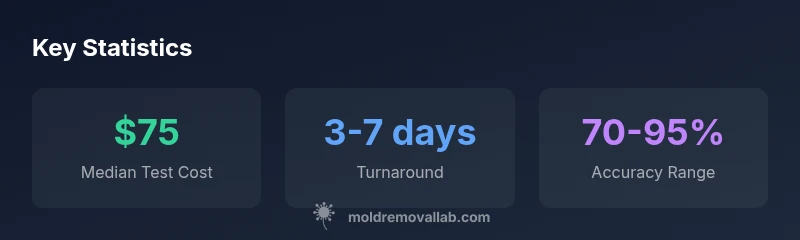
| Mail-in kit | 50-250 | 1-5 days | Least expensive; variable accuracy |
| In-home test kit | 100-400 | 2-7 days | Moderate cost; more rapid results |
| Professional inspection | 300-1500 | Same day-7 days | Highest accuracy; includes moisture assessment |
FAQ
What makes mold testing affordable and reliable?
Affordable testing balances cost with accuracy by selecting validated options and reputable labs. Look for accredited labs and transparent methodologies to ensure credible results.
Affordable testing uses accredited labs and clear methods for reliable results.
Do mail-in kits require professional interpretation?
Most mail-in kits include a lab report with explanations. Compare results to guidance and consult a professional for remediation decisions.
Kits come with reports; talk to a pro for next steps.
How long does affordable mold testing take?
Turnaround varies by method. Mail-in kits typically take 1-7 days; in-person tests may provide faster feedback depending on the lab.
Most tests take a few days to a week.
Is there a risk with DIY testing?
DIY kits are useful for screening but may miss hidden mold. Professional testing is often needed for a comprehensive assessment.
DIY tests can miss hidden mold; consider pro testing if in doubt.
When should I consider professional remediation after testing?
If tests indicate active mold growth or high spore counts, hire a licensed professional for safe removal and proper containment.
If there’s active mold, call a pro.
What certifications should I look for in a lab?
Look for ISO/IEC 17025 or state certifications; reputable labs publish methods and QA data.
Check for lab accreditation.
“Affordable mold testing is most effective when paired with clear next steps. The right test option depends on the space, suspected mold type, and a homeowner's tolerance for turnaround time.”
The Essentials
- Define budget before testing
- Prioritize accreditation and clear reporting
- Compare total costs, not just price
- Choose a method aligned with your goals
- Use results to guide moisture control and remediation