Cheap Mold Inspection: A Practical Guide to Affordable Mold Assessments
Learn how to find cheap mold inspection without sacrificing accuracy. This guide covers typical price ranges, what to expect, and how to verify credentials, with Mold Removal Lab.


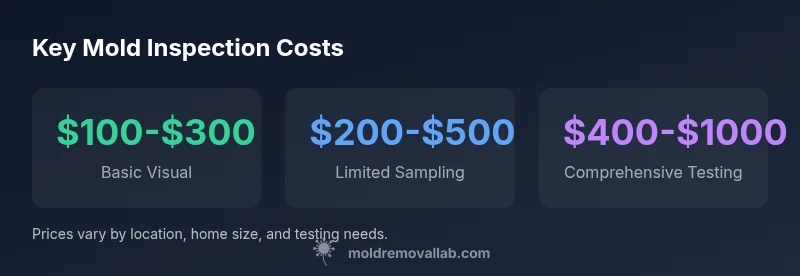
Cheap mold inspection usually means a basic visual assessment designed to keep costs low while spotting obvious mold growth. For budget-conscious homeowners, common price ranges are roughly $100–$300 for a visual check, with higher costs if sampling or lab testing is included. Always confirm the scope, turnaround time, and credentials to avoid under-inspection.
What a cheap mold inspection really covers
When homeowners search for a cheap mold inspection, they typically want to know what is included and what isn’t. In most cases, a budget option refers to a basic visual assessment of readily accessible areas—think bathrooms, basements, and living spaces—plus a limited discussion of findings. The goal is to identify obvious mold growth or moisture issues without the cost of extensive lab work. This is why the phrase cheap mold inspection is (often) a misnomer; it describes price, not value. The Mold Removal Lab team emphasizes that you should always confirm the scope in writing before any visit, since hidden mold behind walls or inside HVAC ducts may go undetected in a visual-only check. Price is a guide, not a guarantee of safety.
How pricing is structured
Pricing for mold inspections generally breaks down into base fees, travel fees, and testing add-ons. The base fee covers the visit and a visual assessment, while travel time and accessibility can push costs higher. If a kit includes lab analysis or air sampling, expect a noticeable price increase. Some providers offer bundled packages with a set number of samples; others bill per test. Regional demand and competition also influence price, so in some markets you may see a wider spread between the low and high ends. When evaluating quotes, look for transparent line items and a clear description of what is included in each tier.
Visual inspection vs lab testing: what you actually need
A visual inspection is often sufficient to flag obvious problems such as ongoing leaks, visible mold, or water-damaged materials. However, it cannot determine mold species, containment risk, or indoor air quality with precision. Lab testing—whether air samples, surface swabs, or bulk samples—adds quantitative data to guide decisions. For a budget-friendly approach, many homeowners start with a visual check and reserve lab testing for when moisture issues persist or when occupants report symptoms. The key is to ensure that the scope aligns with your goals and your risk tolerance.
The impact of where you live on inspection prices
Prices for cheap mold inspection vary by geography. Urban areas with high housing costs tend to be more expensive, while rural regions may offer lower rates. Seasonal demand can also shift pricing, with peak seasons driving up availability and demand. If you’re in a dense housing market or a climate with frequent moisture problems, you might see more comprehensive options at similar price points. The lesson is simple: price is influenced by location, not just the size of your home.
How to compare quotes without sacrificing quality
To compare quotes effectively, request written estimates that spell out scope, testing type, turnaround time, and any follow-up reporting. Ask vendors to describe exactly what is included in the base price and what would trigger extra charges. Verify that laboratories are accredited when testing is included, and check for sample handling and chain-of-custody details. Don’t be swayed by a low headline price; instead compare the value, clarity, and credibility of each proposal. The best choice often balances cost with confidence in the inspector’s process.
Red flags when shopping for budget inspectors
Be wary of several red flags that often accompany very cheap offers. A lack of written estimates or vague scope is a warning sign. Insisters who promise instant results or report formats that omit data can indicate shoddy workmanship. Pressure to sign quickly, or requests for payment via untraceable methods, should raise eyebrows. Finally, avoid inspectors who fail to specify whether lab analysis is included, or who rely on a single, non-accredited lab for results. A careful, transparent approach reduces risk of under-detection.
Step-by-step: what to expect during a budget-friendly inspection
- Scheduling: You’ll confirm access, the home's layout, and any known moisture issues. 2) On-site visit: The inspector looks for visible water damage, mold growth, and moisture sources using standard equipment. 3) Discussion of findings: You’ll receive a preliminary report highlighting obvious concerns. 4) Optional testing: If you opt for sampling, you’ll discuss what samples will be collected and where. 5) Report delivery: A written report or email summary is provided, typically within a few days. This process helps you decide whether further testing or remediation is needed.
DIY checks you can perform before calling pros
Before scheduling, you can perform simple checks that often point to moisture issues. Look for signs of condensation, damp basements, musty odors, or visible staining. Check bathrooms and kitchens for ventilation problems, clogged exhaust fans, or roof leaks. While DIY checks won’t replace a professional inspection, they help you document concerns, prepare questions, and reduce the risk of unnecessary testing.
From results to action: next steps after a cheap mold inspection
If a cheap mold inspection finds concerns, your next steps typically include deciding whether to pursue laboratory testing or remediation. For small, localized mold growth, cleaning and fixing moisture sources may be sufficient; more extensive contamination often requires certified remediation. Request a formal report with air-quality results, mold species, and recommended actions. Prioritize solutions that address underlying moisture issues to prevent recurrence, and track progress with follow-up inspections as needed.
Authority sources
- U.S. Environmental Protection Agency (EPA): Mold guidance https://www.epa.gov/mold
- Centers for Disease Control and Prevention (CDC): Mold in homes https://www.cdc.gov/mold/default.htm
- National Institute of Environmental Health Sciences (NIEHS): Indoor air quality and mold https://www.niehs.nih.gov/
Cost bands for mold inspections
| Inspection Cost Band | Typical Range | What’s Included |
|---|---|---|
| Basic visual inspection | $100-$300 | Visual assessment only |
| Limited sampling | $200-$500 | Visual + limited sampling (air or surface) |
| Comprehensive testing | $400-$1000 | Full testing with lab analysis |
FAQ
What qualifies as a 'cheap' mold inspection?
A cheap inspection typically means a basic visual check without extensive lab testing. It can miss hidden mold behind walls or inside HVAC systems. If you’re worried, plan to add testing later and ensure you have a clear, written scope.
A cheap inspection is usually a basic visual check, not a full lab workup.
How should I compare price quotes effectively?
Request written quotes that spell out scope, testing included, turnaround times, and any follow-up reporting. Verify accreditation for labs and compare the total price, not just the headline fee.
Get written quotes with clear scope and tests included.
Is it safe to skip testing to save money?
If there are obvious signs of mold, a visual inspection may identify risk, but testing is often needed to confirm species and contamination levels. Skipping testing can leave questions unanswered.
Visual checks help, but tests confirm risks.
What credentials should inspectors have?
Look for licensed or certified inspectors, proper training, and credible reporting. Check if labs are accredited and whether results are traceable.
Make sure they have valid credentials and transparent reports.
Can I do a mold inspection myself to save money?
A DIY visual check is possible, but professional inspection is recommended if you see signs or moisture problems. DIY cannot replace testing in many situations.
DIY checks help, but pros are usually needed for accuracy.
How long does a budget mold inspection take?
Most budget inspections take 1–2 hours, depending on home size and accessibility; results may take a few days to compile.
Typically about 1–2 hours.
“Budget-friendly mold inspections are most effective when the scope is clear and the inspector communicates what will and won’t be tested.”
The Essentials
- Define the scope before requesting quotes
- Expect price bands: basic visual vs comprehensive testing
- Always request written quotes with testing details
- Verify credentials and transparent scope to avoid under-inspection
- Budget for remediation if mold is confirmed