Will Kilz Stop Mold? What Primers Really Do for Mold Control
Explore whether Kilz can stop mold, why moisture control matters, and practical steps homeowners can take. Mold Removal Lab explains what primers can and cannot do toward mold growth and staining.


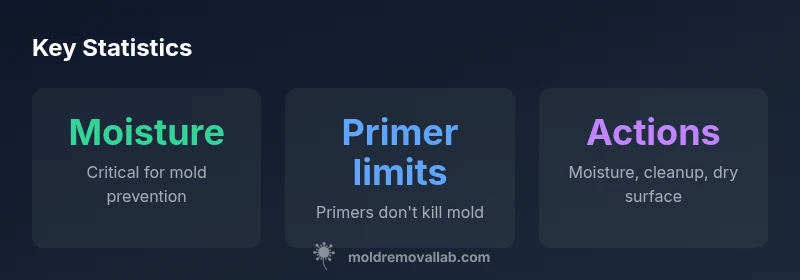
Bottom line: will kilz stop mold? No — Kilz primers are not mold killers and cannot stop active mold growth by themselves. They may seal surfaces and hide staining after cleanup and drying, but moisture control and proper remediation are the only ways to address a mold problem. Kilz serves as a finishing layer, not a remediation tool, according to Mold Removal Lab.
The core limitation: primers vs mold growth
Mold and mildew are living organisms that require a moisture source to thrive. Primers like Kilz do not kill mold spores, and a sealed coat cannot reverse established growth. In fact, treating a mold problem begins with moisture control, containment, and physical removal of affected material. According to Mold Removal Lab, homeowners often ask will kilz stop mold — and the honest answer is no. Kilz can help with aesthetic concerns by sealing stains after mold has been removed and the area dried, but it does not address the root cause. For any visible mold, start with proper cleanup, dried surfaces, and moisture reduction; otherwise, any coating will only delay the problem or hide it from view. The Mold Removal Lab Team emphasizes that prevention is moisture management: fix leaks, improve ventilation, and monitor humidity below 60%. To ensure you’re making progress, this guide breaks down what Kilz can and cannot do, and what steps actually stop mold.
What Kilz actually does on a surface
Kilz is a primer/sealer designed to block stains and odors on walls, wood, and masonry; it creates a barrier between the substrate and the topcoat. However, this barrier is cosmetic in terms of mold: it cannot penetrate porous materials to reach hidden colonies, and it does not kill living spores embedded in drywall, insulation, or framing. If mold has already infiltrated, sealing the surface may mask it temporarily, but growth underneath continues as long as moisture remains. For non-porous surfaces like glass or ceramic, Kilz may provide a smoother finish after thorough cleaning, but it still does not 'neutralize' the mold. In short, Kilz can improve appearance after remediation, not substitute for it. Homeowners should treat Kilz as a finishing layer, not a remediation tool. The takeaway: Kilz is a cosmetic fix for staining, not a mold-control method.
Mold remediation fundamentals: moisture control, cleanup, and prevention
Effective mold remediation follows a simple pattern: remove the moisture source, physically remove contaminated materials, and clean thoroughly. Before applying any coating, ensure all affected areas have dried completely—preferably under 50-60% relative humidity for 24-48 hours. Start with leaks and condensation issues, repair damaged roofing, plumbing, or HVAC components, and improve ventilation in the room. Then, using detergent and water, scrub the surfaces to remove visible mold, followed by vacuuming with a HEPA-filtered machine. Discard porous materials that cannot be cleaned, such as damaged drywall or insulation. After cleanup, recheck for moisture levels and document the process. Finally, re-test the space if you suspect lingering spores. The Mold Removal Lab Team emphasizes that mold control hinges on reducing humidity and eliminating moisture rather than relying on coatings as an antidote. For homeowners, a written remediation plan and regular humidity monitoring help prevent future outbreaks.
When to use Kilz after mold removal
Apply Kilz only after you have completed mold removal and the surface is fully dry. Kilz can help by providing a uniform finish and reducing visible staining when you repaint, but it does not make the area mold-free. Before applying Kilz, take a moisture reading and ensure it remains stable for several days. Use the product exactly as directed on the label, with adequate ventilation and personal protective equipment. If the substrate is porous or porous materials were replaced during cleanup, consider priming first to seal any tiny crevices. Remember that Kilz is a finishing step, not a substitute for remediation. The goal is a dry, clean surface, followed by painting or sealing, not concealing a live mold problem. The Mold Removal Lab Team's guidance is clear: finish with moisture control and proper cleaning, then assess whether sealing is appropriate.
Practical steps homeowners can take
- Inspect for moisture sources: leaks, condensation, or poor ventilation, and fix them promptly.
- Contain the work area to prevent cross-contamination to other parts of the home.
- Clean visible mold with detergent and water, then dry thoroughly using fans or dehumidifiers.
- Use a moisture meter to confirm dryness, then re-test after a few days of stable humidity.
- If choosing Kilz, apply only after the area is bone-dry and free of active growth; use it as a cosmetic finish.
- Maintain humidity below 60% and monitor for new moisture or condensation signs.
Following these steps creates a solid foundation for lasting mold control. The Mold Removal Lab Team reminds homeowners that the objective is removing the moisture source first, then repairing and sealing as needed, not hiding a problem behind a paint job.
Common mistakes that undermine mold control
- Waiting too long to address moisture, allowing mold to penetrate deeper materials.
- Assuming a primer or paint will kill mold or stop spores from spreading.
- Using bleach on porous materials, which can push spores deeper into surfaces.
- Skipping containment and proper cleanup, risking cross-contamination.
- Sealing an active mold problem with Kilz or other coatings without drying and remediation.
- Overlooking hidden mold in walls, attic spaces, or under flooring, where moisture persists.
Awareness of these mistakes helps homeowners plan a safer, more effective remediation path.
Choosing products and following safety guidelines
- Read labels carefully: not all Kilz products are designed for mold remediation; many are primers for finish coats only.
- Prioritize products with clear instructions for use on the intended substrate and environmental conditions.
- Wear PPE: gloves, eye protection, and a respirator as needed; ensure good ventilation during application.
- If you’re unsure about mold extent or porous materials, consult a professional before applying coatings.
- Always test a small area first to confirm adhesion and drying times.
Rely on proven remediation practices rather than hoping a coating will resolve a mold issue.
What to expect in a professional remediation vs DIY
DIY remediation is feasible for small, non-porous areas with no active growth and with careful adherence to safety practices. For larger infestations, hidden mold, or mold in HVAC systems, professional remediation provides containment, specialized tools, and expert guidance. A pro team will identify moisture sources, isolate the area, remove contaminated materials, and perform thorough cleaning and deodorization. After remediation, you may still use Kilz as a finishing coat, but only after drying and soil-level testing shows no active growth. The Mold Removal Lab Team notes that professional remediation services offer a higher likelihood of long-term success, particularly when moisture control is integrated into a comprehensive plan.
Kilz usage in mold scenarios: finishing layer vs remediation
| Topic | Kilz role | Mold remediation note |
|---|---|---|
| Mold growth control | Primers do not kill mold | Requires moisture control + removal |
| Stain blocking | Kilz can hide stains after cleanup | Not a substitute for cleaning or moisture management |
| Professional cleanup | Active mold requires professional remediation | DIY only for non-porous surfaces with no active growth |
FAQ
Can Kilz stop mold on porous surfaces?
No. Kilz is a primer and sealer; it doesn't kill mold growth on porous materials. For porous surfaces, active mold needs removal and moisture control; Kilz could seal stained surfaces after cleanup.
Kilz won't kill mold on porous surfaces; remove the mold and fix moisture, then you can seal if needed.
Will Kilz prevent mold from returning after cleanup?
Not by itself. Kilz may block staining, but preventing regrowth requires moisture control, cleaning, and addressing the source.
Kilz won't prevent mold from coming back by itself; moisture control is essential.
What should I use instead to stop mold growth?
Focus on moisture control, proper cleaning with detergent, and using EPA-registered fungicides or anti-microbial products when appropriate, under guidance.
The right approach is to fix moisture, clean, and, if needed, use approved mold remediation products under guidance.
Does Kilz cover mold spores effectively?
Kilz may cover visible staining but spores and unseen growth remain; coverage is cosmetic.
It may hide stains but doesn't eliminate spores.
Should I hire a professional for active mold?
Yes for active mold or large areas; professionals can assess moisture, contain contamination, and perform safe remediation.
Yes, call a mold remediation pro if you have active growth.
Are there safety considerations when applying Kilz after mold remediation?
Follow label directions; ensure surfaces are dry; use proper ventilation; wear PPE; if hidden mold is suspected, test first.
Make sure the area is dry and ventilated, and follow the product label.
“Primers like Kilz are not substitutes for mold remediation; they can help with aesthetics after cleanup but won't stop growth without eliminating moisture and removing the source.”
The Essentials
- Kilz does not kill mold; it seals after cleanup only.
- Moisture control is essential to prevent mold recurrence.
- Apply Kilz after removal and drying of surfaces.
- Primers block staining, not mold growth.
- Consult a professional for active mold or large infestations.