Removing Mold Stains from Clothing: A Practical Guide
Learn practical, evidence-based methods to remove mold stains from clothing and prevent re-growth. This guide covers safety testing, fabric-specific strategies, drying practices, and prevention tips for homeowners and renters.


By following these steps, you can safely remove mold stains from clothing while protecting fabrics and your health. Start with safety precautions, test colorfastness, treat stains with appropriate cleaners, and launder as directed. The guide emphasizes avoiding harsh chemical blends and ensuring thorough drying to prevent regrowth. If odors linger, repeat the process with a fresh treatment.
Understanding mold stains on clothing
Mold stains on fabrics are the visible sign of moisture-driven growth that occurred when a garment sat damp long enough for spores to colonize. They can appear as greenish, gray, or black patches, often with a musty odor. Even if the fabric looks clean, the underlying fibers may harbor mold roots that weaken the textile over time. For homeowners and renters, addressing mold stains from clothing quickly reduces the chance of permanent color loss and fabric damage. From a safety perspective, wear gloves and a mask when handling moldy textiles to minimize inhalation of spores. According to Mold Removal Lab, moisture control and prompt treatment are the two most important factors in successful remediation. Before you begin, isolate affected items to prevent cross-contamination and test the fabric for colorfastness to avoid setting stains during cleaning. By planning your approach and using fabric safe cleaners, you can restore garments while protecting your indoor air quality.
How moisture and fibers influence cleaning outcomes
The way you treat mold stains depends largely on the fabric type and the amount of moisture that infiltrated the fiber. Natural fibers like cotton and linen absorb water differently than synthetics such as polyester and nylon. This means a one size fits all approach can damage some garments or fail to remove the stain. The key is to choose a cleaning strategy aligned with the fabric care label. Mild pretreatments such as applying a small amount of liquid detergent or a gentle hydrogen peroxide solution often work well on whites and colorfast fabrics. For colored fabrics, oxygen bleach designed for colors can lift stains without fading dyes. Mold Removal Lab emphasizes testing in an inconspicuous seam or hem before broad application; if color runs, stop and switch to a fabric safe method.
Fabric-specific stain strategies
Cotton and linen garments respond well to a mild oxygen bleach combined with detergent, followed by a warm wash cycle if the care label allows. For synthetics like polyester and nylon, enzyme-based stain removers can be effective without rough abrasion. Wool and silk require the gentlest approach: avoid hot water and harsh solvents, and instead use a diluted hydrogen peroxide treatment or a color-safe stain remover, then wash on a delicate cycle. Always avoid mixing chlorine bleach with ammonia or vinegar, as this can release harmful fumes. If a stain persists after washing, repeat the pretreat and wash step rather than applying more aggressive chemicals. The goal is to remove visible mold without damaging fibers or colors.
Post-cleaning care and prevention
After the stain is removed, dry the garment promptly and completely. Mold loves humidity, so air drying in a sunny, well-ventilated location is ideal for many textiles, but check the care label for heat tolerance. If sun exposure is not possible, use a clothesline indoors with good airflow or a drying rack near a fan. Store cleaned items in dry, ventilated spaces and consider using moisture absorbers in closets. Regularly washing damp items quickly and ensuring your washing machine is clean helps prevent future outbreaks. Mold Removal Lab notes that effective prevention is as important as the initial cleaning, because recurring dampness creates new opportunities for spores to take hold.
Tools & Materials
- White vinegar (5% acidity)(Dilute 1:1 with water for pretreatment.)
- Hydrogen peroxide (3%)(Use on colorfast fabrics only; test first.)
- Oxygen-based (color-safe) bleach(Follow label directions; avoid on wool or silk.)
- Liquid laundry detergent(Mild formula works best.)
- Enzyme-based stain remover(Useful for synthetic fibers.)
- Old toothbrush or soft-bristled brush(Gentle agitation only.)
- Color-safe fabric-safe stain remover(Alternative for delicate fabrics.)
- Gloves and a mask(Protect yourself from spores.)
Steps
Estimated time: 30-45 minutes active work, plus any required soaking and drying time
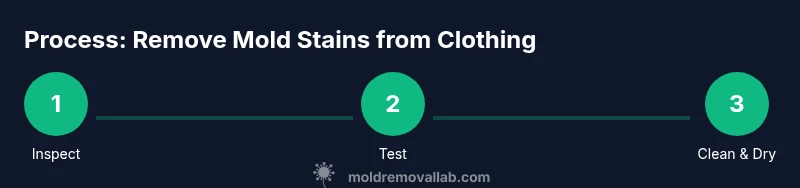
- 1
Inspect and isolate stained garments
Remove items from the laundry area and place stained clothes in a sealed bag or bin to prevent spores from spreading. Note fiber type and care label to guide the cleaning method.
Tip: Keep a dedicated tray for mold stained garments to avoid cross-contamination. - 2
Test colorfastness on an inconspicuous area
Apply a small amount of cleaner or hydrogen peroxide to a hidden seam or hem. Wait 5–10 minutes to see if color bleeds or fabric shows damage. If color transfers, choose milder methods.
Tip: If in doubt, skip bleach and stick to gentler pretreatments. - 3
Pretreat the stained area
Apply a color-safe stain remover or a diluted hydrogen peroxide solution to the mold stain. Gently rub with a soft brush for 20–60 seconds, taking care not to fray the fabric.
Tip: Avoid heavy scrubbing on delicate fabrics; work gradually. - 4
Soak if fabric tolerates it
Soak the garment in an appropriate solution for 15–30 minutes depending on stain severity and fabric tolerance. For whites or colorfast fabrics, oxygen bleach can be effective.
Tip: Do not soak wool, silk, or delicate knits in hot solutions. - 5
Launder with correct settings
Wash according to care label using the proper water temperature and cycle. Use mild detergent and consider an extra rinse to remove residual detergent and mold spores.
Tip: If odor persists after wash, run a second rinse. - 6
Air-dry and re-check
After washing, inspect the garment for any remaining stain or odor. If needed, repeat pretreat and wash steps before drying.
Tip: Best results come from full drying in a ventilated area; avoid piling damp items.
FAQ
Can I use bleach to remove mold stains from clothing?
Bleach can help white fabrics but may damage colored fabrics or delicate fibers. Use oxygen-based or color-safe bleach when possible and always test first. For wool or silk, avoid chlorine bleach altogether.
Bleach can work on whites, but test first and avoid delicate fabrics. Oxygen bleach is safer for colors.
What fabrics tolerate mold cleaning best?
Cotton and linen generally tolerate pretreatment and warm washes well, while synthetics like polyester can handle enzyme cleaners. Delicates such as wool and silk require gentler methods and often avoidance of hot water or strong bleaches.
Cotton and linen usually handle mold cleaning; synthetics are okay with proper cleaners. Delicates need gentler approaches.
If mold returns after washing, what should I do?
Reassess the fabric tolerance and repeat the pretreatment and washing steps, ensuring complete drying between cycles. If odor persists, consider a second wash with a fresh cleaner and inspect storage conditions to reduce humidity.
If mold comes back, redo pretreatment and washing, and make sure items dry completely before storing.
Is it safe to machine wash mold contaminated clothes in hot water?
Hot water can help remove some mold but may shrink or damage certain fabrics. Always follow the care label; use hot water only if the fabric tolerates it and you are using an appropriate detergent.
Only wash in hot water if the fabric can tolerate it and the label allows it.
Are natural remedies like vinegar and baking soda effective?
Vinegar can help in pretreatment for some fabrics, and baking soda can aid odor control. They are generally milder options and should be tested on colorfast fabrics before broad application.
Vinegar or baking soda can help, but test first to ensure compatibility with the fabric.
When should I call a professional?
If mold covers a large area, plant fibers show lasting damage, or there is persistent odor despite cleaning, consult a professional to prevent health risks and further fabric damage.
If mold is widespread or stubborn, a professional can assess health risks and texture damage.
Watch Video
The Essentials
- Test colorfastness before cleaning
- Choose fabric-friendly cleaners first
- Dry thoroughly to prevent regrowth
- Repeat treatment if stains persist