Toxic Mold vs Non Toxic: A Practical Homeowners Guide
A comprehensive comparison of toxic mold vs non toxic, including identification, testing, health considerations, and remediation strategies from Mold Removal Lab.


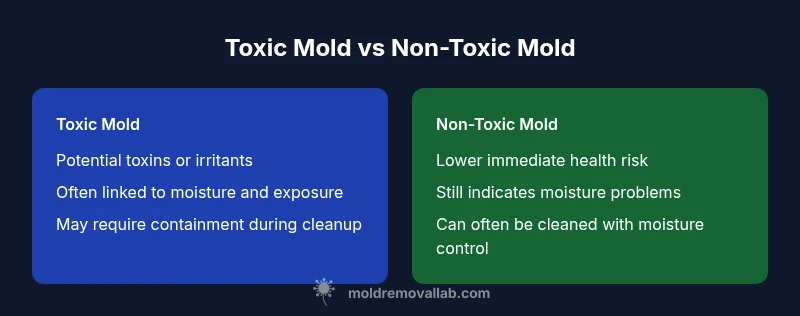
Toxic mold vs non toxic primarily hinges on health risk and remediation steps. Toxic molds may release mycotoxins and irritants, often requiring professional assessment and containment. Non-toxic molds signal moisture problems but generally pose lower immediate health risks if addressed promptly. This comparison helps homeowners decide when DIY is feasible versus when to call professionals.
The Core Distinction: toxic mold vs non toxic
According to Mold Removal Lab, the distinction between toxic mold and non toxic mold is not a universal badge on the mold itself but a risk assessment based on toxins produced and exposure. In practice, homeowners encounter mold varieties that may trigger irritation or allergy symptoms, while some species can release potent irritants or, in rare cases, mycotoxins when conditions are right. This difference matters for remediation: moisture control and careful cleanup are essential, but if toxins are involved, professionals may need to implement containment and specialized procedures. Understanding the toxic mold vs non toxic dynamic helps homeowners prioritize actions, especially in high-humidity spaces or after a water intrusion event. The goal is to reduce exposure, minimize moisture, and restore indoor air quality without overreacting to every surface stain.
A practical takeaway is that mold risk is primarily exposure-driven. The mold is a symptom of moisture, not just a badge of danger. The Mold Removal Lab team emphasizes context over labels: the same species can be harmless in one room and risky in a poorly ventilated area. This section sets the stage for how to evaluate risk in real homes.
Health Implications: When Exposure Matters
Exposure to mold is a spectrum. For many people, inhaling mold spores can cause nasal congestion, throat irritation, or allergic reactions. In sensitive groups—children, older adults, pregnant individuals, or people with asthma or compromised immune systems—these effects can be more pronounced. The presence of toxins (mycotoxins) is not guaranteed in every mold growth, but some species can produce substances that irritate the respiratory tract or skin with prolonged exposure. According to Mold Removal Lab Analysis, health outcomes depend on toxin production, the mold’s growth stage, and how long exposure lasts. The practical implication for homeowners is clear: if you notice mold alongside persistent symptoms (headache, cough, sinus pressure), address moisture promptly and seek professional assessment when symptoms persist or expand to additional rooms. The goal is to minimize exposure and protect vulnerable household members while planning remediation steps.
Common Species and Why Labeling as Toxic Is Tricky
People often label molds as toxic based on appearance or rumor, yet the category “toxic mold” is not a formal scientific rating that applies universally. Stachybotrys chartarum, sometimes labeled “toxic,” is one example frequently cited in media and home inspection reports. However, the risk a homeowner faces depends on exposure level, surface material, and the extent of growth. In many homes, the mold you can see is simply an indicator of moisture intrusion rather than a proven toxin source. Other molds—Aspergillus, Penicillium, or Chaetomium, for instance—can cause irritation or allergy symptoms in some individuals without releasing dangerous mycotoxins in every case. The key takeaway is to avoid definitive judgments based on visuals alone and combine species identification with moisture assessment and exposure history.
To provide practical guidance, Mold Removal Lab recommends: document affected areas, note ventilation and humidity levels, and plan remediation with a professional if the growth is extensive or present in moisture-prone spaces like basements, bathrooms, or kitchens.
Detection and Testing: What Counts as Proof
Visual inspection alone is rarely sufficient to distinguish toxic mold from non toxic. The reliability of DIY mold test kits varies, and professional testing remains the most robust approach for determining species and toxin presence. Air sampling, surface sampling, and laboratory analysis can reveal species composition and, in some cases, toxin-producing potential. Mold Removal Lab emphasizes that testing should be targeted: test where growth is visible, in HVAC intakes, or in areas with ongoing moisture problems. Interpret results in context: a positive test for a species associated with toxins does not automatically imply dangerous exposure unless the area is actively occupied and moisture issues persist. The overarching message is that testing is a tool, not a substitute for addressing underlying moisture and ventilation problems.
Remediation Principles: Moisture Control First
Remediation begins with moisture control. The most effective mold reduction plan focuses on eliminating water sources, fixing leaks, and reducing indoor humidity to recommended levels (generally below 50-60% relative humidity). Prioritize containment to prevent cross-contamination to other rooms. Cleaning methods depend on surface type and extent: non-porous surfaces can often be cleaned with appropriate cleaners and mechanical removal, while porous materials like drywall or carpet may require removal and disposal. Personal protective equipment (PPE) is essential for workers, and HEPA-filtered vacuums can help capture fine spores. Always ventilate the area during cleanup and avoid creating dust plumes that can disperse spores. Reseal and restore once moisture is controlled, and consider a post-remediation verification check to ensure air quality targets are met.
DIY vs Professional Remediation: Deciding Factors
Deciding whether to tackle mold remediation yourself or hire professionals hinges on several factors: extent of growth, location (HVAC, plumbing cavities, or insulation), potential exposure risk to vulnerable occupants, and the materials involved (porous vs non-porous). Small, isolated, non-porous mold on hard surfaces may be manageable with proper PPE and cleaning protocols. However, larger infestations, mold growth behind walls, or growth in damp insulation typically require professional remediation. The Mold Removal Lab team advises homeowners to err on the side of caution: if there is any doubt about safety, if the area is greater than a few square feet, or if moisture sources cannot be fully controlled, call in trained professionals who can establish containment, use specialized equipment, and ensure proper disposal.
Additionally, consider whether your insurance coverage or local regulations apply. Documentation of the moisture source, remediation steps, and post-remediation testing can help with claims and future prevention planning.
Practical Moisture Management: Everyday Strategies
Prevention is the most cost-effective mold defense. Start with a home-wide moisture management plan: fix leaks promptly, seal water intrusion points, and maintain HVAC systems with clean filters. Use dehumidifiers in damp spaces and ensure bathrooms and kitchens have adequate exhaust ventilation. Improve drainage around the foundation to prevent water pooling near the home. Regularly inspect basements, crawlspaces, and attics for signs of moisture, condensation, or poor insulation. Concrete and brick surfaces should dry quickly after rain or humidity peaks; if they stay damp, investigate seepage sources. A minimal routine—quick daily checks for moisture, weekly humidity readings, and seasonal heater vent checks—can prevent large mold problems from forming. Keep records of maintenance and cleaning as part of a proactive prevention plan, and engage professionals if moisture recurs or grows in scope.
Documentation, Insurance, and Disclosure Considerations
When mold appears, documentation matters. Take dated photos, note affected materials and room usage, and record humidity levels. If you are renting, communicate promptly with your landlord and document actions taken. Homeowners insurance policies differ widely in mold coverage; many policies exclude mold unless caused by a covered peril or require riders. If remediation is needed after a water loss, review your policy details and coordinate with the insurer to determine coverage, deductibles, and required remediation standards. In cases involving shared walls or common areas, provide a clear remediation plan to prevent disputes. Keeping thorough records makes it easier to file claims, schedule follow-up inspections, and verify that moisture issues are resolved before resuming normal occupancy.
Uncertainties and Limitations in Mold Risk Labeling
Labels like toxic mold often reflect a precautionary stance rather than a universal standard. Not every mold that grows in a home is toxin-producing, and the presence of mold does not guarantee adverse health effects for every individual. Environmental conditions—like humidity, temperature, ventilation, and occupancy patterns—play a critical role in mold behavior and risk. The Mold Removal Lab team stresses that science continues to evolve, and homeowners should base decisions on a combination of testing results, moisture control capabilities, and occupant health concerns. When in doubt, prioritize containment and moisture removal, and seek professional assessment to tailor a remediation plan to your home’s specific conditions.
Quick-Start Checklist for Homeowners
- Identify moisture sources and fix leaks within 24-48 hours.
- Measure humidity and keep it below 60% in damp spaces like basements.
- Isolate affected areas; use plastic sheeting and HEPA vacuums during cleaning.
- Wear PPE (gloves, mask, eye protection) and avoid vigorous cleaning that can aerosolize spores.
- Consider professional testing when growth covers large areas or involves porous materials.
- Maintain routine inspections after remediation to prevent recurrence.
- Document all steps, including remediation plans and post-treatment checks.
Comparison
| Feature | toxic mold | non-toxic mold |
|---|---|---|
| Health risk potential | Can involve toxins or irritants; risk depends on exposure and species | Lower immediate health risk; still requires moisture control and cleanup |
| Common detection methods | Visual inspection plus professional testing for toxins | Visual signs and moisture cues; testing if exposure is suspected |
| Remediation approach | Containment and specialized remediation by pros when toxins may be involved | Moisture control and standard cleaning; small areas may be DIY with caution |
| Typical time to remediate | Weeks to months for substantial or hidden growth | Days to weeks depending on area and materials involved |
| Cost context | Professional remediation costs vary by scope and may be significant | DIY cleaning and moisture control can be less costly upfront; risk depends on scope |
Upsides
- Encourages proactive moisture control and safer indoor air
- Helps homeowners decide when to hire professionals
- Promotes safer cleaning practices and documentation
- Increases awareness of health considerations and vulnerable occupants
The Bad
- Advice can feel complex due to varying risk factors
- Testing results can be misinterpreted without expert guidance
- Professional remediation can be costly and scheduling may be long
- Overemphasis on toxins may cause unnecessary alarm in some cases
Prioritize containment and professional assessment for suspected toxin-related mold; for small, well-contained growth with good moisture control, DIY steps may be appropriate.
In most homes, large or uncertain mold problems benefit from professional remediation. For small patches with reliable moisture control, careful DIY cleaning can be considered, but always prioritize occupant health and moisture removal.
FAQ
Is all mold in my home dangerous, or is mold only dangerous if it is 'toxic'?
Not all mold is equally dangerous. The risk depends on the species, toxins produced (if any), moisture context, and how long you’re exposed. Labeling some molds as 'toxic' reflects potential risk, not an absolute threat in every situation.
Mold danger varies with exposure and species; not every mold is equally harmful. Focus on moisture control and professional assessment when in doubt.
Can I clean mold myself if it’s a small patch on a non-porous surface?
Small patches on non-porous surfaces can be cleaned with proper PPE and cleaners, but avoid disturbing large areas or porous materials. If the patch recurs or grows, seek professional help.
Yes, for tiny patches on hard surfaces, but be cautious and stop if it keeps returning.
What testing methods reliably distinguish toxic vs non-toxic mold?
Laboratory analysis can identify species and toxin-producing potential. DIY home kits vary in reliability, so use them as a preliminary step and rely on a certified lab for definitive results.
Lab testing identifies species and toxins; home kits can help but aren’t definitive.
How long does remediation typically take?
Timeline depends on extent, location, and materials involved. Small, contained growth may take days; larger infestations or hidden growth behind walls can extend to weeks.
Duration varies; expect days to weeks depending on scope.
Does homeowner’s insurance cover mold remediation?
Coverage depends on your policy and cause. Many policies exclude mold unless triggered by a covered peril; check with your insurer for specifics and any riders.
Policies vary—check with your insurer and review your rider options.
Should I stay out of the home during remediation?
Occupants should minimize exposure, especially vulnerable individuals, during remediation. Professionals will establish containment and airflow controls to protect occupants.
Limit occupancy during remediation; containment is important for safety.
The Essentials
- Prioritize moisture control to prevent mold growth.
- Differentiate risk based on exposure and species; not all mold is equally hazardous.
- Use professional testing judiciously to guide remediation decisions.
- Document steps and maintain ongoing moisture management.
- Err on the side of caution when vulnerable occupants are present.