Steps to Mold Remediation: A Practical Homeowner Guide
A practical, step-by-step mold remediation guide for homeowners and renters, covering safety, containment, removal, drying, and prevention—backed by Mold Removal Lab.


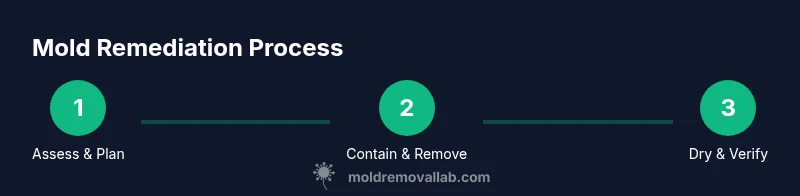
In this guide, you will learn to perform mold remediation safely at home. You’ll identify moisture sources, contain contamination, remove moldy materials, dry the area, and prevent future growth. This step-by-step approach emphasizes safety, proper tools, and knowing when to call a professional. The Mold Removal Lab team found that proper remediation minimizes health risks and structural damage.
What mold remediation is and why it matters
Mold remediation is the process of identifying, containing, removing, and cleaning mold growth in order to reduce health risks and prevent recurrence. According to Mold Removal Lab, effective remediation starts with identifying moisture sources and creating a containment plan. This work not only improves indoor air quality but also protects building materials from moisture damage. In homes, mold typically grows where there is persistent moisture from leaks, high humidity, or condensation. The goal is to remove visible mold, address the underlying moisture problem, and restore the space to a safe, dry condition.
Safety first: PPE, containment, and cross-contamination avoidance
Before touching any mold-affected surface, equip appropriate PPE: a well-fitting N95 respirator, protective goggles, gloves, and disposable coveralls. Remove contents and belongings from the work area only after protection is in place. Seal the work zone with plastic sheeting and tape to prevent spores from migrating to clean areas. Avoid using fans that directly blow air from the contaminated space to other rooms, which can spread mold spores.
Assessing the extent of contamination and planning the job
Start with a thorough assessment of the affected area. Document all mold growth, moisture sources, and damaged materials. Use a moisture meter to identify damp zones behind walls and under flooring. Plan containment needs, disposal methods, and a drying strategy that fits the space and climate. Based on Mold Removal Lab research, moisture control is the most critical factor driving successful remediation. A clear plan reduces surprises and keeps the job on track.
Containment, cleanup strategy, and material handling
Containment should include sturdy barriers, negative air pressure if possible, and dedicated entry/exit routes for the work crew. Plan for safe removal of porous materials (drywall, insulation) and non-porous surfaces (tile, metal) with appropriate techniques. Bag contaminated materials in leak-proof bags and seal before disposal. Use a HEPA vacuum for cleanup and avoid dry brushing, which disperses spores.
Cleaning, disinfection, and disposal methods
Clean all non-porous surfaces with an EPA-registered mold cleaner or detergent solution. Porous materials that are heavily contaminated or damaged beyond cleaning should be removed and disposed of. Avoid mixing cleaners indiscriminately and never use bleach on porous materials. When finished, seal work areas and prepare for the drying phase, ensuring cleaned surfaces are free of visible mold residues and odors.
Drying, verification, and prevention of recurrence
Drying is essential to prevent regrowth. Use dehumidifiers and fans to reduce humidity levels and keep relative humidity below 60% whenever possible. Continuously monitor moisture with a meter and check for musty smells, new staining, or warped materials. After drying, repair leaks, improve ventilation, and implement a maintenance plan to prevent recurrence, such as regular moisture checks and prompt repairs.
Tools & Materials
- PPE kit (N95 respirator, eye protection, gloves, coveralls)(Ensure proper fit and seal; replace disposable PPE after each project.)
- HEPA vacuum with attachments(Use for initial cleanup and ongoing dust control.)
- Plastic sheeting (6 mil) and tape(Create containment barriers around the work area.)
- Scrapers and putty knives(For removing dried material from surfaces without scattering spores.)
- Detergent solution and clean rags(Use soap and water for initial cleaning before disinfection.)
- EPA-registered mold cleaner or disinfectant(Follow label directions and use on non-porous surfaces.)
- Moisture meter or hygrometer(Detect hidden moisture behind walls or under flooring.)
- Dehumidifier and/or air movers(Control humidity during and after cleanup to speed drying.)
- Heavy-duty trash bags and disposal containers(Seal contaminated materials securely for disposal.)
- Buckets, brushes, and rags(Collect and manage wastewater and debris safely.)
- Plastic anchor for air sealing (optional)(Can help maintain containment if needed.)
- Infrared thermometer or moisture camera (optional)(Nonessential but helpful for spotting damp zones.)
Steps
Estimated time: Estimated total time: 1-3 days depending on scope
- 1
Prepare safely and plan
Put on full PPE, gather tools, and outline containment. Clear the area of obstructions and coordinate with household members to minimize exposure. Create a simple action plan that lists what will be removed, cleaned, and discarded.
Tip: Double-check PPE fit and ensure pets/children are kept away. - 2
Stop the moisture source
Identify and fix the root cause of moisture—leaks, condensation, or humidity. If the problem is ongoing, address it before cleanup to prevent recontamination.
Tip: Document the leak repair with photos in case reference is needed later. - 3
Contain the work area
Seal doors and vents with plastic sheeting to prevent spores from spreading. If possible, establish negative air pressure using a portable air scrubber.
Tip: Label the containment zone and restrict access to trained personnel only. - 4
Inspect and document the scope
Visually inspect all visible mold and measure damp zones with a moisture meter. Photograph affected areas and note material types and moisture readings.
Tip: Look behind walls or under flooring using safe access points when needed. - 5
Remove contaminated materials
Carefully bag and seal materials that are mold-damaged or beyond cleaning (e.g., drywall insulation). Avoid shaking or dust-generating activities.
Tip: Contain waste promptly to minimize release of spores. - 6
Clean and disinfect surfaces
Clean non-porous surfaces with an EPA-registered cleaner. Porous materials that are contaminated should be removed and disposed of as needed.
Tip: Rinse surfaces after cleaning and allow to dry fully before proceeding. - 7
Dry the area thoroughly
Run dehumidifiers and air movers to achieve low humidity. Recheck moisture levels regularly to ensure the space stays dry.
Tip: Aim for humidity below 60% and monitor for signs of moisture resurgence. - 8
Verify and prevent recurrence
Perform a final inspection, fix any remaining moisture sources, and implement a prevention plan (ventilation, drainage, regular checks). Maintain documentation for future reference.
Tip: Schedule follow-up checks to ensure long-term prevention.
FAQ
What is the first step in mold remediation?
Identify the moisture problem and contain the area before cleanup. PPE should be worn from the start to protect your health.
First, locate and fix the moisture source, then contain the space and put on protective gear before cleaning.
Can I remove mold myself?
Small, clearly bounded areas can be tackled safely with proper PPE and cleaning methods. Large or hidden growth should be handled by a professional.
You can start with small, visible spots if you’re careful, but call a pro if you’re unsure or it’s widespread.
Is bleach recommended for mold cleanup?
Bleach is not generally recommended for porous materials. Use EPA-registered cleaners and follow product directions.
Bleach isn’t ideal for porous surfaces; use approved cleaners instead.
How long does remediation take?
Time varies with area size, moisture level, and materials. A small job may be done in a day; larger jobs take longer.
It depends on the scope; expect a few days for bigger jobs.
What are signs of hidden mold?
Musty odors, staining, or moisture behind walls indicate hidden mold; further investigation may be needed.
If you notice smells or unseen damp spots, hidden mold could be present.
What should I do after remediation?
Recheck moisture, fix leaks, and maintain ventilation. Consider a post-remediation verification if concerns remain.
Finish with moisture control and a follow-up check to ensure the space stays mold-free.
The Essentials
- Identify moisture sources first and fix them.
- Contain the work area to prevent spread of spores.
- Remove contaminated materials safely and use proper cleaners.
- Dry thoroughly and verify moisture is under control.
- Implement long-term prevention to avoid recurrence.