What Can You Do in Mold: A Practical Homeowner Guide
A practical, safety-first guide for homeowners and renters on mold remediation. Learn immediate actions, safe cleanup, moisture control, and prevention with data-backed tips from Mold Removal Lab.


You will learn practical, safety-first steps to address mold growth in a home. This guide covers immediate actions, safe cleanup on non-porous and porous surfaces, moisture control, and prevention. Begin by isolating the affected area, fixing the moisture source, and using proper PPE; for large or toxic mold, seek professional help.
Understanding the question: what can you do in mold
In the context of home mold, what you can do ranges from quick containment and cleanup to long-term moisture management. According to Mold Removal Lab, homeowners can take immediate, safe actions that reduce spore spread and prevent new growth. The core idea is to act fast, stay safe, and document conditions so you can adjust strategies as needed. This is a practical, hands-on topic for homeowners and renters who want to reduce risk while staying within safety guidelines. Throughout this guide you’ll see clear steps you can follow in 2026, with a focus on practical, repeatable actions you can implement today.
Immediate actions when you suspect mold
When you first notice mold, your priority is to stop moisture, limit exposure, and begin containment. Start by fixing any leaks or water intrusion, then dry the area as quickly as possible. Isolate the space to prevent cross-contamination, using physical barriers and basic airflow control. Wear appropriate PPE, including an N95 respirator, gloves, and eye protection, and keep children and pets away from the affected area. Document the exact location and the extent of visible growth for reference and planning.
Safety gear and containment basics
PPE is not optional when dealing with mold; it is essential for safety and to avoid spreading spores. Use a properly fitted N95 respirator, disposable gloves, and protective eyewear. Consider disposable coveralls if the contamination is larger. For containment, seal the work area with plastic sheeting and tape to prevent spores from migrating to other rooms. Ensure ventilation is controlled and that exhaust air does not circulate back into occupied spaces. A simple rule is to keep the area as closed off as possible during the remediation process.
Safe cleanup for non-porous surfaces
Non-porous surfaces like tile, glass, metal, and sealed concrete are generally easier to clean and less prone to permanent damage. Begin with a detergent solution or EPA-recommended cleaner to remove visible mold. Rinse and dry thoroughly, then inspect for any remaining staining. If the surface remains discolored after cleaning, you may need to repeat the process or consider repainting or resealing. Avoid mixing cleaners with bleach or ammonia, as this can create hazardous fumes. Safety first.
Porous materials and containment decisions
Porous materials—drywall, insulation, carpets, and fabric—are more challenging because mold can penetrate fibers. In many cases, porous materials that are visibly moldy should be removed and disposed of properly rather than cleaned. Bag and seal contaminated materials in plastic before removal to reduce spore spread and follow local disposal guidelines. If material removal is unavoidable, plan for replacement materials and consider using moisture-resistant products to prevent future growth.
Drying, humidity, and monitoring
Moisture control is a long-term requirement after cleanup. Use a dehumidifier and adequate ventilation to drive down humidity levels in the affected area. Keep windows closed and fans directed outward away from the living space to minimize cross-draft. A simple moisture meter can help you monitor when surfaces reach a stable, dry condition. Persistent dampness after cleaning often signals an ongoing moisture source that must be addressed to prevent regrowth.
Professional help vs DIY: decision framework
Many mold situations can be managed by careful DIY steps when growth is superficial and materials are non-porous. However, if mold covers a large area, if it recurs after cleaning, or if you suspect hidden growth behind walls or in HVAC systems, professional remediation is advised. A licensed remediator will identify moisture sources, safely contain the area, and dispose of contaminated materials using industry-standard practices. When in doubt, err on the side of caution and consult a professional.
Documentation, prevention, and future-proofing
Keep a simple log of moisture events, cleanup dates, and drying times. Regularly inspect bathrooms, kitchens, basements, and laundry rooms for signs of dampness or condensation. Improve ventilation where needed, use exhaust fans, and consider moisture-rated paints and sealants in damp areas. By maintaining proactive moisture control and documenting actions, you reduce the likelihood of recurring mold and preserve indoor air quality over time. Mold Removal Lab emphasizes prevention as the best defense in 2026.
Authority Sources
- https://www.epa.gov/mold
- https://www.cdc.gov/mold/faq.html
- https://www.osha.gov/mold
Tools & Materials
- N95 respirator mask(Fit-tested if possible; replace after use)
- Disposable gloves(Latex-free recommended)
- Goggles or face shield(Protect eyes from splashes and spores)
- Protective coveralls(Disposable or washable; prevents clothing contamination)
- Plastic sheeting (6-mil or heavier)(To seal off the area)
- Duct tape(For securing plastic barriers)
- Detergent or EPA-approved cleaner(For initial cleaning of hard surfaces)
- Bucket and sponge(Cleaning and rinsing supplies)
- Disinfectant suitable for mold(Optional for non-porous surfaces after cleaning)
- Moisture meter/hygrometer(Helpful to verify dryness)
- Dehumidifier(Use during drying phase to lower humidity)
- Trash bags / sealable bags(For disposing contaminated materials)
Steps
Estimated time: 6-12 hours
- 1
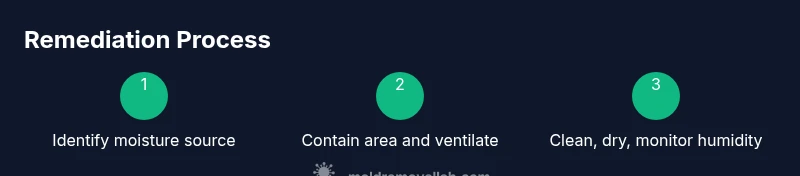
Identify moisture source
Locate and document the moisture problem driving mold growth, such as leaks or condensation. Fix the source to prevent ongoing dampness. After repair, within 1-2 hours begin a controlled cleanup plan.
Tip: Take photos before, during, and after repairs to track progress. - 2
Contain the area
Seal off the affected space with plastic sheeting to minimize spore spread. Keep doors and vents closed; set up a simple airflow direction away from living areas.
Tip: Avoid creating new air paths that could carry spores into other rooms. - 3
Put on PPE
Wear an properly fitted N95 respirator, gloves, and eye protection before touching moldy materials. Don’t reuse disposable PPE after contamination.
Tip: Ensure a safe doffing area to prevent cross-contamination. - 4
Clean non-porous surfaces
Wipe down hard, non-porous surfaces with a detergent solution. Rinse with clean water and dry completely before moving on.
Tip: Do not mix cleaners; bleach is not necessary for all surfaces and can be hazardous. - 5
Handle porous materials
If porous materials show visible mold, remove and seal them in bags. Porous items may need replacement to prevent regrowth.
Tip: Double-bag removed materials to contain any residual spores. - 6
Dry the area thoroughly
Run a dehumidifier and ventilate as appropriate to drive humidity down. Check moisture levels with a meter to confirm dryness before reoccupying.
Tip: Drying times vary; verify dryness before removal of containment. - 7
Recheck and monitor
Reinspect the area after 24-72 hours of drying and again after a week to ensure no new growth appears. Keep humidity steady below the target level.
Tip: Address any new moisture quickly to avoid a relapse. - 8
Document and prevent
Record all actions, materials removed, and moisture-control measures. Develop a prevention plan to minimize future mold risk.
Tip: Regular checks and a maintenance routine greatly reduce recurrence.
FAQ
Is mold dangerous to my health?
Mold exposure can affect some people more than others, especially those with allergies or compromised immune systems. Limit exposure, use PPE, and ventilate the area. If you experience persistent symptoms, consult a healthcare professional.
Mold exposure can affect some people more than others; limit exposure and use PPE. If you have symptoms, see a doctor.
Can I remove mold myself?
Small, surface mold on non-porous surfaces is often manageable with care and proper PPE. If mold covers porous materials or has penetrated walls, or if you’re unsure, seek professional help.
Small surface mold on non-porous surfaces can be DIY, but larger or porous growth should be handled by a pro.
What’s the difference between black mold and other mold?
Color alone does not determine hazard. Assess growth type, moisture source, and whether remediation is needed. If you’re unsure, test or consult a professional to identify species safely.
Color isn’t the only clue; assess growth, moisture, and seek advice if unsure.
How long does it take to dry after cleanup?
Drying time depends on area size, materials, and ventilation. Use a moisture meter to verify surfaces are dry before reoccupying and removing containment.
Drying varies; let moisture checkers confirm dryness before you finish.
When should I call a professional?
If mold covers a large area, recurs after cleaning, or is hidden behind walls or in HVAC, professional remediation is advised to ensure safety and thorough removal.
Call a pro if the mold is extensive or hidden behind walls.
Watch Video
The Essentials
- Contain mold early to limit spread
- Moisture control is the foundation of prevention
- Non-porous surfaces are easier to clean than porous ones
- Porous materials may require removal and disposal
- Document actions and monitor humidity over time