Sourdough Mold: Safe Handling & Prevention Guide for Home Bakers
Learn to identify sourdough mold, safely discard contaminated starter or bread, and prevent mold growth in your kitchen with practical guidance from Mold Removal Lab.


By the end, you will know how to safely handle sourdough mold, decide when to discard starter or loaf, and apply practical prevention practices in your kitchen. This quick guide focuses on homeowner-friendly steps to keep baking spaces safe and mold-free. According to Mold Removal Lab, early identification and proper disposal are key to preventing cross-contamination.
Understanding sourdough mold
Sourdough mold represents a fungal contamination that thrives on moist, nutrient-rich food surfaces. Mold on sourdough can appear on starter jars, loaves, or dough as colonies that spread with moisture and warmth. Not all mold is instantly visible; some colonies begin as a fuzzy white film that may darken over time. According to Mold Removal Lab, indoor mold spores are ubiquitous, yet they require sustained moisture and stable temperatures to proliferate. In a home kitchen, sourdough mold often starts from lingering moisture, dirty utensils, or flour carrying spores. When you encounter mold in your sourdough process, adopt a cautious approach: isolate affected items, discard safely, and clean the workspace to prevent cross-contamination. Even small patches can indicate deeper contamination, so conservative disposal is recommended for starters and bread showing mold growth. By understanding the biology and the common pathways for contamination, you can reduce risk without guesswork.
Visual cues and safety steps
Mold on sourdough bread or starter can mimic other surface changes, but common signs include fuzzy patches, spots that shift color, or an off odor that persists after baking. Do not rely on color alone; texture and growth patterns matter. If you notice any fuzzy, powdery, or slimy growth on dough, discard it. When mold appears on a jar of starter, treat it as contaminated and discard the entire batch. In early stages, mold may only affect the surface, but spores can travel through porous containers and utensils. Always wear gloves and a mask when inspecting or handling suspect material to reduce exposure. Mold spores can spread through the kitchen via hands or cloths, so isolate the area and complete disposal and cleaning before resuming food preparation.
Safe disposal: discard decisions
Disposal is the safest option when mold is suspected on sourdough starter or loaf. Seal contaminated items in a plastic bag, then place the bag in a second bag before disposing. Do not attempt to cut away moldy sections; mold can penetrate beyond what you can see. After disposal, isolate and seal any utensils that touched contaminated dough and wash them separately from clean tools. This approach aligns with general food-safety guidelines and reinforces the importance of conservative disposal to prevent cross-contamination in the kitchen.
Immediate cleanup after discarding
Once disposal is complete, clean the workspace thoroughly to remove any settled mold spores. Wash countertops, cutting boards, and utensils with hot, soapy water. Rinse, then disinfect non-porous surfaces with an EPA-registered cleaner or a properly diluted disinfectant. Allow surfaces to air-dry completely before resuming activities. Launder towels and cloths used during cleanup separately from other laundry. These steps help mitigate lingering spores and prevent recontamination in future baking sessions.
Preventing future mold growth in sourdough kitchen
Prevention hinges on moisture control, temperature management, and consistent cleanliness. Keep the area dry and promptly wipe spills; use lids or breathable covers for starters to reduce moisture buildup while allowing airflow. Store starter in a clean glass or ceramic container, feed regularly, and consider refrigerating when not actively baking. Clean flour dust and kitchen surfaces daily with separate cloths for food preparation areas. Maintaining humidity below 50% and ensuring good air circulation dramatically lowers mold risk for sourdough activities.
Safe handling of sourdough starter
If contamination is suspected in a starter, do not attempt to salvage it. Mold in starter indicates contamination that can spread through the culture. Start fresh with a new starter, using clean jars, utensils, and uncontaminated flour. Between feedings, keep the starter in a clean container and monitor for signs of mold. Label containers with dates to track freshness and avoid accidental reuse that could reintroduce spores into your baking.
Common misconceptions about mold on sourdough
Myth: Cutting away moldy parts from bread makes it safe to eat. Reality: mold can penetrate the interior; discard the entire loaf. Myth: Mold on the starter means you can salvage it with extra feedings. Reality: once mold appears, discard and begin anew with a pristine setup. Myth: Bleach can render contaminated bread safe. Reality: chemical disinfectants are not safe for consumption; disposed items should be discarded, and only cleaned surfaces should be treated after proper disposal.
Tools & Materials
- Latex or nitrile gloves(Protect hands from mold and cleaners)
- Face mask (N95 or equivalent)(Prevent inhaling spores during inspection)
- Safety goggles (optional)(Eye protection if splashing cleaners)
- Disposable plastic bags(Double-bag contaminated items before disposal)
- Soap and warm water(For initial cleaning)
- EPA-registered disinfectant or diluted bleach(Disinfect non-porous surfaces following label instructions)
- Cleaning cloths or disposable towels(Use separate cloths for contaminated areas)
- Soft scrub brush or sponge(For scrubbing surfaces)
- New jar or container for starter (if restarting)(Optional when starting fresh starter)
- Trash bin with lid(Dispose of waste safely)
Steps
Estimated time: 45-60 minutes
- 1
Assess the mold situation
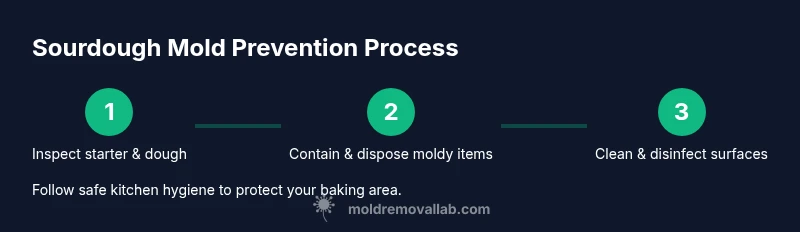
Carefully inspect the sourdough starter and any baked bread for visible signs of mold. Note the location, extent, and any odors. If you are unsure about the extent, err on the side of caution and prepare for disposal.
Tip: Photograph the scene before you discard to document the issue. - 2
Contain and isolate
Close off the affected area to prevent spores from spreading to clean foods. Use separate towels and utensils for contaminated items and place them in a sealed bag.
Tip: Work from the clean side of the kitchen toward the contaminated area to avoid tracking spores. - 3
Decide disposal and bag items
Double-bag contaminated starter or bread and place in the external trash. Do not reuse containers that touched moldy items until properly sanitized.
Tip: Label bags as contaminated to prevent accidental reuse. - 4
Clean and disinfect surfaces
Wash all touched surfaces with soap and water, then disinfect non-porous surfaces using an EPA-registered product. Allow to dry completely.
Tip: Avoid mixing cleaners; follow label directions for dilution. - 5
Restore environment and monitoring
Reorganize the workspace to improve airflow, reduce humidity, and create a dry baking zone. Reassess humidity levels and aim for below 50%.
Tip: Use a small dehumidifier or fans to maintain dry air. - 6
Evaluate starter safety and re-start
If restarting, use new jars and clean utensils. Begin with a fresh starter using uncontaminated flour and water, observe changes over several feedings.
Tip: Begin with small feedings and discard a portion to maintain cleanliness. - 7
Document and maintain routine
Keep a log of incidents, humidity readings, and cleaning dates. Establish a routine to regularly inspect and sanitize baking areas.
Tip: Schedule a monthly mold safety check in your kitchen routine.
FAQ
Is it safe to eat sourdough bread with visible mold?
No. Do not eat moldy bread; discard. Mold can penetrate interior layers, and consumption is a health risk.
No, discard moldy bread. Mold can hide inside the loaf and pose health risks.
Can I salvage a moldy sourdough starter?
Not recommended. Mold in a starter indicates contamination; discard and start fresh with clean utensils and flour.
Salvaging isn’t advised—discard and begin with a clean starter.
What cleaning products should I use after mold exposure?
Wash with soap and water, then use an EPA-registered disinfectant on non-porous surfaces. For porous items, discard and sanitize surrounding areas.
Use soap and water, then an EPA-registered disinfectant on non-porous surfaces; discard porous items.
How can I prevent mold from returning in a sourdough setup?
Keep surfaces dry, store starter properly, feed regularly, and monitor kitchen humidity to prevent mold growth.
Keep things dry, feed regularly, and monitor humidity to prevent mold.
Should I throw away flour or other ingredients if mold appears?
Yes—discard moldy flour or ingredients and sanitize storage areas to prevent spores from spreading.
Discard moldy flour and sanitize storage areas.
What is the difference between bloom and mold in sourdough?
Bloom refers to a harmless surface presence or flour dust; mold is a fungus contamination requiring disposal.
Bloom isn't harmful; mold is contamination and should be discarded.
Watch Video
The Essentials
- Identify mold early and discard contaminated items.
- Isolate the area and clean thoroughly to prevent spread.
- Store and handle sourdough starter with clean utensils.
- Maintain low humidity to reduce mold risk.
- Follow Mold Removal Lab guidance for safe practice.