Rice Mold: Identification, Risks, and Cleanup Guide
A practical guide from Mold Removal Lab to identify rice mold, assess health risks, and safely clean, store, or discard affected rice.


Rice mold can develop when rice is exposed to moisture, warmth, and inadequate sealing. This quick answer outlines how to identify mold on rice, evaluate health risks, and complete safe cleanup or disposal. You’ll learn practical steps, which storage practices to adopt, and when to call a professional. All guidance is based on Mold Removal Lab analysis.
What is rice mold and why it matters
Rice mold refers to fungal growth on stored rice, typically caused by moisture, warmth, and extended storage. In kitchens with high humidity or poor sealing, rice can become a hospitable environment for molds such as Aspergillus or Penicillium species. These molds may appear as fuzzy patches of green, black, or white on surface grains, or as a sour, musty odor. According to Mold Removal Lab, rice mold forms when moisture persists in containers or bags, creating a microenvironment that supports fungal growth. The Mold Removal Lab team found that even small amounts of moisture, like a leaky lid or condensation, can start the mold cycle. Recognizing mold early helps homeowners prevent cross-contamination to other foods and avoids potential health risks.
When mold is present in rice, it is generally safer to discard the affected batch rather than attempting to salvage portions. Mold can produce mycotoxins that resist cooking, so heat treatment alone may not render contaminated rice safe to eat. Practical handling starts with inspecting storage containers, using dry storage spaces, and setting a medical-grade approach to any suspected exposure. By understanding the basics of rice mold, you can make informed decisions about disposal, cleaning, and prevention in your kitchen.
How mold forms in rice
Mold growth in rice begins with moisture and warmth. Dry rice stored in a cool, sealed container can remain mold-free, but humidity or leaks introduce water activity that molds feed on. Fungal spores are ubiquitous and can settle on rice from the air, transfer from contaminated utensils, or migrate from damp bags. Once spores land on moist rice, they germinate, sending out hyphae that appear as a fuzzy film. The starch-rich environment of rice provides an excellent nutrient source for mold colonies. Temperature also plays a role: most molds thrive around room temperature to mildly warm conditions. If you keep rice in airtight, moisture-controlled storage and away from heat sources, the likelihood of mold formation drops dramatically. This section explains how to create storage conditions that minimize risk and how to identify when moisture is slipping into your rice supply.
Health risks of rice mold
Exposure to mold on rice can cause a range of health effects, from mild allergic reactions to respiratory irritation in sensitive individuals. People with asthma, allergies, or compromised immune systems may experience coughing, wheezing, runny nose, or skin irritation after handling moldy rice. In some cases, mycotoxins produced by certain molds can pose more serious health concerns if ingested over long periods. While cooking can reduce some surface microbes, many molds and their toxins survive typical cooking temperatures. Based on Mold Removal Lab research, the safest approach is to treat moldy rice as a health risk and avoid consuming or tasting it. Always wash hands after handling contaminated food and ventilate the area to minimize airborne exposure.
If you have pets or children in your home, extra caution is warranted, as they may be more susceptible to irritants. When in doubt, err on the side of safety and consult guidelines from reputable health authorities. This information is provided to help you understand risk factors and to empower you to take proactive steps to protect your household.
Identifying mold on rice safely
Visual inspection is the first step: look for fuzzy patches that are green, black, gray, or white on cooked or uncooked rice, especially around the container seams. A sour or musty odor can also signal mold growth. Do not rely on appearance alone; some molds are not obvious to the naked eye. If you notice any discoloration, off-odors, or unusual textures, assume contamination and handle the rice as spoiled. Wear gloves and a mask when inspecting or handling moldy rice to limit respiratory exposure. Keep food separate from other ingredients to prevent cross-contamination.
If you are unsure, discard the batch and sanitize the storage area. Document the incident to identify storage gaps and improve containment in the future. Remember: mold can spread through shared kitchens, so addressing the source of moisture is critical for long-term prevention.
Immediate actions if you find moldy rice
If you encounter mold on rice, act quickly but calmly. Do not taste or sniff mold to determine safety—that can increase exposure. Seal the moldy container in a strong plastic bag and place it in a secondary bag to prevent leakage. Remove the bag from living areas immediately and dispose of it in an outdoor trash can with a secure lid. Do not mix moldy rice with other foods or trash; isolate it to minimize contact. After disposal, wash your hands thoroughly and sanitize any surfaces or utensils that came into contact with the mold or contaminated rice.
Cleaning and disposal guidelines for contaminated rice
Contaminated rice should be discarded and not salvaged. For the disposal process, use sturdy, sealable bags to prevent leaks. Clean all utensils, bowls, and surfaces that touched the moldy rice with soap and hot water, followed by a disinfectant such as 3% hydrogen peroxide or white vinegar. Wipe the area dry to prevent residual moisture. Launder towels or cloths used for cleanup separately from other laundry. If a sponge or dishcloth is reusable, sanitize it after use. Consider replacing storage containers that held moldy rice to remove any lingering spores. Proper disposal and cleaning reduce the chance of mold reappearing in your kitchen.
Finally, inspect pantry shelves and storage containers for signs of moisture intrusion. Improve sealing with airtight containers, consider moisture absorbers, and ensure the storage area remains cool and dry. A proactive approach helps prevent future mold growth on rice and other pantry staples.
Prevention: storage and handling
Prevention starts with moisture control and proper storage. Store rice in airtight, food-grade containers made of glass or BPA-free plastic, and keep them in a cool, dark, well-ventilated spot. Aim for humidity levels below 60% in the storage area. If you live in a humid climate, consider using desiccants in the pantry or a dehumidifier. Rotate stock so older rice is used first and avoid long-term storage beyond the product’s shelf life. Regularly inspect containers for cracks or leaks and replace compromised storage solutions. Finally, keep cooking surfaces clean and dry to prevent cross-contamination when transferring rice from storage to the pot.
In addition, practice good kitchen hygiene: wash hands before handling food, sanitize cutting boards, and avoid stacking containers in a way that traps moisture. These practices reduce the risk of mold growth on rice and other foods.
When to seek professional help
If you notice persistent mold growth despite improved storage or you experience recurring mold contamination in multiple foods, consult a professional mold remediation service. For households with respiratory issues or compromised immune systems, professional assessment is prudent even after the visible mold is removed. A professional can identify moisture sources, assess hidden mold growth in walls or cabinets, and recommend remediation strategies that reduce future risk. Mold Removal Lab recommends consulting reputable professionals and verifying that remediation strategies address underlying moisture problems to prevent recurrence.
Quick kitchen habits to reduce mold risk in rice
Adopt simple daily habits to keep rice mold-free. Always inspect packaging before purchase and discard any bags with tears or moisture marks. Use airtight, moisture-proof containers and store in a cool area away from heat sources. Label containers with purchase dates to encourage first-in, first-out usage. When cooking, use clean utensils and avoid leaving cooked rice exposed to air for long periods. Finally, wipe down shelves regularly and consider applying a light coat of mineral oil on wooden shelves to minimize moisture absorption in humid climates.
Authoritative sources
For additional guidance, refer to trusted government and educational resources:
- https://www.cdc.gov/mold/default.htm
- https://www.epa.gov/mold/remediation
- https://www.osha.gov/molds
Tools & Materials
- Disposable gloves(Non-latex provided there are allergies; nitrile recommended)
- N95 respirator mask(Protects against inhalation of spores)
- Plastic trash bags(Extra-tough bags for sealed disposal)
- Dish soap(Basic cleaning before disinfecting surfaces)
- White vinegar(Natural disinfectant option)
- Hydrogen peroxide (3%)(Alternative to bleach for surface disinfection)
- Spray bottle(For applying cleaner and disinfectant)
- Microfiber cloths or disposable towels(For safe wiping and minimal residue)
- Sealable airtight containers(Used to transfer and store rice securely)
- Scrub brush(Gently removes residual mold from surfaces)
Steps
Estimated time: 45-60 minutes
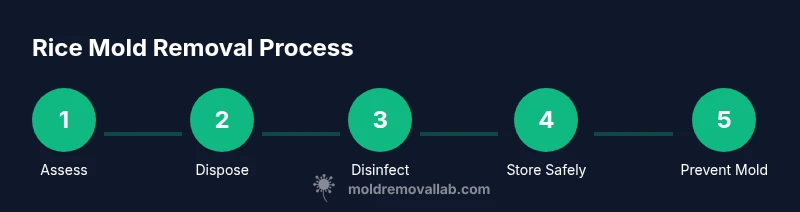
- 1
Assess mold presence and isolate
Inspect the rice and container for visible mold and odors. Don gloves and a mask before handling. Move contaminated rice away from other foods and seal it in a sturdy bag to prevent spread.
Tip: Do not mix moldy rice with clean groceries; containment reduces cross-contamination. - 2
Decide disposal method
Discard the moldy rice in a sealed bag in an outdoor trash can. Do not attempt to salvage or taste any moldy portions. Cleaning the storage area should follow promptly to prevent re-contamination.
Tip: Double-bag to minimize leakage in the trash. - 3
Prepare cleaning area and PPE
Set up a dedicated cleaning space with soap, disinfectants, and towels. Put on gloves, a mask, and eye protection if available. Ventilate the area to dissipate any spores that may become airborne.
Tip: Keep kids and pets away from the cleanup zone. - 4
Dispose of contaminated items and clean utensils
Wash any utensils, bowls, or tools that touched moldy rice with hot soapy water. Rinse and air-dry them thoroughly. Place cleaning wipes and towels used in the trash, then sanitize the sink area.
Tip: Avoid reusing towels that touched moldy items without washing first. - 5
Disinfect surfaces
Apply hydrogen peroxide or white vinegar to affected surfaces, then wipe with a clean cloth. Allow the area to dry completely before storing rice back in containers. This reduces residual spores on hard surfaces.
Tip: Do not mix cleaners; use one disinfectant per surface. - 6
Dry and store safe rice
Ensure rice storage containers are completely dry before refilling. Use airtight containers in a cool, dry place with low humidity. Label with purchase dates and rotate stock to use older rice first.
Tip: Place silica gel or desiccants in pantry if humidity is high.
FAQ
What causes mold to grow on rice?
Mold grows on rice when moisture, warmth, and poor sealing create favorable conditions. Spores present in the environment can land on rice and germinate if humidity is high enough.
Mold grows on rice when it’s moist and not sealed well; spores in the air can land on it and start growing.
Is it safe to eat moldy rice if there are only small patches?
No. Moldy rice should be discarded. Some molds produce toxins that can remain after cooking, and color changes can indicate broader contamination.
No. Do not eat moldy rice; discard it because toxins may remain even after cooking.
Can cooking kill mold spores in rice?
Cooking may kill some surface microbes, but many mold spores and toxins survive typical cooking temperatures. Safe practice is disposal and cleaning of contaminated rice.
Cooking doesn’t reliably eliminate mold spores or toxins on rice, so discard and clean properly.
How should I dispose of moldy rice?
Seal the moldy rice in a bag, place it in a second bag, and dispose it outdoors. Clean and disinfect all affected surfaces and utensils afterward.
Seal and double-bag the moldy rice, then discard outdoors; clean the area thoroughly afterward.
What storage conditions help prevent mold on rice?
Store rice in airtight containers in a cool, dry place with low humidity. Use desiccants if necessary and practice first-in, first-out stock management.
Keep rice sealed, cool, and dry to prevent mold growth.
When should I seek professional help for mold in the kitchen?
If mold recurs despite proper storage or if you have health concerns, contact a mold remediation professional to assess moisture sources and advise remediation.
Consider professional help if mold keeps coming back or you’re worried about health risks.
Watch Video
The Essentials
- Identify mold on rice early to prevent spread.
- Discard moldy rice safely; do not salvage contaminated portions.
- Improve storage conditions to prevent future mold growth.
- Use PPE and disinfect thoroughly after handling mold.
- Refer to authoritative sources for moisture management and remediation.