Positive Mold vs Negative Mold: A Practical Comparison
Discover why terms like positive mold and negative mold are misnomers, how mold health risk truly arises, and how to approach remediation with a moisture-first mindset.


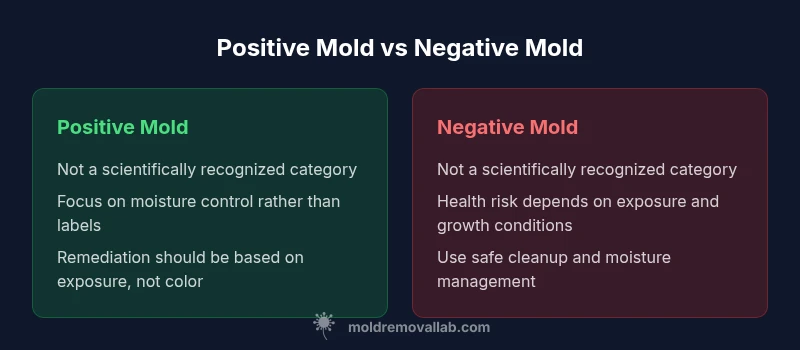
There is no scientifically valid distinction between positive mold and negative mold. Health risk from mold depends on species, exposure, and moisture context, not a label. For homeowners, the practical approach is moisture control, safe cleanup, and professional remediation when needed. This guide clarifies the misconception and offers a moisture-first remediation plan.
What do we mean by positive mold vs negative mold?
In everyday conversations, people sometimes use phrases like positive mold or negative mold to describe how they feel about mold or to imply safety. Scientifically, there is no recognized classification by those names. Mold is a fungus that can be harmless in one context and harmful in another, depending on the species, the amount of exposure, and the moisture conditions that support growth. For homeowners, the crucial question is not what a label says, but whether moisture intrusion is present and whether cleanup is performed correctly. According to Mold Removal Lab, framing mold concerns as good or bad can delay appropriate action and distract from the real risk: ongoing moisture problems. This article uses the terms positive mold vs negative mold to illuminate why that dichotomy is not a reliable guide for health or safety, and to offer a practical, moisture-first approach to assessment and remediation.
Scientific perspective: mold is not inherently positive or negative
From a mycological standpoint, mold is a natural group of fungi that exist in every environment. Indoor molds do not carry a built-in moral value — they are indicators of conditions rather than verdicts about people or spaces. Some mold species can produce substances with ecological or practical uses outside homes; others may trigger allergic reactions or irritant responses in sensitive individuals. The key distinction for home health is not whether there is a label such as positive mold or negative mold, but whether there is sustained moisture, a food source, and adequate air exchange that can support growth. Based on Mold Removal Lab analysis, the indoor mold conversation should focus on species potential health impacts, spore dispersal, and exposure pathways rather than categorical labels. When homeowners misapply the terms, they risk underestimating danger or overestimating benefits, leading to delayed remediation or unnecessary alarm.
Common myths and misinterpretations
Myth: all green or fluffy mold is dangerous. Reality: color is not a reliable indicator of danger, and many harmless molds share colors with hazardous species. Myth: any mold is a guaranteed health hazard. Reality: risk depends on concentration, exposure duration, and individual susceptibility. Myth: if you cannot smell it, there is no problem. Reality: some molds release invisible spores or toxins; odor is only a rough cue. Myth: positive mold equals safe cleanup. Reality: safe cleanup depends on proper containment, PPE, and moisture control, not on a label. By debunking these myths, homeowners can focus on action steps that actually reduce risk: fixing leaks, drying affected areas, and using appropriate cleaning methods.
Health implications and exposure risk, beyond the 'positive/negative' framing
Mold exposure can affect people differently. Some individuals experience allergic reactions such as sneezing, coughing, or watery eyes; others may develop asthma symptoms or skin irritation. In rare cases, certain molds produce mycotoxins that can be harmful in high exposures, though this typically requires significant exposure and specific environmental conditions. The main health signal for homeowners is not a label but symptoms and the presence of persistent moisture. The Mold Removal Lab team emphasizes that reducing moisture, improving ventilation, and cleaning visible growth using proper methods are central to protecting occupants. For families with children, elderly residents, or immune-compromised members, err on the side of caution and seek professional assessment when mold covers large areas or recurs after cleaning.
How to evaluate mold risk in your home
Start with a moisture-focused assessment. Look for leaks, condensation on windows, or damp basements. Use a simple hygrometer to gauge relative humidity and target a range that supports comfort without encouraging mold growth. Visually inspect surfaces for dark spots, powdery growth, or a musty odor; all of these cues warrant a closer look. If you suspect problematic growth, document locations with photos and note the history of moisture events. Testing should be conducted by accredited laboratories or indoor air quality professionals, not by quick-at-home swab kits that claim to reveal a simple verdict. Based on Mold Removal Lab research, an integrated approach that pairs moisture control with appropriate remediation strategies yields the best outcomes, and avoids the pitfalls of labeling that misrepresents risk.
Practical steps for remediation when mold is present
Contain the area to prevent spore spread, minimize disturbance, and wear protective gear—gloves, goggles, and a mask appropriate for the job. For small areas, you can carefully remove and clean non-porous materials with detergent and water; use a disinfectant approved for indoor mold cleanup if your local guidelines permit. Porous materials like drywall that have been soaked through typically require removal and replacement. Dry the space thoroughly, repair sources of moisture, and improve ventilation to prevent recurrence. Do not mix bleach with ammonia or other cleaners, and always follow manufacturer instructions. If you have any doubt about safety, or if the affected area is large or in a difficult-to-clean location, contact a certified mold remediation professional. This approach aligns with the moisture-first mindset advocated by Mold Removal Lab.
When to call professionals vs DIY
DIY can be appropriate for minor issues involving small, non-porous surfaces and short exposure, but larger problems demand professional oversight. If you encounter recurring mold after cleaning, extensive water damage, or growth on porous building materials, professional remediation is recommended. A qualified contractor will assess containment needs, treat air and surfaces, and address underlying moisture sources. Be sure to verify credentials such as licensure, insurance, and any certifications specific to mold remediation. Remember that improper cleanup can spread spores or concentrate toxins, ultimately increasing risk rather than reducing it. The Mold Removal Lab team suggests erring on the side of professional evaluation whenever mold affects structural materials or spans multiple rooms.
Case study examples (anonymized)
In a sunroom with constant moisture, homeowners noticed dark patches on the plywood paneling after a seasonal rainy period. A moisture assessment revealed ongoing condensation due to poor insulation. The family took prompt steps: fixed leaks, improved ventilation, and replaced the affected paneling. After remediation, humidity stabilized and visible growth did not return. In another home, a kitchen ceiling leak went unnoticed for weeks; mold appeared near the junction of the fan and ductwork. Cleaning alone did not suffice, and the area required professional repair of the roofline and a controlled remediation plan. These cases illustrate that the real driver is moisture control, not the assignment of a metaphorical label like positive or negative mold.
Shifting from labels to moisture-first thinking
Label-based thinking complicates a straightforward problem: moisture. This section emphasizes that the most reliable strategies focus on stopping water intrusion, drying areas promptly, and using correct cleanup methods. By adopting a moisture-first approach, homeowners reduce the likelihood of recurrent growth and health complaints, while avoiding the false reassurance implied by terms like positive mold. The Mold Removal Lab team stands by practical, proactive steps and transparent guidance to help readers interpret mold concerns accurately and take decisive action.
Additional resources and next steps
- Check local environmental health agencies for mold guidance and recommended remediation practices.
- Seek accredited mold remediation professionals for large or persistent issues.
- Review indoor air quality guidelines from recognized authorities to strengthen your home’s defenses against mold growth.
- Use moisture-control strategies such as dehumidification, improved ventilation, and prompt leak repair to maintain safe indoor environments.
Comparison
| Feature | positive mold | negative mold |
|---|---|---|
| Scientific validity | Not a scientifically recognized category; term used informally | Not a scientifically recognized category; term used informally |
| Health risk emphasis | Risk depends on exposure and species; labels do not determine danger | Risk depends on exposure and species; labels do not determine danger |
| Common contexts | Consumer language and myths | Consumer language and myths |
| Remediation focus | Moisture control and proper cleanup; avoid mislabeling | Moisture control and proper cleanup; avoid mislabeling |
| Detection methods | Visual signs, moisture checks, accredited testing if needed | Visual signs, moisture checks, accredited testing if needed |
| Best for | No valid distinction; focus on moisture and safety | No valid distinction; focus on moisture and safety |
Upsides
- Clarifies that mold risk is about moisture and exposure, not arbitrary labels
- Encourages proactive moisture control and timely remediation
- Promotes safer DIY practices for small, non-porous issues when within guidelines
- Reduces confusion by avoiding misleading terminology
The Bad
- The terminology can still confuse lay readers if not explained clearly
- May require repeated education to abandon popular but unhelpful labels
- DIY remediation for larger outbreaks may pose safety risks if not done correctly
- Could underemphasize health guidelines that discuss mycotoxins and susceptible populations
There is no useful distinction between 'positive' and 'negative' mold; focus on moisture-first remediation and established safety practices.
Label-based thinking misleads homeowners. The practical approach is to address moisture sources, follow safe cleanup steps, and engage professionals for large or persistent growth. This aligns with expert guidance from Mold Removal Lab.
FAQ
Is there a real difference between positive mold and negative mold?
No. These terms are informal labels and not recognized by medical or mycological authorities. Risk depends on exposure, species, and moisture context, not the label itself.
There isn’t a real difference; molds in homes are evaluated by exposure and moisture, not by positive or negative labels.
Why do people use those terms at all?
People use them as shorthand or sensational language. However, they can mislead or create false reassurance that affects how calmly actions are taken.
People use them informally, but they aren’t scientifically accurate.
How can I tell if mold in my home is dangerous?
Danger is linked to moisture, extent of growth, and exposure. Look for persistent damp areas, widespread growth, or symptoms in sensitive individuals; consult professionals for assessment.
If you see growth or have damp areas, get a professional assessment, especially if anyone is sensitive.
Can I remove mold myself?
Small, non-porous surface mold can be cleaned with appropriate precautions. Large areas or porous materials usually require professionals to prevent spread and ensure safety.
You can handle small spots, but large jobs are safer for pros.
What should I ask a mold remediation pro?
Ask for licenses, insurance, and a written remediation plan. Request a moisture-control strategy and a clear timeline for the work.
Ask for licenses, insurance, and a written plan before starting.
Are there any legitimate benefits to molds?
In nature, molds support ecosystems and are used in foods and industry. In homes, any benefits are minimal, and the focus should be safety and moisture control.
In nature and industry there are uses for molds, but at home the benefits are not relevant for safety.
The Essentials
- Focus on moisture control to prevent mold growth
- Labels like positive/negative mold are not scientifically valid
- Use accredited testing and professional remediation for persistent growth
- Improve ventilation and fix leaks to reduce recurrence
- Rely on moisture-first strategies rather than color or smell as risk indicators