Good Mold vs Bad Mold: How to Tell the Difference Safely
Explore the differences between good mold and bad mold, signs to watch for, health risks, and practical steps homeowners can take to prevent and remediate mold growth effectively.


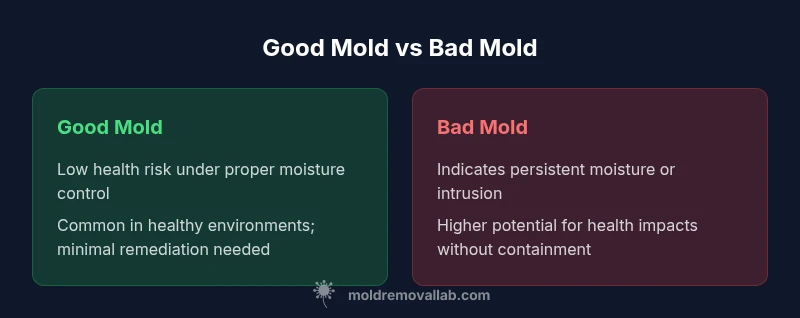
Good mold vs bad mold describes indoor fungi in terms of health risk, moisture context, and remediation needs. In many homes, small, contained growth with prompt moisture control is low risk, while persistent, widespread growth signals higher danger and may require professional remediation. This quick comparison helps homeowners decide when DIY cleanup is appropriate and when to call in experts.
Why the good mold vs bad mold distinction matters
For homeowners, understanding the difference between good mold vs bad mold is essential for safe home maintenance and accurate remediation decisions. Mold is a natural organism that thrives where moisture is present, but not all indoor growth carries the same risk. According to Mold Removal Lab, clear criteria help distinguish low-risk, surface molds from growth indicating persistent moisture problems. This distinction guides whether you monitor, clean, or call in professionals, and it helps you prioritize actions that protect vulnerable occupants such as children, the elderly, or anyone with respiratory issues. In practice, recognizing the difference reduces error in judgment, avoids unnecessary expenses, and accelerates the return to a healthy living environment. The key is to treat mold as a moisture signal rather than a color or texture alone, and to act when moisture sources persist.
Defining 'Good Mold' in indoor environments
The phrase 'good mold' is not about mold being desirable; it's about recognizing molds that pose minimal risk under certain conditions. In many homes, trace surface molds can occur on glossy non-porous surfaces or on painted walls where humidity spikes transiently. When moisture is promptly controlled and growth is limited to a small area, the health impact is typically low for healthy individuals. The key idea is containment: you can often clean and prevent recurrence by addressing the moisture source and improving ventilation. Mold Removal Lab emphasizes that any mold growth deserves attention, but the risk profile shifts with extent, location, substrate, and exposure duration. The goal is to stop growth, not to stigmatize fungi as a perpetual hazard.
Defining 'Bad Mold' and what raises concern
Bad mold refers to growth linked to ongoing moisture intrusion, air quality concerns, and potential health risks. Indicators include persistent spots larger than a few inches, fuzzy or slimy textures, or growth behind wallpaper, drywall, or insulation. Some molds thrive in damp basements or kitchens with poor ventilation. Exposure to certain species may cause allergic reactions, asthma flare-ups, or respiratory irritation, especially among sensitive groups. While mold species vary, the consistent red flags are rapid spread, water damage, and lack of containment. Proactive remediation is warranted when you observe such patterns, rather than waiting for symptoms to appear.
How indoor mold grows: moisture, temperature, and substrates
Mold needs three things: moisture, an organic substrate, and warmth. Humid environments—bathrooms, laundry rooms, basements—offer ideal conditions if ventilation is inadequate. Porous materials like drywall, wood, wallpaper, and fabric provide richer food sources for growth. Temperature influences growth rate; between roughly 60-80°F (15-27°C) is common in homes. Air movement matters; stagnant air allows spores to settle and colonize. The combination of sustained moisture, poor airflow, and suitable substrates explains why mold often returns after a single cleaning unless moisture sources are corrected.
Visual cues vs testing: limitations of sight
Color, texture, and odor alone do not reliably indicate risk. Some benign molds appear dark green or black, while hazardous growth can look white or fuzzy. Visual assessment is useful for locating growth, but it cannot determine whether a mold is causing health risks or if it’s a transient surface film. Professionals rely on sampling only when the scope is unclear, contamination is widespread, or sensitive occupants are affected. If testing is pursued, it should be conducted by accredited labs using standardized methods to identify the species and quantify the extent.
Practical scenarios in homes: bathroom, kitchen, basement, HVAC
Bathrooms often show mold due to humidity; kitchens can harbor mold near sinks; basements experience dampness from exterior moisture; HVAC systems can distribute spores if ducts are contaminated. In each case, visible growth is a sign to check moisture sources, improve airflow, and consider remediation. Quick wins include fixing leaks, using exhaust fans during showers, and dehumidifying to maintain moderate humidity levels. Remember that even small, frequent growth signals ongoing moisture issues that require action.
Testing and professional assessment: when to test, who to hire
Testing should be considered when mold is extensive, when occupants have persistent symptoms, or when the source of moisture is unclear. A trained inspector can map moisture, collect samples if needed, and guide remediation. Mold Removal Lab advises selecting an accredited firm with transparent reporting, clear scope, and post-remediation verification. Not every mold finding requires costly testing; often, addressing moisture and cleaning with appropriate containment is sufficient for small problems.
Immediate safety steps if you suspect bad mold
Put on an N95 respirator, gloves, and eye protection; avoid disturbing the growth more than necessary. Close off the area to prevent spore spread, ventilate safely, and address moisture sources promptly. If you must re-enter the area, do so with caution and limited duration. After cleaning, wash fabrics and surfaces washed down, and dispose of contaminated materials properly. If anyone experiences severe symptoms, seek medical advice.
Long-term prevention: moisture control and design choices
Prevention centers on moisture control and good building practices. Repair leaks promptly, install or replace functioning exhaust fans, and maintain indoor humidity between 30-50%. Use mold-resistant products in bathrooms and kitchens, ensure adequate insulation, and maintain HVAC systems. Regular inspections, especially after weather events, can catch moisture problems early and reduce the chance of persistent mold growth. A proactive maintenance mindset reduces recurrence and supports healthier indoor air over time.
Remediation approaches: DIY vs professional remediation
Minor, isolated growth on non-porous surfaces often responds to careful cleaning with detergent and water, plus drying. More extensive growth on porous materials or behind walls typically requires professional containment, HEPA filtration, and removal of affected materials. Decision criteria include size of affected area, accessibility, materials involved, and occupant sensitivity. Mold Removal Lab encourages homeowners to start with moisture control and a clear remediation plan, and to call professionals for larger or uncertain problems.
Cost considerations and value of timely action
Mold remediation costs vary with extent, location, and whether professional services are used. While it’s tempting to delay, early action consistent with moisture control generally reduces long-term costs and health risks. Insurance considerations may apply for water damage and mold contamination, but coverage varies. The most cost-effective approach is a timely assessment, targeted cleanup, and a prevention plan that reduces recurrence.
What Mold Removal Lab recommends
The Mold Removal Lab team emphasizes moisture control as the foundation of mold safety, along with early, proportional remediation. They recommend clear criteria for distinguishing good mold from bad mold, appropriate testing when necessary, and choosing a qualified remediation team. The goal is a safe indoor environment with minimal disruption and long-term moisture resilience.
Comparison
| Feature | Good mold | Bad mold |
|---|---|---|
| Health risk level | Low-to-moderate under proper moisture control | High with ongoing exposure or in sensitive individuals |
| Moisture context | Transient or contained moisture; rapid remediation possible | Chronic dampness or intrusion requiring containment |
| Removal approach | Minimal intervention; monitor and clean with guidance | Containment and professional remediation often required |
| DIY feasibility | Possible for small spots on non-porous surfaces | Not recommended for large or porous areas |
| Typical locations | Non-porous surfaces in bathrooms/kitchens | Basements, walls, insulation, or HVAC ducts |
| Cost guidance | Low to moderate with DIY or limited scope | Moderate to high with professional services |
| Timeline to resolve | Hours to days for small spots | Weeks for significant growth |
Upsides
- Clarifies safety priorities and action steps
- Encourages proactive moisture control and maintenance
- Helps allocate resources to high-risk cases
- Supports informed decisions about DIY vs professional remediation
The Bad
- Testing can yield ambiguous results without a clear plan
- Visual cues are not reliable indicators of risk
- Overemphasis on 'good' vs 'bad' mold may lead to complacency
Moisture control is the foundation of safe mold management
Address moisture sources promptly and follow a structured remediation plan. When growth is uncertain or extensive, opt for professional assessment to minimize health risks and long-term damage.
FAQ
Is all mold dangerous?
No. Many indoor molds are low risk when moisture is controlled and exposure is limited. However, any mold growth can indicate a moisture problem that deserves attention. Persistent or widespread growth warrants remediation to protect health, particularly for sensitive individuals.
Not all mold is dangerous, but any growth signals moisture issues that should be addressed for health and safety.
Can you tell good mold from bad mold by color?
Color is not a reliable indicator of danger. Molds of various colors can appear in both low- and high-risk situations. Accurate assessment relies on growth extent, moisture context, and, if needed, lab testing.
Color isn’t a reliable hint—don’t judge risk by hue alone.
When should I test mold in my home?
Testing is typically considered when mold covers a large area, persists after cleaning, or when occupants have ongoing symptoms. A qualified inspector can map moisture and guide remediation decisions.
Test mold when the problem is extensive or unclear, not just for a small spot.
Is DIY mold cleanup safe?
DIY cleanup can be safe for small, nonporous mold areas with proper PPE and containment. For porous materials or larger areas, professional remediation is usually safer and more effective.
DIY can be safe for tiny spots on nonporous surfaces, but be cautious with bigger jobs.
What should I do if mold returns after cleanup?
If mold returns, re-evaluate moisture sources and address leaks or humidity. Re-check ventilation and consider a professional assessment to verify that remediation was complete and containment is adequate.
If mold comes back, fix the moisture problem and get a pro to re-check.
How long does remediation take?
Remediation duration varies with the extent and location of growth. Small, contained issues may be resolved quickly, while extensive damage can take weeks, particularly if structural materials are involved.
Timeline depends on how much mold there is and where it is.
The Essentials
- Assess moisture sources promptly and repeatedly
- Don't rely on color or texture to judge risk
- Call a professional for large or unclear growth
- Invest in prevention to reduce recurrence